As an Amazon Associate, we earn from qualifying purchases. We may also earn a commission through other retailer links. Check the exact model, condition, delivery and current price before ordering.
- For home use, an 8-inch Dobsonian gives the best views per dollar - large aperture, easy setup, no motorized tracking needed for visual observing.
- If you want GoTo automation, the Celestron NexStar series is the most beginner-friendly computerized option.
- Refractors are low-maintenance and sharp - ideal for planetary views and Moon observing in a home setting.
- Avoid department-store telescopes - aperture and mount quality matter more than magnification claims.
A home telescope should be easy to carry outside, stable while focusing and suited to the objects you want to observe. Compare the mount and complete package alongside aperture; an awkward telescope is less useful than one you will actually use.
This guide compares manual refractors and Dobsonians with computerized NexStar models. Start with the Moon and planets if you observe from a bright urban site, and consider a larger reflector when storage and darker skies make it practical.
The product cards identify the linked model. Availability and condition can change: check the current merchant offer and delivery details before deciding.
In this post, we’ll discuss the best telescopes you can use at home. Whether you’re a beginner just starting or an experienced amateur, this guide will help you find the perfect telescope to suit your needs and budget.
15 best telescopes to use at home
If you are searching for the perfect telescope to use in the comfort of your home, look no further, as we have compiled a list of the top 15 telescopes suitable for home use and perfect for exploring the dark sky and observing space objects.
1. Celestron NexStar 8SE
- 2-year warranty and unlimited support
- High-quality optics
- Easy to use
- Requires a power source
- Check collimation when the telescope design and image quality call for it, following the manufacturer’s manual. Reflectors may need adjustment; most refractors do not require routine user collimation. Never turn unfamiliar adjustment screws without model-specific instructions.
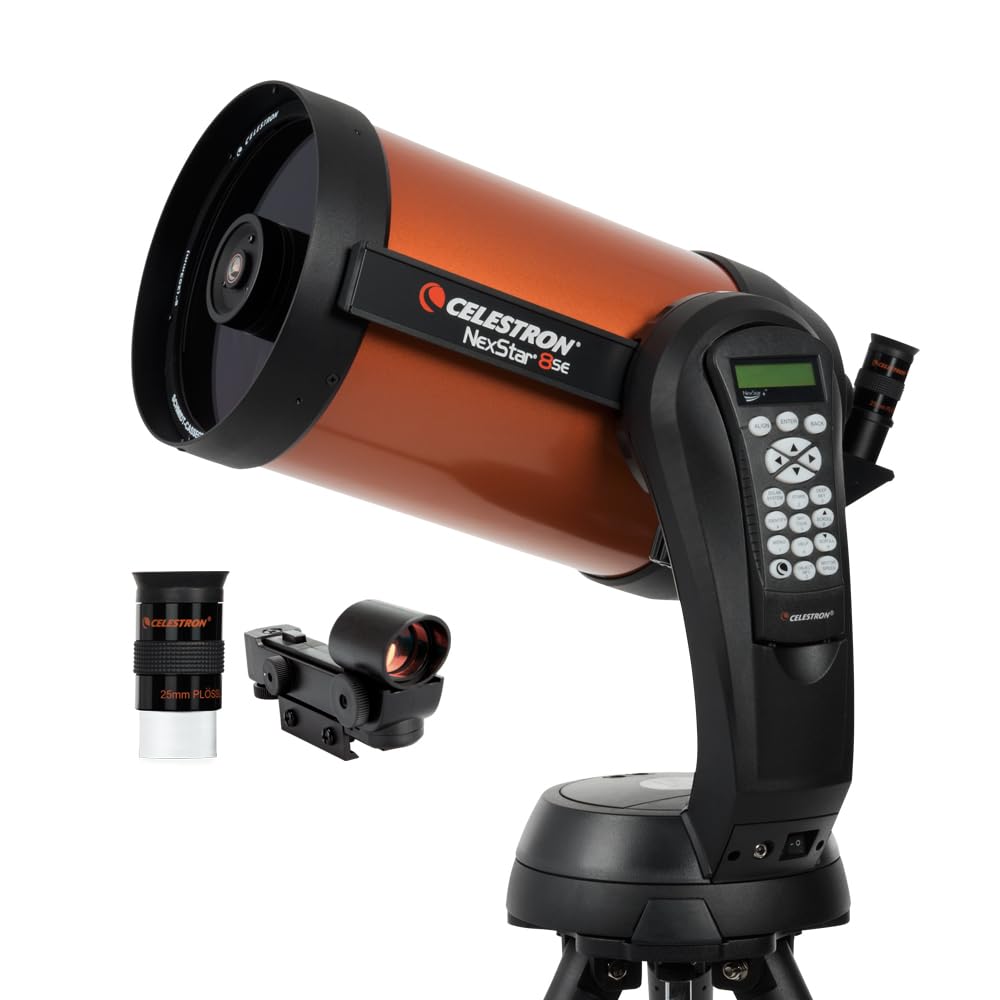
The Celestron NexStar 8SE is popular among amateur astronomers as one of the best telescopes. An aperture of 8 inches makes it an excellent choice for capturing large amounts of light and obtaining bright and clear images.
Its Schmidt-Cassegrain design provides a compact and portable size, making it easy to transport and set up in your backyard or on your balcony.
The NexStar 8SE also comes with Celestron’s proprietary “SkyAlign” technology, which makes it easy to align the telescope with the sky, even for beginners. This feature makes it easy to use and allows quick setup time.
The telescope also has a focal length of 2032mm. This focal length gives it a high magnification power, making it suitable for observing a wide range of space objects.
2. Celestron CPC Deluxe 800 HD
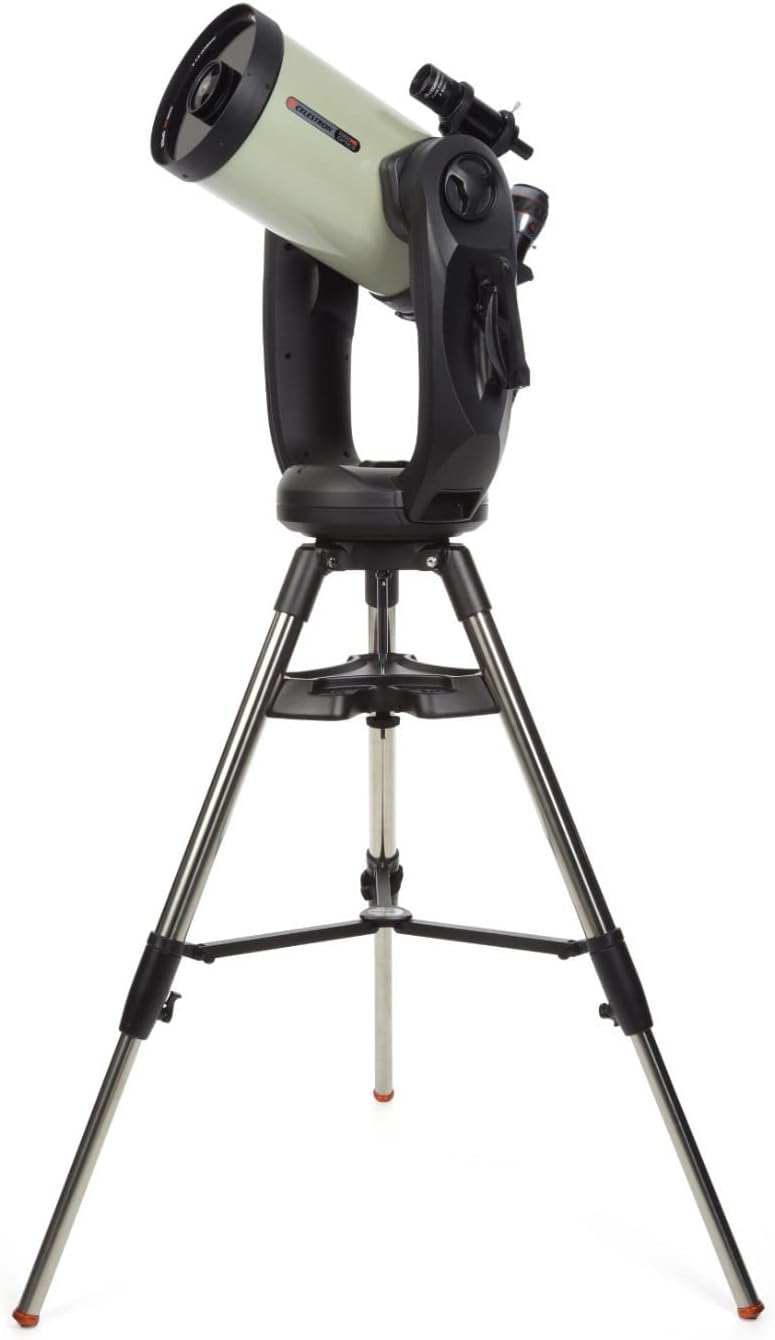
The linked CPC Deluxe 800 HD uses an 8-inch EdgeHD optical tube on a computerized dual-fork altazimuth mount. It is a premium, relatively heavy setup; check the combined tube-and-fork weight before planning to carry it outdoors.
“SkyAlign” technology allows easy alignment with the dark sky, even for beginners.
Its GPS assists with location and time information, while an observing alignment is still required. EdgeHD rear vents assist thermal equalization; they should not be described as an included powered cooling fan.
3. Celestron NexStar Evolution 8
- Superior optics
- Smart features
- Designed with portability in mind
- High price tag
- Limited field of view
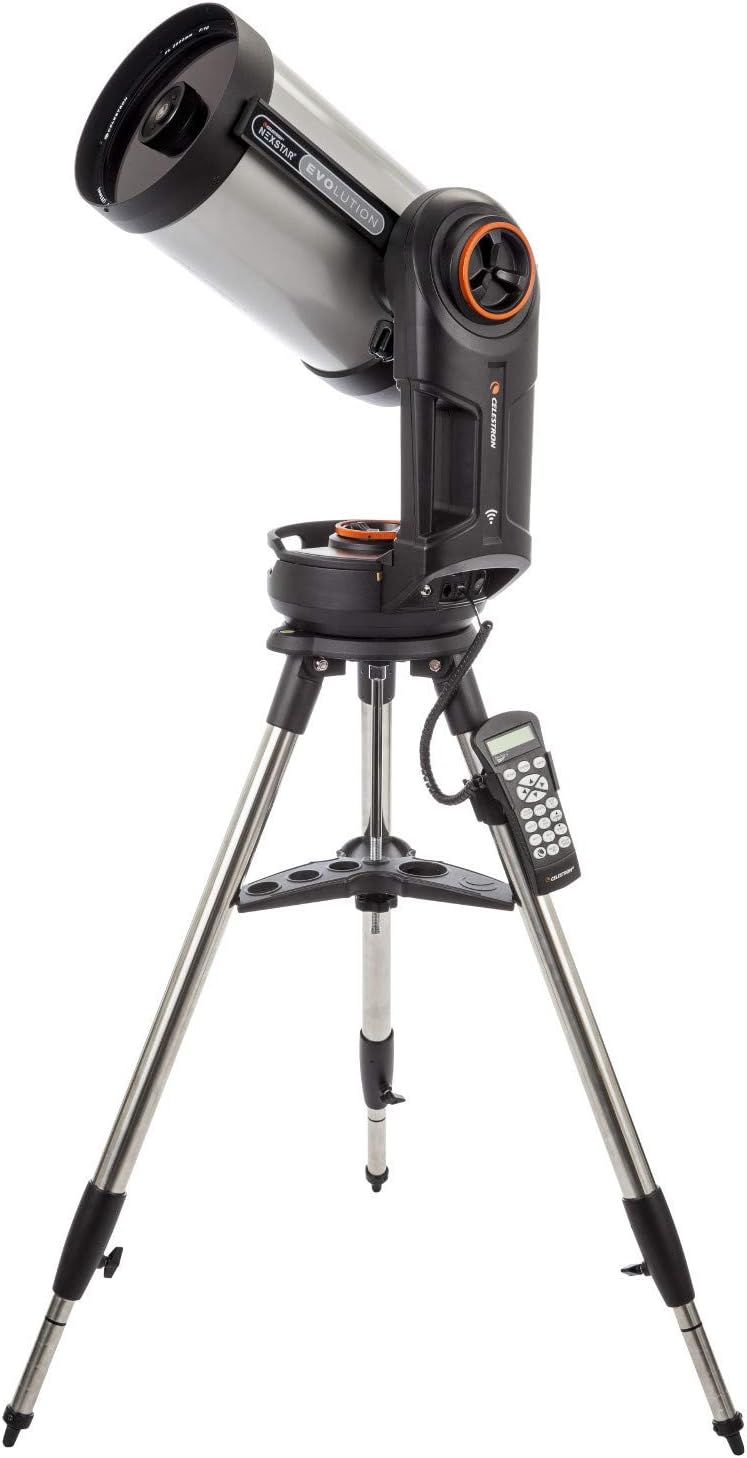
Celestron NextStar Evolution’s key feature is the 8-inch aperture, which gathers a lot of light, providing bright and clear images of objects such as planets, stars, nebulae, and galaxies.
Its built-in WiFi capabilities and long battery life set the NexStar Evolution 8 apart from other telescopes. The built-in WiFi allows for easy control and alignment of the telescope using a smartphone or tablet through Celestron’s “SkyPortal” App.
The telescope has an internal battery pack that can last up to 10 hours of continuous use, allowing for a night of observation without needing an external power source.
4. Celestron Inspire 100AZ
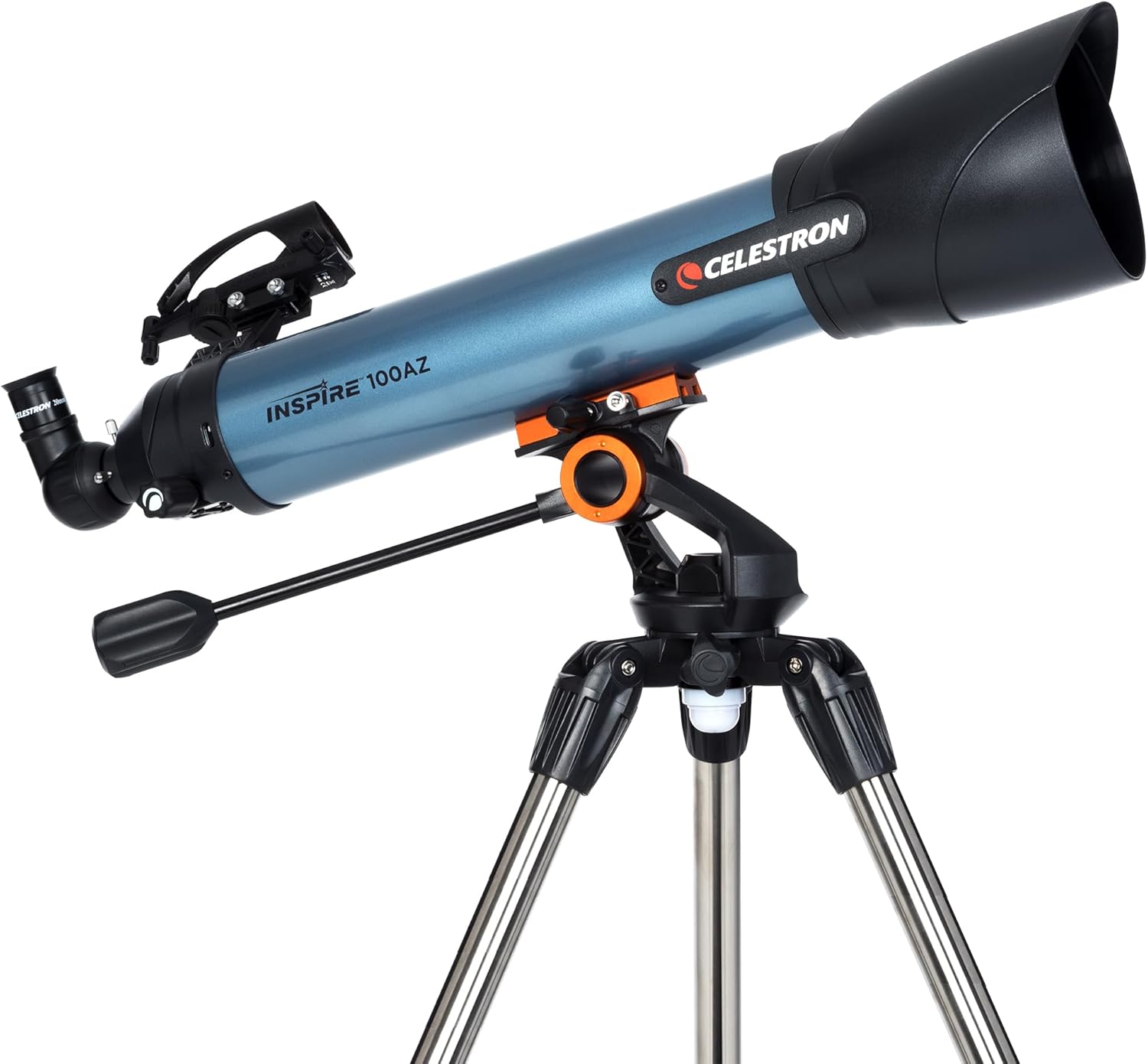
Celestron Inspire 100AZ’s key feature is the 100mm aperture, which gathers a good amount of light, providing bright and clear images of space objects such as planets, stars, nebulae, and galaxies.
The telescope uses a refractor design, which offers a compact and portable size for easy transport and setup. Its focal length is 660mm, providing a good magnification power.
The telescope comes with two eyepieces, a red dot finderscope, and a smartphone adapter, allowing you to capture images of what you observe. The telescope also features an Alt-Azimuth mount, which is easy to set up and use, making it perfect for beginners and children.
5. Celestron StarSense Explorer DX 130AZ
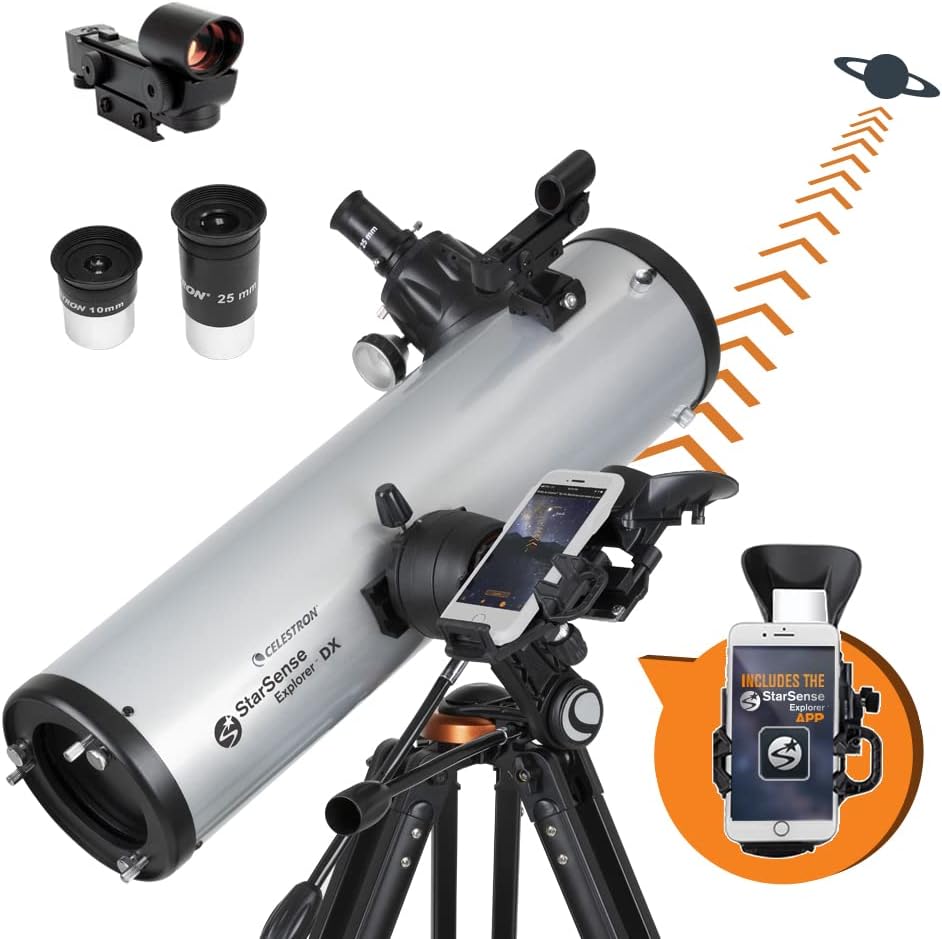
The Celestron StarSense Explorer DX 130AZ is one of the most innovative telescopes for home use. Instead of a traditional GoTo motor, it uses your smartphone and Celestron's StarSense app to generate a real-time sky map that shows you exactly where to point the scope.
With a 130mm aperture and 650mm focal length, it gathers enough light for detailed views of Jupiter's bands, Saturn's rings, and brighter deep-sky objects like the Orion Nebula. The Newtonian reflector design keeps the price accessible while delivering serious optical performance.
Fit a compatible smartphone in the StarSense dock and align its camera with the telescope optics. The app then shows arrows to guide your manual movements. There is no motorized pointing or tracking.
6. Celestron StarSense Explorer LT 80AZ
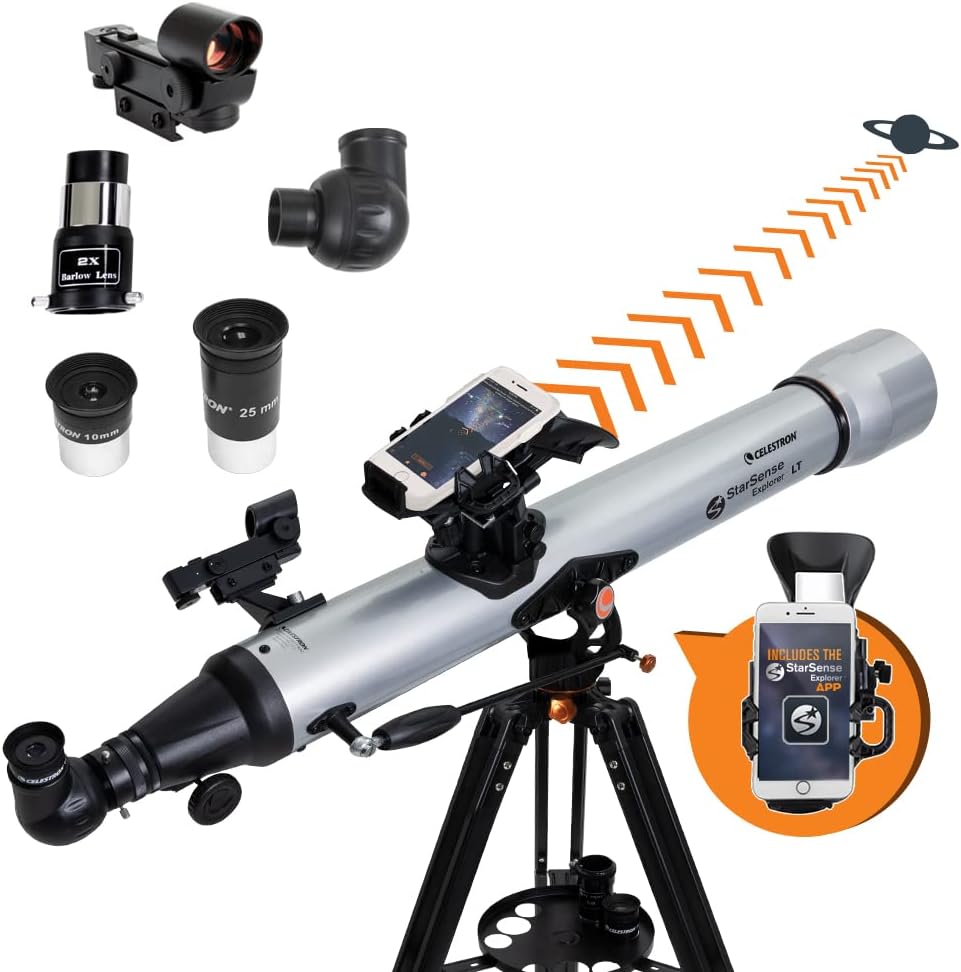
The Celestron StarSense Explorer LT 80AZ combines a quality 80mm refractor with Celestron's StarSense smartphone app navigation. Point your phone at the sky and the app tells you what you are looking at and guides you to thousands of objects.
The 80mm aperture and 900mm focal length suit lunar and planetary observing. A refractor usually needs less routine optical adjustment than a reflector, but still needs normal care and time to adjust to outdoor temperature.
At this price point, it is one of the best ways to start astronomy at home without the frustration of finding objects manually.
7. Celestron StarSense Explorer 8" Dob
- #1 Beginner Telescope
- Comes with useful accessories
- Great value for money
- Easy to set up
- Not portable
- Regular maintenance needed
- Not suitable for astrophotography
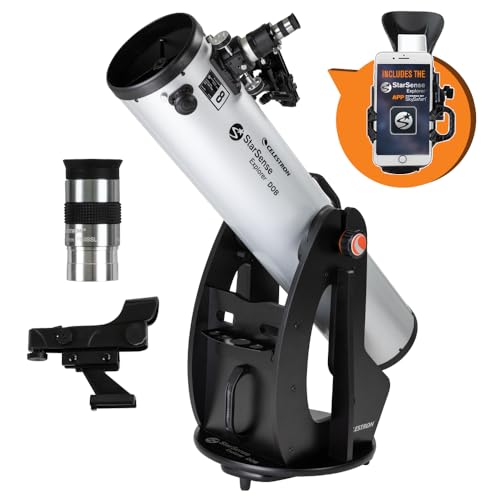
Celestron StarSense Explorer 8" Dob uses a Dobsonian design, offering a large aperture and great value. Its focal length is 1200mm, and this focal length provides a good magnification power.
The Dobsonian mount moves manually in altitude and azimuth. StarSense Explorer uses a compatible smartphone to help you aim after aligning the phone with the optics; it does not drive the mount.
Another feature of the StarSense Explorer 8" Dob is its parabolic primary mirror, which provides a high-quality image with minimal distortion.
8. Sky-Watcher 8″ Collapsible Dobsonian
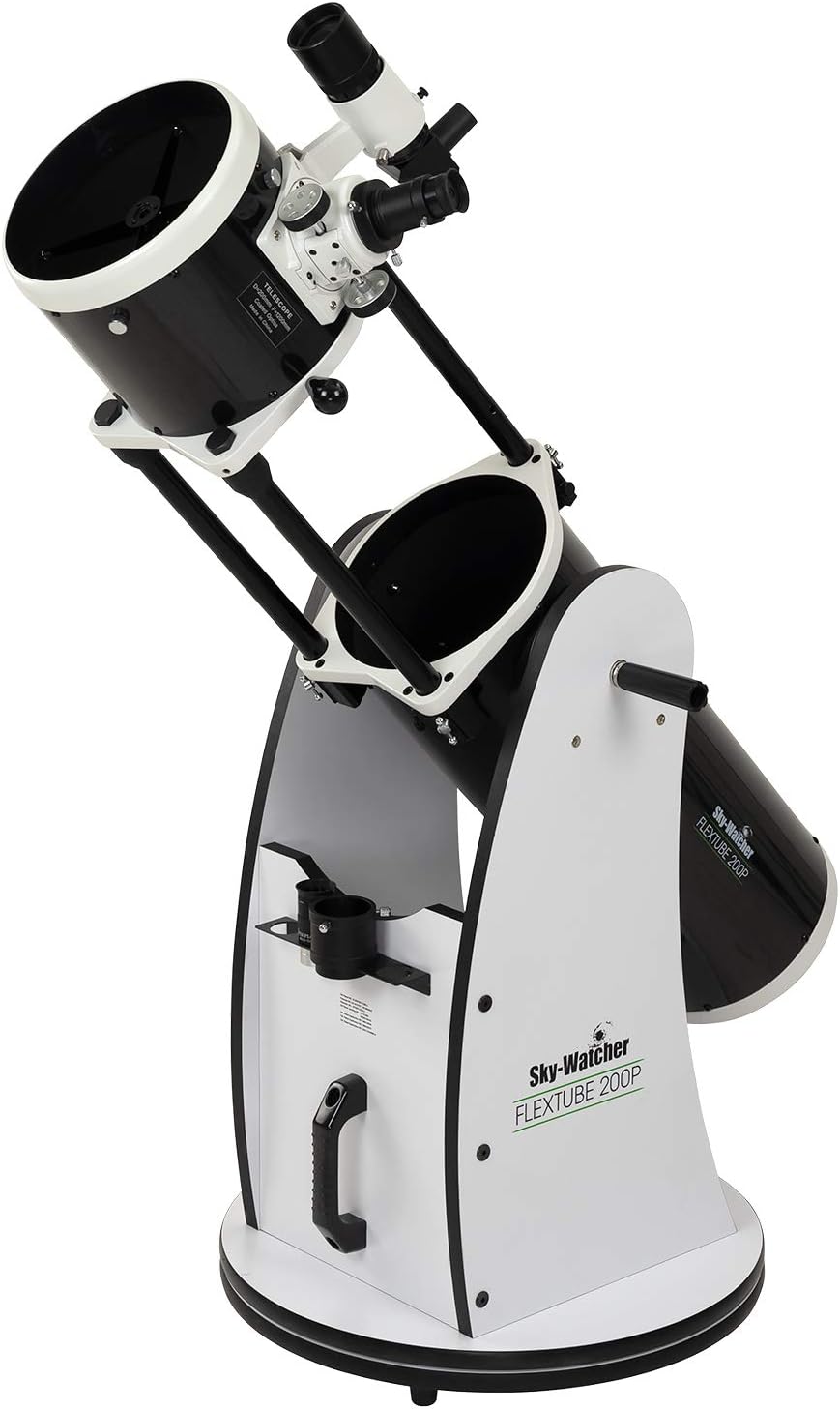
The Flextube 200P uses a collapsible tube to reduce its storage length. It remains an 8-inch telescope with a substantial base; check the storage dimensions and carrying weight.
Use the supplied finder to help aim, and verify the finder and eyepieces included in the exact regional package.
Its focal length is 1200mm, providing high magnification power.
9. Zhumell Z8 Deluxe
Zhumell Z8 Deluxe comes with two eyepieces, a 2″ Crayford-style focuser, and a 9×50 finderscope, which provides a wide range of magnification options. The telescope uses a Dobsonian design, which offers a large aperture and great value for the price. Its focal length is 1200mm, providing high magnification power.
Additionally, the telescope features a cooling fan to reduce thermal drift and enhance image clarity.
The Zhumell Z8 Deluxe telescope is designed to be highly compatible with a wide range of accessories, making it a versatile and expandable option for home use. The telescope has a 2″ focuser, allowing for larger eyepieces, Barlow lenses, and other accessories.
10. Gskyer 70mm Aperture Telescope
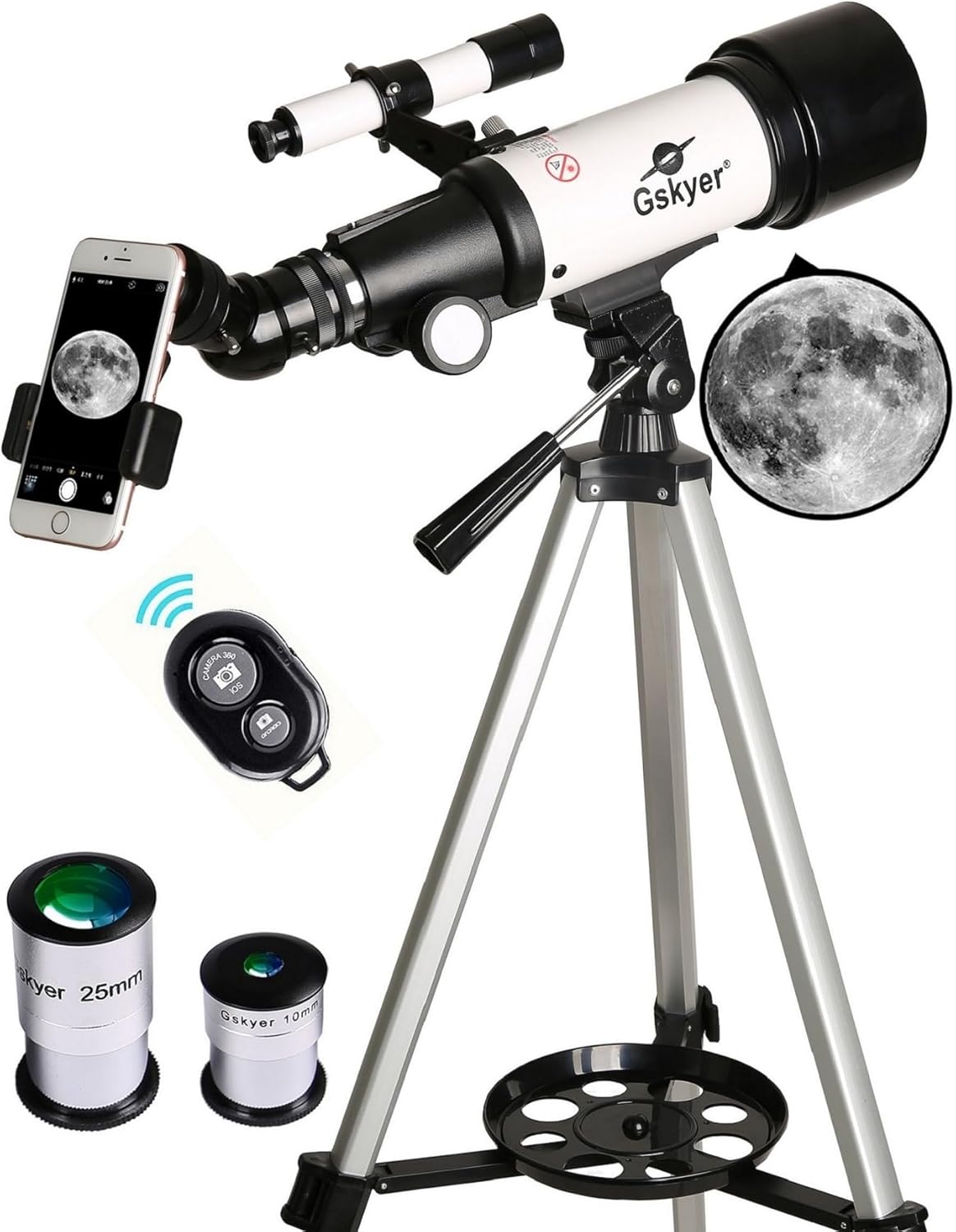
The Gskyer 70mm Aperture Telescope is an excellent telescope for home use, known for its compact size and affordability. The telescope uses a refractor design, which offers a compact and portable size for easy transport and setup. Its focal length is 400mm, providing good magnification power.
The Gskyer 70mm Aperture Telescope is designed with multi-coated glass optics, which helps to enhance image brightness and clarity. The multi-coating process is applied to the lenses and mirrors of the telescope, which helps to increase the amount of light transmitted through the telescope, resulting in brighter and clearer images.
A sturdy and stable tripod is an important feature of the Gskyer 70mm Aperture Telescope. The tripod provides a stable platform for the telescope, reducing vibrations and allowing you to observe space objects with minimal movement.
11. Celestron AstroMaster 130EQ Reflector Telescope
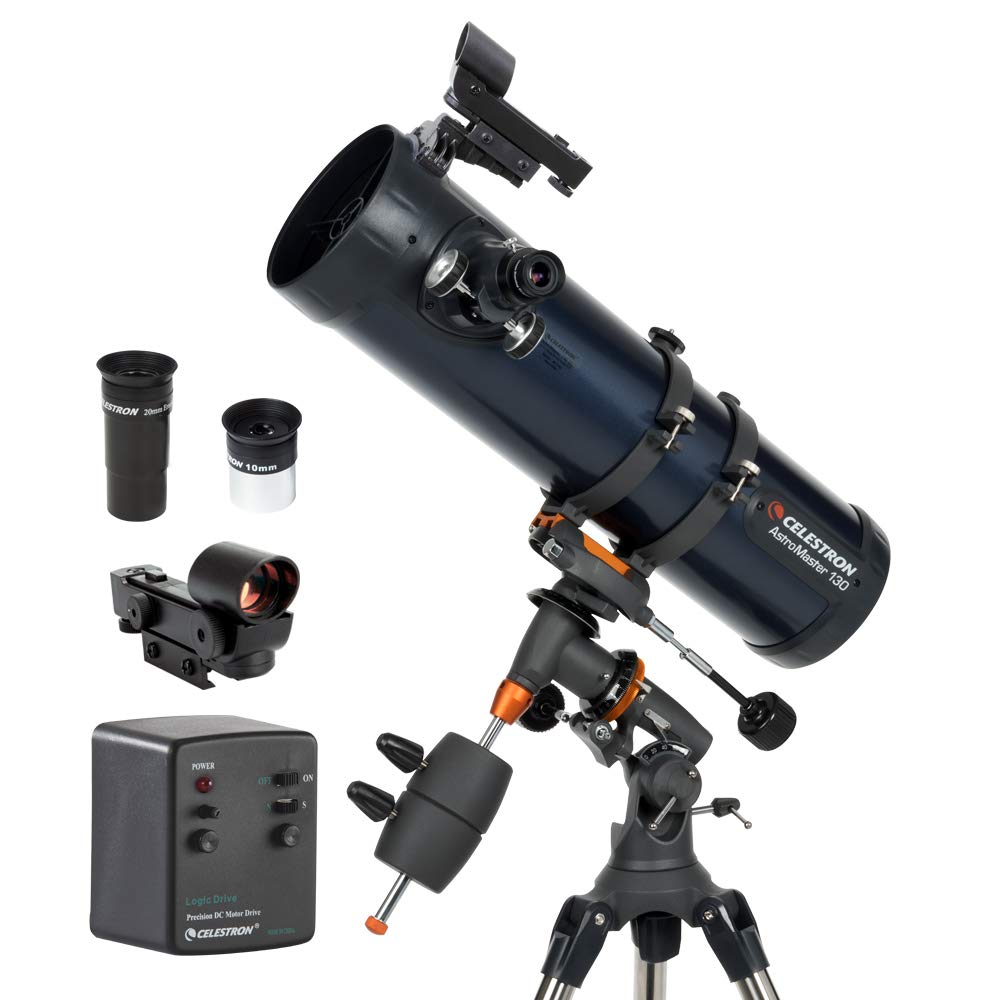
The Celestron AstroMaster 130EQ uses a Newtonian reflector design with a generous 130mm aperture and 650mm focal length. This combination gathers enough light to reveal detail in deep-sky objects like the Andromeda Galaxy and Orion Nebula, while still delivering sharp planetary views.
The equatorial (EQ) mount allows smooth tracking of objects as they drift across the sky, making longer observing sessions more enjoyable. For beginners learning to navigate the night sky, the included StarPointer finderscope helps you locate targets quickly.
At its price point, the 130EQ is one of the best ways to step up from a basic starter scope without breaking the budget.
12. Sky-Watcher EvoStar 72 APO Doublet Refractor
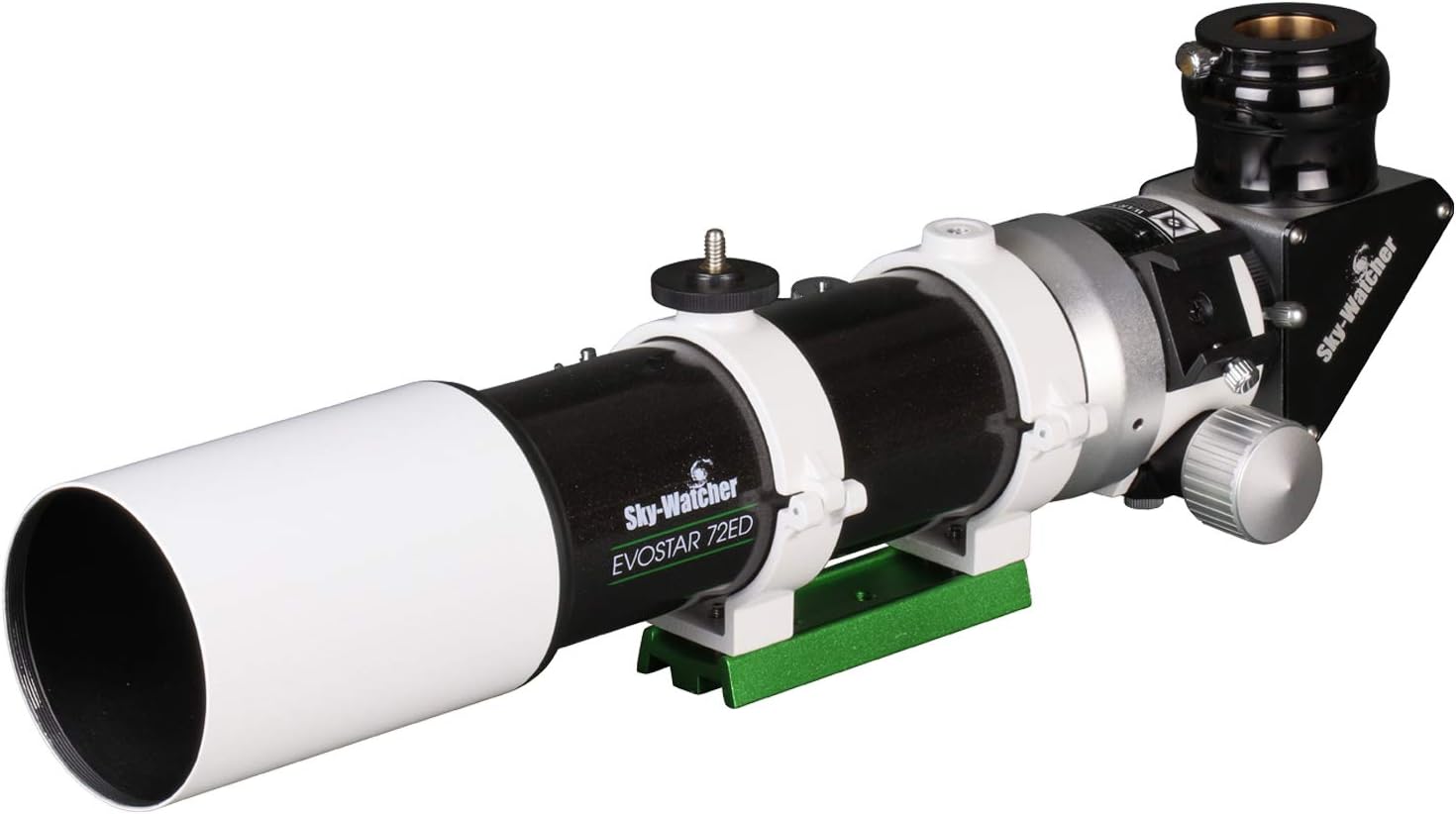
The Sky-Watcher EvoStar 72 APO Doublet Refractor is a high-quality astronomical telescope ideal for amateur and professional astronomers. It features a 72mm aperture and a multi-coated doublet objective lens, providing clear and crisp views of the night sky.
The APO (apochromatic) design reduces chromatic aberration, which results in sharper images with accurate color representation. The telescope’s compact and lightweight design makes it easy to transport, set up, and store, making it a great option for those who want to observe the stars on the go.
Additionally, the Sky-Watcher EvoStar 72 APO Doublet Refractor is versatile and can be used for visual observation and photography.
13. Sky-Watcher Heritage 150 Tabletop Dobsonian
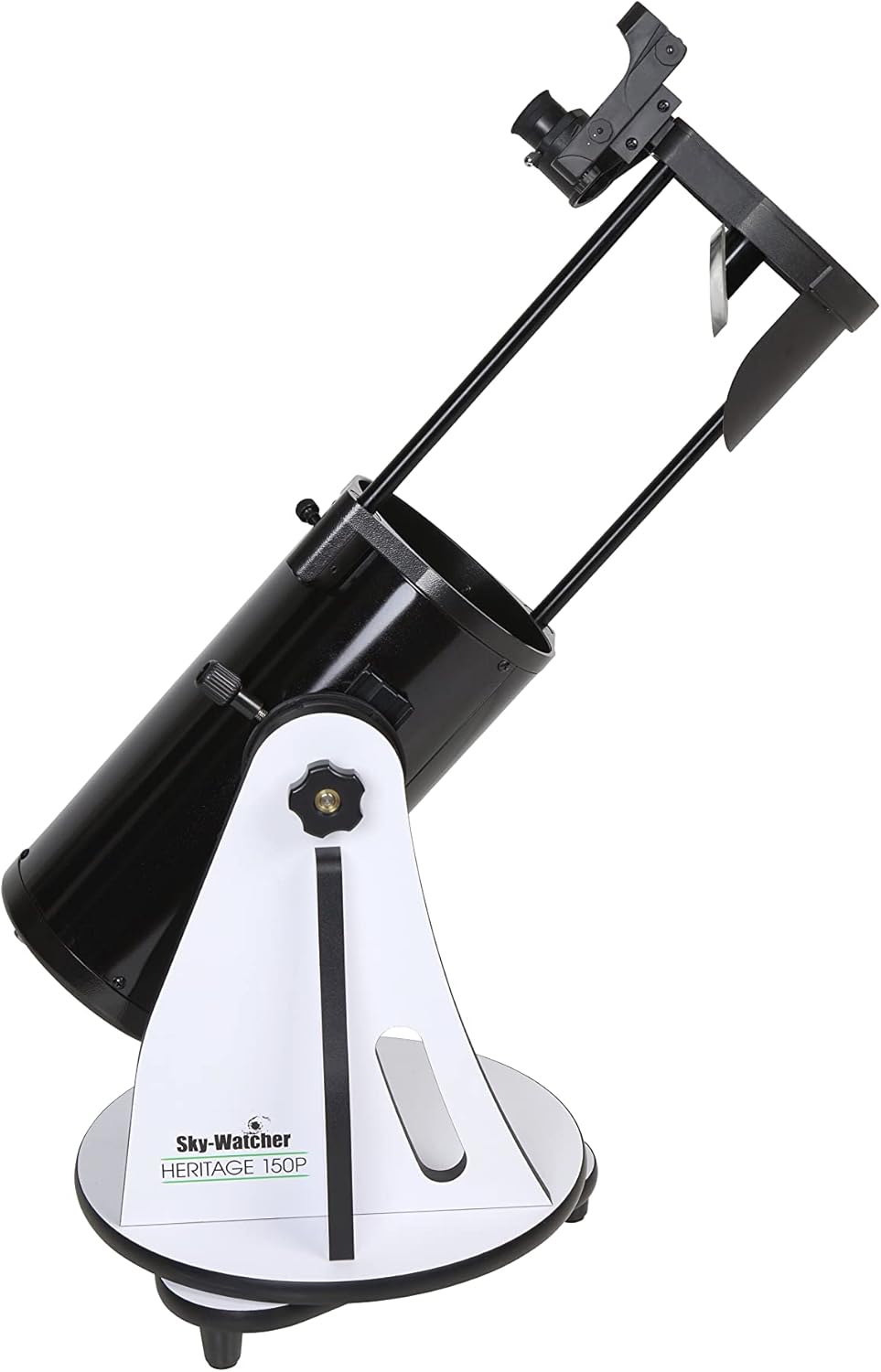
The Sky-Watcher Heritage 150 is a tabletop Dobsonian that packs 150mm (6 inches) of aperture into a compact, collapsible design. Set it on any sturdy table or bench and you have a serious observing station that reveals detail on Jupiter, Saturn's rings, and dozens of deep-sky targets.
The collapsible truss design means it stores in a small space when not in use, making it ideal for apartments or homes with limited storage. Despite its compact size, the parabolic primary mirror delivers sharp, well-corrected images across the field of view.
For anyone who wants more than a toy scope but does not want a floor-standing instrument, the Heritage 150 hits the sweet spot between capability and convenience.
14. Celestron AstroMaster 70AZ Telescope
- Good for beginners
- Easy to use
- Great value
- Limited compatibility
- Manual tracking
- Plastic parts
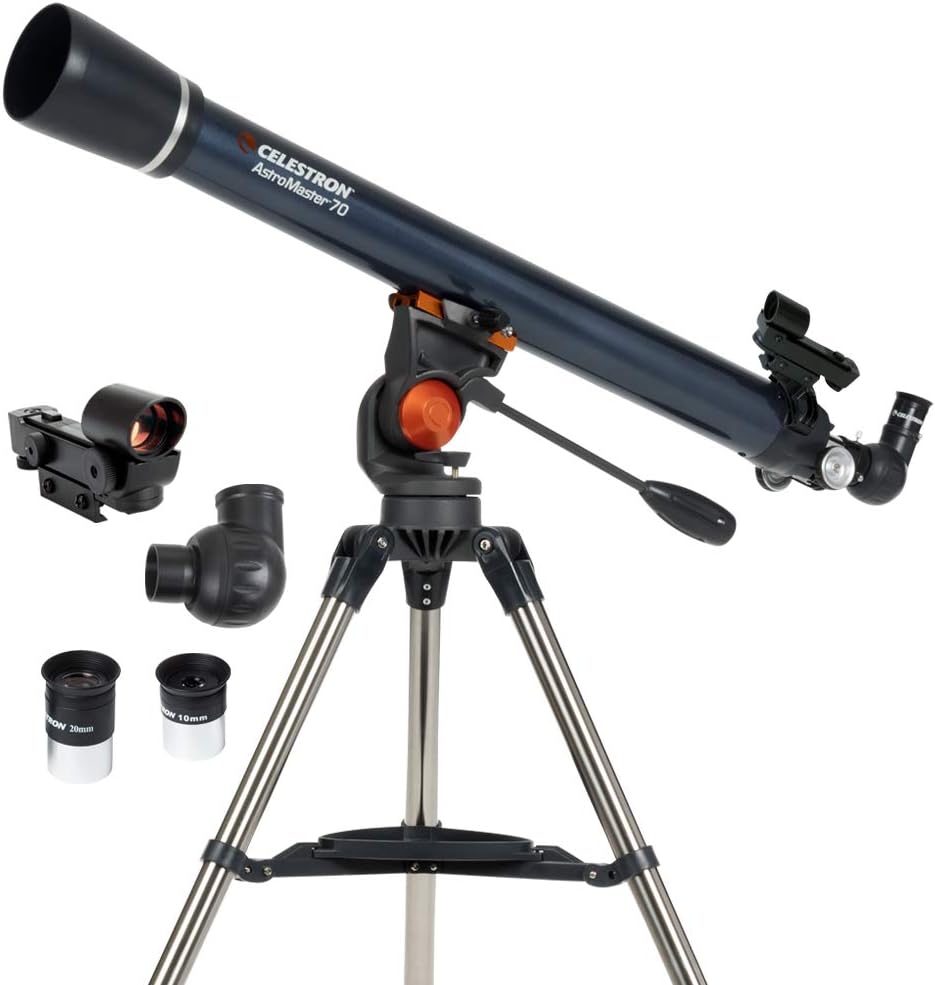
The Celestron AstroMaster 70AZ Telescope is a beginner-level telescope designed for terrestrial and astronomical observation. It features a 70mm aperture and fully coated glass optics that provide bright and clear sky views. The AZ (altazimuth) mount is easy to set up and use, making it ideal for those new to astronomy.
The AstroMaster 70AZ also has slow-motion controls for smooth tracking of celestial objects, allowing for longer observing sessions.
The compact design and affordable price make the Celestron AstroMaster 70AZ Telescope a popular choice for hobbyists and families interested in exploring the night sky.
15. Celestron – 80mm Travel Scope
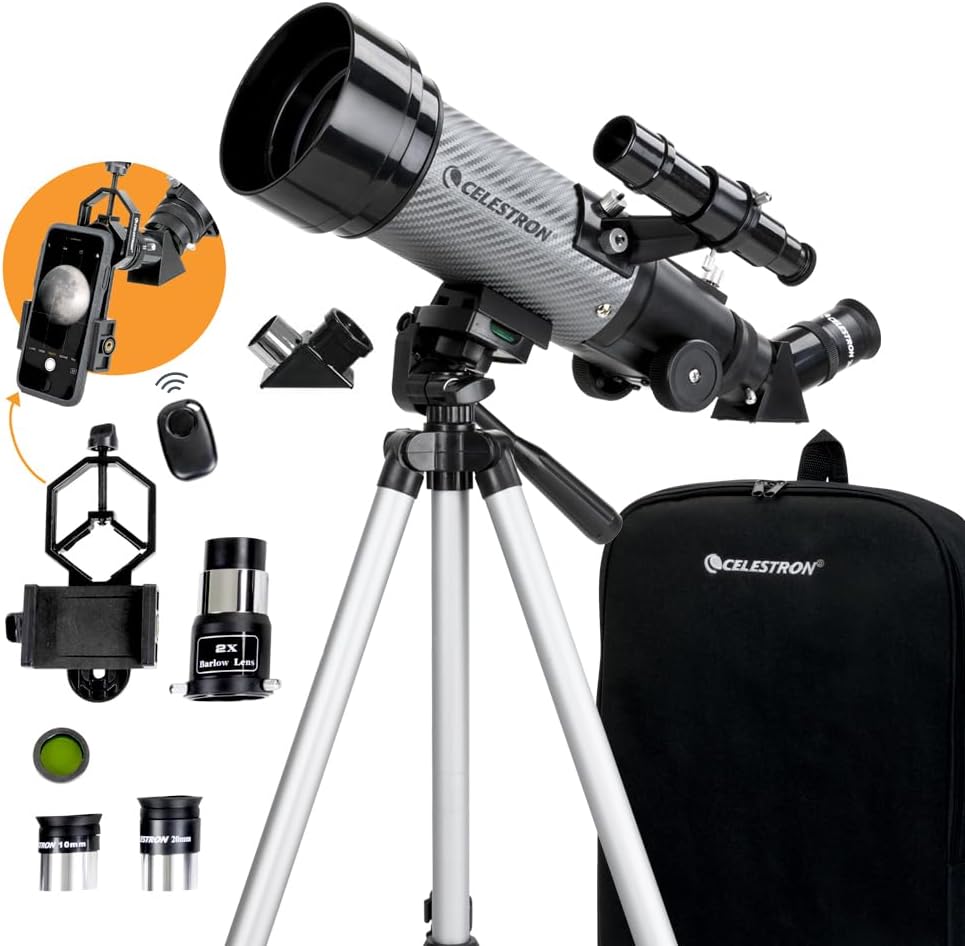
The Celestron 80mm Travel Scope is a compact, portable telescope designed for on-the-go observation. It features an 80mm aperture and fully coated glass optics that provide bright and clear views of celestial objects and terrestrial targets.
In addition to the travel scope, a tripod, and carrying bag are included for convenience.
If you are looking for a high-quality telescope that can be taken with you wherever you go or used on your balcony at home, the Celestron 80mm Travel Scope is one of the best options.
What type of telescope is suitable for home use to explore the night sky?

With so many options available, it can be hard to know which type of telescope is suitable for home use.
Among the best options for exploring the night sky at home are Refractor, Reflector, Schmidt-Cassegrain, and Dobsonian telescopes. Individual preferences and observing goals will dictate which type is best.
Refractor telescopes
A refractor uses lenses and usually needs little routine collimation. Achromatic models can show color fringing on bright objects, especially at short focal ratios; ED and apochromatic designs reduce that effect.
Refracting telescope is a popular choice for amateur and professional astronomers, who value the sharp and accurate images they provide.
- Great value
- Easy to use
- Quality optics
- Comes with accessories
- Limited aperture
- Short focal length
The Solomark 70mm Refractor Telescope is an excellent option for beginners and home use because it is a refractor telescope that is known for its simplicity of design and ease of use.
The 70mm aperture allows ample light-gathering capability, while the 700mm focal length balances image brightness and magnification.
This telescope also has a finder scope and a tripod to help beginners aim and stabilize the telescope.
Reflector telescopes
Reflector telescopes, also known as reflecting telescopes, use mirrors to gather and focus light to produce an image. They are known for their large aperture sizes, making them great for viewing sky objects and the solar system, such as galaxies and nebulae.
They also tend to be more affordable than refractor telescopes, making them an excellent option for those on a budget for home use.
- Large aperture
- Suitable for beginners
- Affordable
- Heavy
- Limited magnification
The Celestron – AstroMaster 130EQ Newtonian Telescope is an excellent option for beginners and home use because it is a reflector telescope that is known for its cost-effectiveness and best performance in terms of image brightness and clarity.
The AstroMaster 130EQ has a 130mm aperture and a 650mm focal length. Its manual equatorial mount needs balancing and polar alignment for convenient tracking.
Schmidt-Cassegrain telescopes
Schmidt-Cassegrain telescopes (SCTs) are reflecting telescopes known for their compact design and versatility, making them an excellent option for home use.
They use a combination of mirrors and lenses to gather and focus light to produce an image. They have a closed-tube design, making them more durable and easier to handle than other telescopes.
- Easy to operate
- Affordable
- Poor mount
- Eyepieces are of average quality
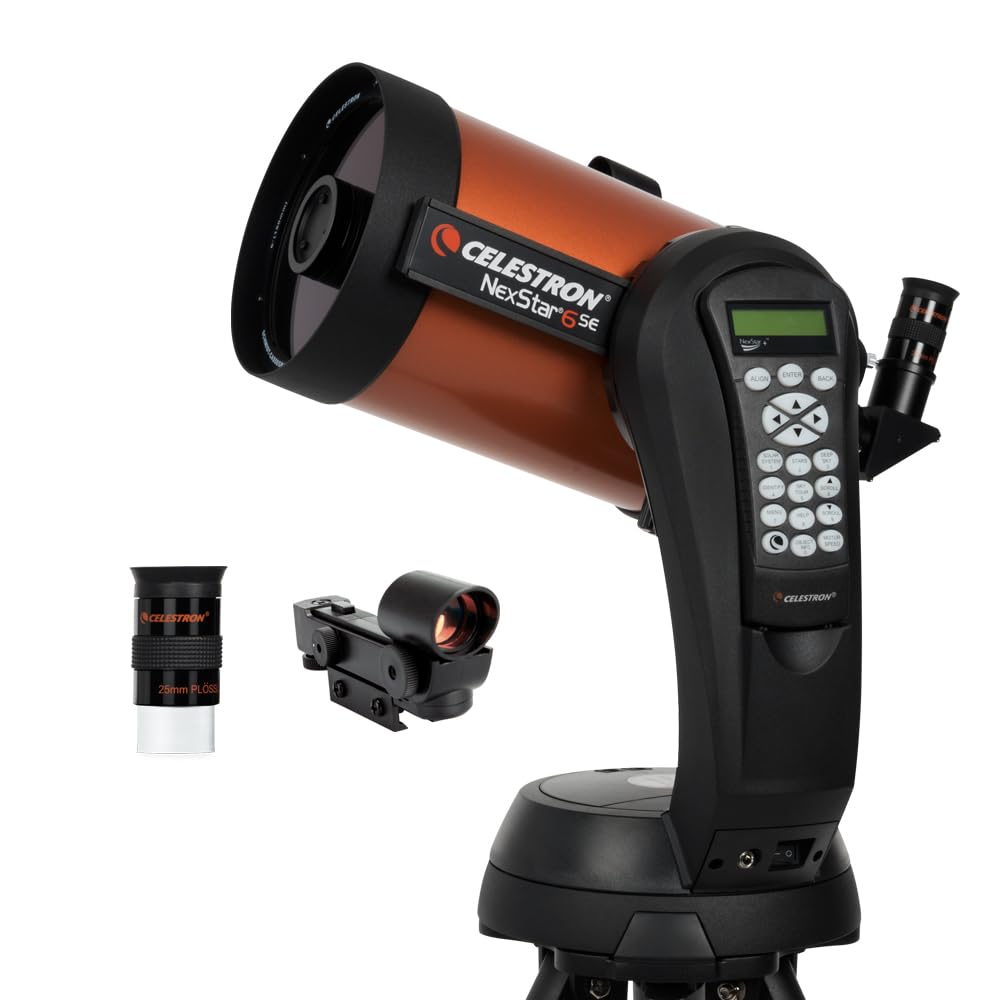
For a compact Schmidt-Cassegrain example, compare the Celestron NexStar 6SE listed below. Do not confuse a 70/700 refractor with a Schmidt-Cassegrain: similar marketing language does not mean the same optical design.
The NexStar 6SE has a 150mm aperture and a 1500mm focal length. Its computerized mount requires power and an observing alignment.
Dobsonian telescopes
Dobsonian telescopes, also known as Dobsonian reflectors, are a popular type of telescope known for their simplicity and affordability, making them an excellent option for home use and exploring the sky.
They use a large parabolic mirror to gather and focus light to produce an image and are mounted on a simple alt-azimuth (Dobsonian) mount. This mount design is easy to use and allows for smooth and precise pointing of the telescope.
- #1 Beginner Telescope
- Comes with useful accessories
- Great value for money
- Easy to set up
- Not portable
- Regular maintenance needed
- Not suitable for astrophotography
The Celestron StarSense Explorer 8" Dobsonian is an excellent option for beginners and home use because it is a Dobsonian telescope known for its simplicity of design, ease of use, and great value for money.
This telescope has an aperture of 203mm and a focal length of 1200mm, allowing for very high image brightness and clarity for sky objects.
Factors to consider when choosing a telescope for home use to explore deep sky objects

Choosing a telescope for home use can be a daunting task; there are many factors to consider before making a decision. Here are the key factors to consider.
Aperture size
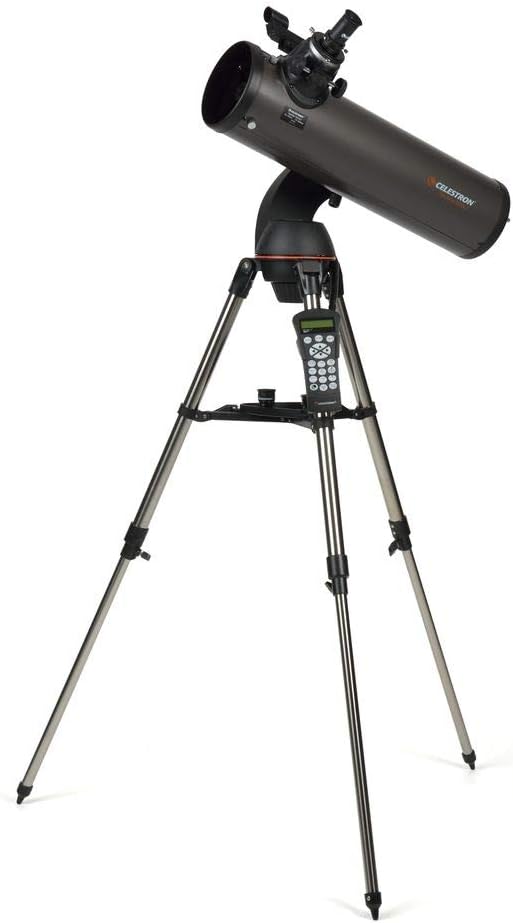
When choosing a telescope for home use, it is essential to consider the aperture size, as it will affect the types of objects you can view and the level of detail you can see.
A telescope with a larger aperture can gather more light, making it better suited for viewing faint brighter deep sky objects like the solar system, galaxies, and nebulae.
A telescope with a smaller aperture can still view bright objects such as the Moon and planets, but the level of detail will be less.
Magnification
Magnification equals telescope focal length divided by eyepiece focal length. For example, a 650mm telescope with a 10mm eyepiece gives 65×; focal length itself is measured in millimeters, not in multiples such as 20×.
A telescope with a higher magnification will allow you to see finer details in the objects you are viewing. Still, it also requires a steady mount and good atmospheric conditions to achieve a sharp image.
A telescope with a lower magnification may not allow you to see as much detail, but it will be easier to use and less affected by atmospheric conditions.
Resolution
Resolution is another essential factor when choosing a telescope for home use, especially when observing space objects in the sky.
Resolution refers to the ability of a telescope to distinguish fine details in an object, which is determined by the aperture size, the quality of the optics, and the atmospheric conditions.
A telescope with a higher resolution will be able to show finer details in objects such as the Moon and planets. A telescope with a lower resolution will be better suited for observing faint sky objects such as the solar system, galaxies, and nebulae.
Mount
The mount is the mechanism that holds the telescope and allows you to point it at different objects in the sky. There are two main types of mounts: alt-azimuth and equatorial mount.
An Alt-Azimuth mount, also known as a Dobsonian mount, is a simple and affordable mount that is easy to use. It moves in two directions, up and down (altitude) and left and right (azimuth).
The equatorial mount is a more advanced mount designed to track the movement of the stars in the sky. An equatorial mount has one or two axes of rotation, one parallel to the Earth’s axis of rotation.
This allows the telescope to follow the movement of the stars, making it an excellent option for long-exposure photography and observing faint sky objects.
If you are a beginner looking for an easy-to-use telescope, an Alt-Azimuth mount is the best option.
If you are more experienced and interested in long-exposure photography or observing faint sky objects and the solar system, then an Equatorial mount is the best option.
Stability
Stability refers to the ability of the telescope to hold its position and remains steady during observation.
When choosing a telescope, it’s essential to consider the stability of the mount, as well as the overall weight and design of the telescope. A telescope with a heavy and well-built mount will provide more stability than a lightweight and flimsy mount.
A Dobsonian telescope, for example, has a simple and stable mount design that makes it easy to use and provides a clear image.
A telescope on a stable surface, such as a tripod or a pier, will provide a more stable image than a telescope on an unstable surface, such as a chair or a table.
Ease of use
The observing experience will be more enjoyable and less frustrating if the telescope is easy to set up and use. A telescope with a simple and user-friendly mount, such as a Dobsonian mount, will be easier to use than a more complex mount, such as an equatorial mount.
Additionally, electronic capabilities such as computerized Go-To mounts and tracking systems can make the telescope more user-friendly and easy to navigate and align.
Furthermore, telescopes with easy-to-read instructions and detailed user manuals can make the setup and use of the telescope more manageable.
Observing goals
The type of objects you want to observe and the level of detail you want to see will determine the type of telescope best suited for your needs.
When choosing a telescope, you must consider the types of space objects you want to observe, such as the Moon, planets, sky objects such as the solar system, galaxies, nebulae, or a combination.
A telescope with a larger aperture and a higher magnification will be better suited for observing faint sky objects.
- Good for beginners
- Easy to use
- Great value
- Limited compatibility
- Manual tracking
- Plastic parts
For faint deep-sky objects, dark skies and light-gathering aperture matter. Compare an 8-inch Dobsonian with a smaller refractor in light of your storage and portability needs; a small beginner refractor is not automatically the strongest deep-sky option.
It also comes with two eyepieces with different magnifications, allowing the user to see a variety of celestial objects at different levels of detail. It has a relatively affordable price point.
Budget
When choosing a telescope, it’s essential to consider the cost of the telescope and any additional accessories that may be needed.
A giant aperture telescope will cost more than a smaller one, and a more complex mount will cost more than a simple one.
For a modest budget, prioritize a steady mount, sensible eyepieces and a complete package. Compare the current offers in our budget guide rather than choosing a model solely because it advertises very high magnification.
Additionally, the cost of accessories such as eyepieces, filters, and a tripod can add up.
Quality of the telescope
The quality of the telescope is determined by the materials used, the manufacturing process, and the design.
A telescope with high-quality optics will provide a sharper image and better resolution than a telescope with low-quality optics. A telescope with a well-built and sturdy mount will provide more stability than a lightweight and flimsy mount.
An optical tube assembly (OTA) can also be added to the telescope to improve the image quality and provide additional functionality.
Add-ons and accessories
These additional components can enhance the observing experience and provide additional functionality to the telescope.
For example, a telescope with a computerized Go-To mount can be enhanced with an electronic hand controller that allows for easy navigation and alignment of the telescope.
Additionally, telescopes can be enhanced with different eyepieces, filters, and Barlow lenses, providing different magnification options and enhancing the image’s quality.
The Celestron 1.25″ Eyepiece and Filter Accessory Kit is a great addition to any telescope; it includes a variety of eyepieces and filters that can be used to enhance the viewing experience and help to observe a wide range of celestial objects.
Size and weight
The size and weight of the telescope will affect how easy it is to transport, set up, and use.
A larger and heavier telescope will be more challenging to transport and set up, while a smaller and lighter telescope will be more portable and easy to use.
Larger telescopes generally have larger apertures to gather more light and provide brighter and clearer images. However, they are usually more challenging to transport, set up, and use and require more space to store.
Portability
Portability refers to how easy it is to transport and set up the telescope, as well as how easy it is to move it around to different observing locations.
Compare the packed dimensions and the weight of the complete tube-and-mount assembly. The PowerSeeker 127EQ is not a 70mm telescope; model names and aperture specifications must refer to the same instrument.
Some telescopes can be disassembled into smaller parts, making them more portable and easy to transport and set up. For instance, you must first remove the optical tube assembly (OTA) from the mount to carry it easily.
Brand reputation
A well-established and reputable brand is more likely to produce high-quality telescopes and provide better customer service and support.
A well-established and reputable brand will likely have a good track record of producing high-quality telescopes and providing good customer service and support.
We highly recommend Celestron because they offer a wide range of telescopes for beginners and experienced users, including the PowerSeeker series, known for its affordability and performance.
Compare support and spare-part availability for the exact model and retailer, especially when considering an older or used telescope.
Customer support
It refers to the availability and quality of assistance and technical support provided by the manufacturer or retailer before, during, and after the purchase.
A manufacturer or retailer that offers good customer support will be able to assist you with any questions or issues you may have, both before and after the purchase of the telescope.
This can include help setting up and using the telescope, troubleshooting issues, and providing information on warranty and repair services.
Maintenance and cleaning
Regular maintenance and cleaning will ensure that the telescope functions correctly and provide clear and detailed images.
A telescope with high-quality optics and a well-built mount will require less maintenance and cleaning than one with low-quality optics and a flimsy mount.
Regular optics and mount cleaning are crucial for maintaining the telescope’s overall performance. Dust, dirt, and other debris can accumulate on optics and mounts, affecting image quality.
Use only an optical cleaning method approved for the telescope or eyepiece. Avoid unnecessary cleaning, household cleaners and rubbing dust across coated surfaces.
Warranty
Material and workmanship defects are guaranteed for a certain period.
A warranty that covers a more extended period and a broader range of issues will provide better protection for your investment.
Additionally, it’s important to note any exclusions or limitations in the warranty and if there are additional costs, such as shipping and handling fees, for warranty repairs.
Online reviews
Online reviews provide valuable insight into the performance and user experience of the telescope from other customers who have purchased and used the product.
Read online reviews from various sources such as manufacturers’ websites, retail websites, and independent review sites. These reviews can provide information on the telescope’s performance, ease of use, and build quality.
Pay attention to both positive and negative reviews, and read various of them to understand better how the telescope works and if it’s worth it.
Personal preferences
Everyone has different needs and preferences regarding telescope design, features, and functionality.
Consider your personal preferences, such as the observing you plan to do (e.g. planetary, space objects, deep-sky, or lunar), your preferred mounting type, and your budget.
Also, consider your physical limitations, such as your strength and mobility, as some telescopes can be quite heavy and difficult to set up and use.
Location of the telescope
The location where you plan to use the telescope will affect the type of telescope most suitable for your needs.
For example, suppose you plan to use the telescope in an urban area with much light pollution. In that case, you may want to consider a telescope with a larger aperture, as it can gather more light and provide more precise images.
If you plan to use the telescope in a remote area with little light pollution, a telescope with a smaller aperture may be sufficient.
Weather conditions of the observing location
Consider the weather conditions of the observing location. For example, suppose you plan to use the telescope in an area with high humidity. In that case, you should consider a telescope with a weather-sealed design to protect the telescope from moisture damage.
If you plan to use the telescope in an area with extreme temperatures, you should consider a telescope with a design that can withstand temperature changes.
If you plan to use the telescope in an area with high winds, you should consider a telescope with a sturdy mount that can withstand the wind.
Suppose you plan to use the telescope in an area with heavy rain or snowfall. In that case, you should consider a telescope with a weather-sealed design to protect the telescope from moisture damage.
What is the best home telescope for a beginner?
For a beginner who wants phone-assisted manual aiming, compare the Celestron StarSense Explorer DX 130AZ and LT 80AZ above. Choose the larger reflector for more aperture, or the refractor for simpler routine care, after checking size and current price.
Both use manual altazimuth mounts. A compatible phone can help you aim, but you must align the camera with the optics first and move the telescope yourself.
Budget for the complete package and select a telescope you can comfortably carry and set up. Neither a low price nor app guidance guarantees a steady high-magnification view.
What is the best budget-friendly home telescope?
For a small, portable starter, compare the Gskyer 70mm and the Celestron StarSense Explorer LT 80AZ in this guide. They offer different aiming systems and mounts, so compare the current complete prices rather than an old price threshold.
A stable support is essential for enjoyable observing. At a higher budget, a manual tabletop reflector can offer more aperture, provided you have a firm table or dedicated stand.
Check the eyepiece sizes and included accessories in the exact merchant package. Bundles can change, and a listing for an optical tube alone will require additional equipment.
Older Orion StarBlast listings should be assessed as specific offers, with condition, support and return rights checked. Do not rely on a historical price or assume a discontinued package is available new.
What is the best home telescope to view planets?
The Celestron NexStar 6SE is a compact computerized option for the Moon and planets. Its 150mm aperture and 1500mm focal length work with a motorized altazimuth mount, which needs power and alignment.
The telescope also has SkyAlign technology, which makes it simple to align the telescope for optimal performance.
A computerized mount helps keep a target in view after alignment. If you prefer manual observing and can accommodate its size, an 8-inch Dobsonian is another useful option.
Discover the top options in the market by reading our comprehensive list of the best telescopes in this category: 21 Best telescopes to see planets (Read this first!)
What telescope accessories are good for home use?
Many telescope accessories can enhance your observing experience at home. Some popular and useful options include eyepieces, Barlow lenses, filters, go-to mounts, camera adapters, etc.
Eyepieces
They determine the magnification and field of view of the telescope. Some of the most common types of eyepieces include
- Plossl eyepieces: Plossl eyepieces are a popular choice for many amateur astronomers, as they offer a wide field of view, good image quality, and a relatively low cost.
- Kellner eyepieces: They offer a slightly wider field of view. They are also relatively low-cost and easy to use and maintain.
- Orthoscopic eyepieces: They are known for their sharp, high-contrast images. They are great for observing small, faint objects like planets and double stars.
Start with the eyepieces supplied with your telescope, then choose a compatible eyepiece for the magnification you actually need. A zoom eyepiece can be convenient, but check its barrel size, field of view and usable magnification range for your instrument.
Barlow lens
A Barlow lens is an accessory placed between the eyepiece and the telescope to increase the magnification of the telescope. It works by increasing the telescope’s focal length and increasing the magnification of the eyepiece used.
A Barlow lens can be a cost-effective way to increase the magnification of your telescope without having to purchase additional eyepieces.
Filters
Filters enhance the contrast and clarity of space objects, making them easier to observe and study.
When choosing filters for home use, it’s good to have various filters to accommodate different observing goals and to get the most out of your telescope.
Solar filters
Solar filters are telescope filters specifically designed to observe the Sun. They are mandatory for safe solar observation, as they block out the sun’s intense light and harmful ultraviolet and infrared rays.
Looking at the sun directly through a telescope without a solar filter can cause permanent eye damage.
There are several different types of solar filters available, including glass solar filters, mylar solar filters, and Baader film solar filters.
Solar observation or imaging requires a securely fitted, purpose-made front-aperture filter approved for the instrument, or a dedicated solar telescope. Never use an eyepiece solar filter, and cover or safely filter the finder too.
Moon filters
Moon filters are a type of telescope filter specifically designed to observe the Moon.
They work by reducing the amount of light that enters the telescope, making it easier to observe details on the Moon’s surface and reducing glare, making it difficult to see the Moon’s details.
Moon filters are handy when observing the Moon during its complete phase when it’s brightest. Moon filters can also be used for other bright objects, such as Jupiter and Venus
A compatible neutral-density or variable-polarizing Moon filter can make the view more comfortable. It is optional for lunar observing and is never a substitute for a proper solar filter.
Color filters
Color filters are a type of telescope filter specifically designed to enhance the contrast of specific features, such as planets and deep-sky objects.
They work by blocking out specific light colors while allowing other colors to pass through, making it easier to observe and study certain features of objects.
Some of the most common types of color filters include red filters, blue filters, green filters, etc.
Star diagonal
A star diagonal is an accessory placed between the eyepiece and the telescope.
It is used to change the position of the eyepiece from a straight-through position to a more comfortable position for the observer, making it easier to observe space objects for extended periods.
Star diagonals come in different designs but are typically made of metal or plastic and have a 45-degree or 90-degree angle.
Star diagonals are particularly useful for telescopes with a long focal length, as they can make it more comfortable to observe objects high in the sky.
Dew shields and heaters
Dew shields and heaters are accessories that prevent dew from forming on the lens of a telescope.
A telescope lens is covered in dew when it reaches the dew point, a temperature at which air becomes saturated with water vapor.
Dew shields are typically made of a lightweight material such as plastic or aluminum and are designed to fit over the lens of the telescope.
Choose a dew shield matched to the outside diameter of your optical tube. For persistent dew, compare a compatible heater band, controller and power supply; a generic shield should not be promised to fit every telescope.
Go-to mount
A Go-To mount is a type of mount used to control a telescope’s movement.
It is equipped with a computerized control system that allows the telescope to automatically point to and track sky objects, making it easier for the observer to locate and observe objects in the sky.
The Go-To mount uses a built-in database of space objects, and the observer can select the desired object using a keypad or a hand controller.
Choose a GoTo mount around the tube weight, mounting interface, observing goal and power supply. A mount sold alone is not a complete telescope, and visual payload guidance is not the same as an imaging payload recommendation.
Motorized focuser
A motorized focuser is an accessory used to control a telescope’s focus. It is a device that attaches to the telescope and allows the observer to make precise and fine adjustments to the focus of the telescope without having to adjust the focus knob manually.
Motorized focusers are particularly useful for long-exposure photography and for observing faint, deep-sky objects, as they can make achieving and maintaining a precise focus easier.
Camera adapter
It is a device that attaches to the telescope and provides a means of connecting a camera to the telescope so you can take photos of space objects.
Camera adapters come in different designs, but they typically have a T-ring that attaches to the camera’s lens mount and a second part that attaches to the telescope.
For a phone, use an adapter that fits both the eyepiece and handset. For an interchangeable-lens camera, verify the camera-mount T-ring, telescope connection and focus requirements before ordering.
Laser pointer
A laser pointer is an accessory that can aid in pointing and locating objects with a telescope.
It works by projecting a small, bright, and highly visible laser beam that can be used to point at objects in the night sky.
Laser pointers come in different designs and power ratings; some are handheld and powered by batteries, while others are mounted directly on the telescope and powered by an external power source.
Telescope carrying case
It is a specially designed case that fits a specific telescope model or a general size.
It typically has a hard shell exterior that protects the telescope from impact, and a padded interior cushions the telescope and helps prevent scratches or dings.
They typically have a handle or a shoulder strap for easy transport, and some also have wheels for easy movement.
Choose a padded case using the actual tube or mount dimensions and weight. Check internal clearance, padding and handle capacity; a nominal case length alone does not establish compatibility.
How to set up and use a telescope at home
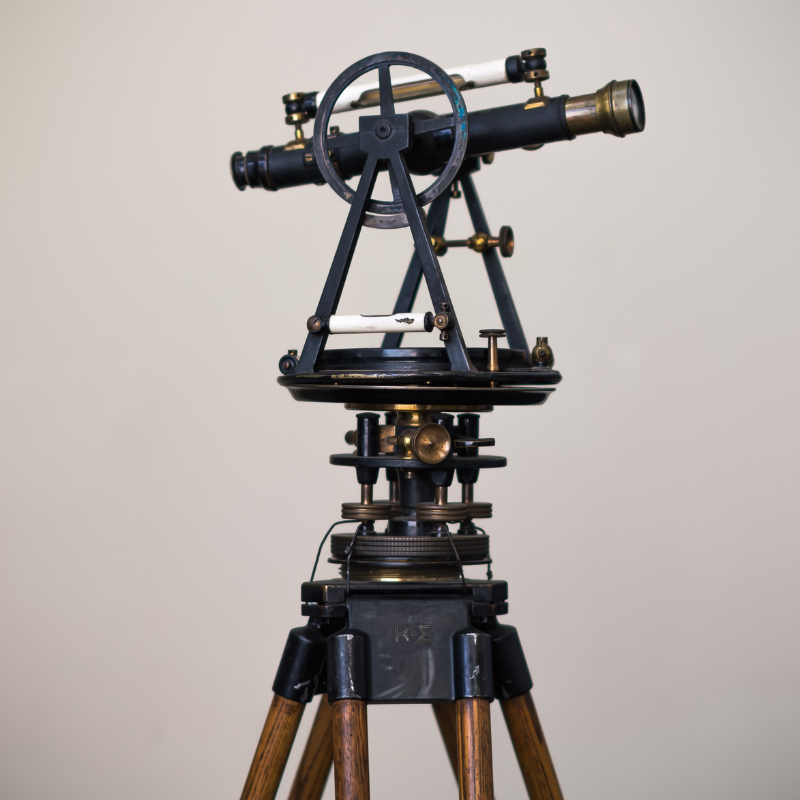
Setting up and using these best telescopes can initially seem daunting, but with some knowledge and tools, you’ll be stargazing in no time.
Familiarize yourself with the telescope’s manual and assembly instructions
Telescope’s manual and assembly instructions will provide you with important information about the telescope, such as how to assemble it, how to use it, and what accessories you might need.
Also, have the manual on hand while setting up and using the telescope, as it will be a valuable reference when you have questions or need help troubleshooting.
Make sure to have a sturdy and level surface
A sturdy surface ensures the telescope is stable and won’t tip over during use.
A level surface is also essential to ensure the telescope is aligned correctly and in the right direction. A good option for a sturdy and level surface is a telescope pier or a sturdy table.
Align the mount as its manual requires
Follow the alignment procedure for your mount. A manual altazimuth mount does not require polar alignment; a manual equatorial mount does. Computerized mounts have their own observing alignment procedures.
Level and set up the mount according to its manual before beginning the appropriate alignment.
For an equatorial mount, follow the manual for your hemisphere and latitude. Polaris is a northern-hemisphere reference; pointing an optical tube at it is not a complete polar-alignment procedure.
Check optical alignment when appropriate
Check collimation when the telescope design and image quality call for it, following the manufacturer’s manual. Reflectors may need adjustment; most refractors do not require routine user collimation. Never turn unfamiliar adjustment screws without model-specific instructions.
Check collimation when the telescope design and image quality call for it, following the manufacturer’s manual. Reflectors may need adjustment; most refractors do not require routine user collimation. Never turn unfamiliar adjustment screws without model-specific instructions.
Make sure to adjust focus properly
Focusing is adjusting the telescope’s focuser to sharpen the image of the celestial object you are observing.
Start by focusing on a bright object such as the Moon, a planet, or a bright star to ensure you know how to focus.
Balance the telescope correctly
Balancing a telescope refers to adjusting the weight distribution of the telescope and mount so that the telescope moves smoothly and tracks objects accurately.
Observe a bright object such as the Moon, a planet, or a bright star to check the tracking quality. Then make any necessary adjustments to the counterweights or the telescope tube position.
Take precautions to protect your eyes
One of the most important precautions is never to look directly at the sun through the telescope. Even a glance can cause permanent eye damage. Instead, use a solar filter or a sun-specific telescope to observe the sun safely.
For ordinary night observing, select magnification for the target and atmospheric conditions. A low-power eyepiece gives a wider view; it is not eye protection for viewing the Sun.
Choose an observing location away from sources of light pollution
Light pollution refers to the excessive or misdirected artificial light that interferes with the natural darkness of the night sky.
To choose an observing location away from sources of light pollution, it is important to find a spot far away from street lights, buildings, and other sources of artificial light. A good option is to find a spot in a rural area or outside the city.
Observe during clear and stable weather
Observing during good weather conditions can significantly enhance the observing experience and provide the best chance of seeing various celestial objects.
Stable weather conditions are also ideal for observation. Unstable weather conditions such as high winds, rain, or snow can affect the telescope’s stability and make it challenging to observe.
Use star maps, apps, or software to locate celestial objects in the sky
Star maps are graphical representations of the night sky that show the positions of stars, constellations, and other celestial objects. They can be in the form of a physical book, poster, or digital format.
Star maps are a great way to learn constellations and help you find and identify celestial objects you want to observe.
Read also: Are GoTo Telescopes Worth It?
Use the telescope’s controls to center the object in the field of view
Centering an object in the field of view is crucial for the best observation and most detailed view of the object.
It involves using the telescope’s azimuth and altitude controls to move it in the horizontal and vertical planes.
Use a variety of eyepieces and accessories to get the best view
Eyepieces are essential to the telescope and can significantly affect the overall observing experience. Each eyepiece has a different magnification and field of view. By using a variety of eyepieces, you can get a different perspective of the same object and see more details and features.
Takeaway – Sky-Watching Made Easy
When choosing a telescope for home use, it’s essential to consider factors such as aperture size, focal length, mount type, and ease of use.
By selecting a well-suited telescope to your needs and budget and maintaining it properly, you can ensure that you get the most out of your stargazing experience.
Following the tips, you can choose the perfect telescope for home use!