Quick verdict: the Sky-Watcher Skymax 127 is a compact Maksutov made for lunar, planetary, double-star, and balcony observing. It is not a wide-field deep-sky sweeper, but it is one of the easiest small scopes to store and transport.
Should you buy the Skymax 127?
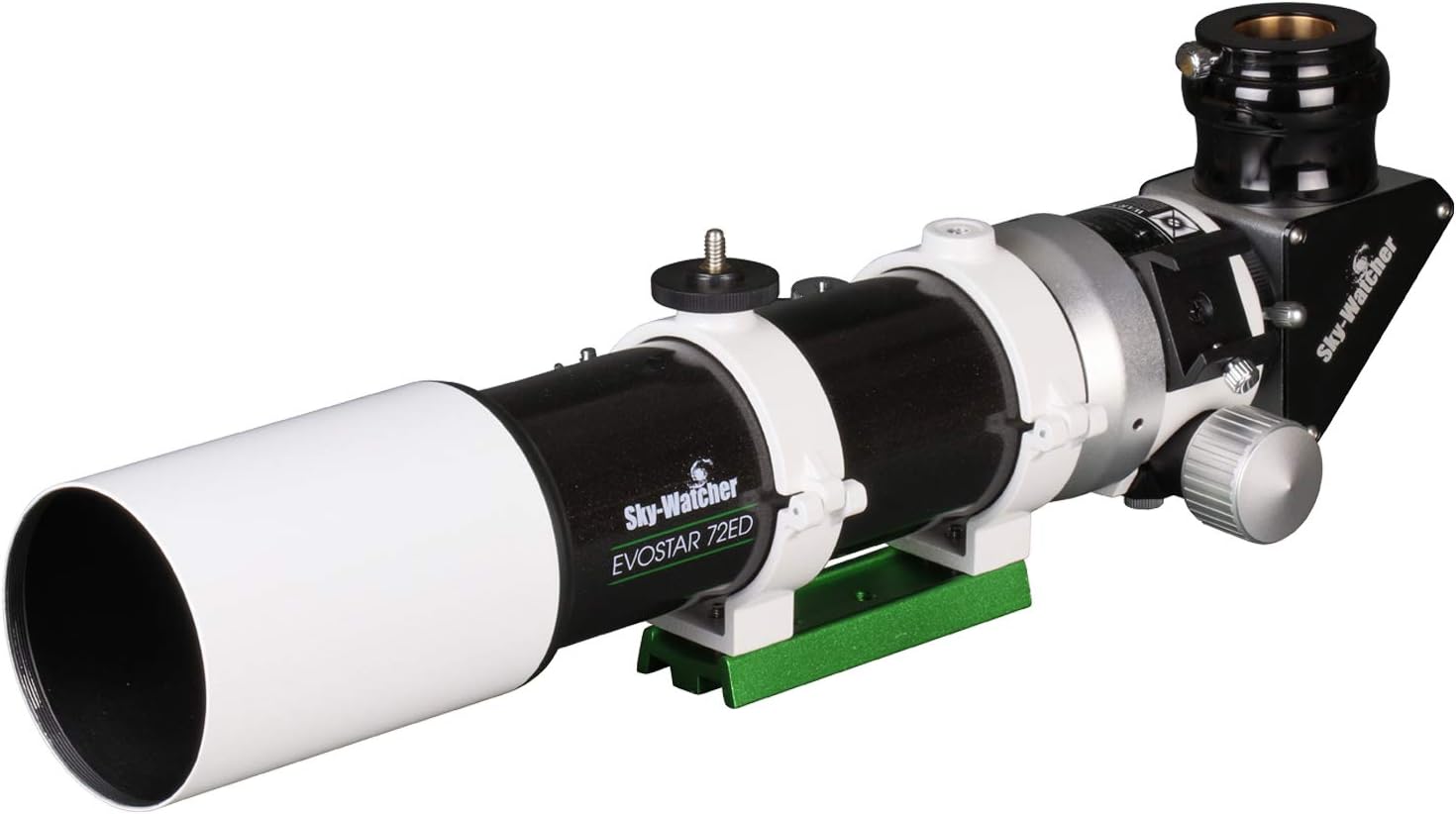
Sky-Watcher Skymax 127
The compact 127mm Mak reviewed here. Best for sharp Moon, Jupiter, Saturn, and grab-and-go planetary viewing.
Check Price on Amazon →The Sky-Watcher Skymax 127 is a 127mm Maksutov-Cassegrain telescope with a 1540mm focal length that excels at lunar and planetary observation in a tube small enough to fit in a backpack. It delivers sharp, high-contrast views of Saturn's rings, Jupiter's cloud bands, and lunar craters at magnifications up to 200–250×, all for under $350. The tradeoff: a narrow field of view that limits deep-sky performance and an alt-azimuth mount that restricts long-exposure astrophotography.
If you want the best portable planetary scope without spending four figures, the Skymax 127 belongs on your shortlist. Here's what our hands-on testing revealed.
Sky-Watcher Skymax 127 at a Glance
| Specification | Details |
|---|---|
| Optical design | Maksutov-Cassegrain |
| Aperture | 127mm (5 inches) |
| Focal length | 1540mm |
| Focal ratio | f/12.1 |
| Mount | Alt-azimuth |
| Limiting magnitude | ~13 |
| Max useful magnification | ~250× (practical sweet spot: 150–200×) |
| Tube weight | ~3.5 kg (7.7 lbs) |
| Dovetail | Vixen-style + ¼-20 tripod thread |
| Mirror reflectivity | 94% (aluminum + quartz overcoat) |
The Maksutov-Cassegrain design folds a long focal length into a short, sealed tube by bouncing light between a primary mirror, a convex secondary mirror, and a thick meniscus corrector plate at the front. The result is a telescope that performs like a much longer instrument while fitting in a carry-on bag.
What Can You Actually See with the Skymax 127?
This is the question that matters most, and the answer depends heavily on what you're pointing at. The Skymax 127's 5-inch aperture and slow f/12.1 focal ratio make it a specialist: exceptional on bright, compact targets, limited on faint, extended ones.
Moon
The Moon is where this telescope truly shines. At 150–200× magnification, crater walls cast sharp shadows, the Apennine mountain range reveals individual peaks, and rilles (narrow channels) become visible along the edges of maria. The high contrast of the Mak-Cass design means the terminator line - the boundary between the sunlit and dark portions - is rendered with striking clarity.
A Moon filter (around $15) is worth adding because the Skymax 127 gathers enough light to make full-Moon viewing uncomfortably bright.
Planets
This is the Skymax 127's primary strength. The long 1540mm focal length delivers native high magnification, and the sealed tube eliminates internal air currents that degrade planetary detail in open-tube Newtonians.
Jupiter: Cloud belts clearly separated, the Great Red Spot visible during good seeing, and all four Galilean moons resolved as tiny discs rather than points.
Saturn: Cassini Division in the rings visible on nights with steady atmosphere, the shadow of the globe on the rings, and Titan easily spotted.
Mars: During opposition, dark surface markings (Syrtis Major) and the polar ice cap visible at 200×+.
For a deeper look at planetary observation techniques, our Stargazing 101 guide walks through targeting planets at different times of year.
Deep-Sky Objects
Here's where expectations need managing. The Skymax 127 can show you bright deep-sky targets - the Orion Nebula (M42), the Andromeda Galaxy (M31) as a fuzzy oval, the Hercules Cluster (M13) as a grainy ball of light, and brighter planetary nebulae like the Ring Nebula (M57).
However, the narrow field of view (roughly 1° maximum with a wide-angle eyepiece) and the f/12.1 focal ratio mean this is not the telescope for sweeping Milky Way star fields or framing large objects like the Pleiades in a single view. If deep-sky is your primary interest, a Dobsonian reflector will give you far more aperture per dollar and a wider field of view.
Is the Skymax 127 Good for Beginners?
Yes, with one caveat. The Skymax 127 is one of the most beginner-friendly telescope designs available. It requires zero collimation (mirror alignment), the sealed tube means zero maintenance, and the alt-azimuth mount moves intuitively - up/down and left/right, just like moving a camera on a tripod. There's no learning curve for pointing it at something.
The caveat: the narrow field of view makes finding objects harder than with a wide-field telescope. If you're new to stargazing, you'll benefit from learning to use the included 6×30 finderscope carefully, or upgrading to a red dot finder for faster target acquisition.
Compared to a beginner refractor like the Celestron AstroMaster 70AZ, the Skymax 127 costs more but delivers dramatically sharper views and much higher useful magnification. It's an excellent "first serious telescope" for someone committed to the hobby.
For a full comparison of entry-level options, see our best telescopes for beginners ranking.
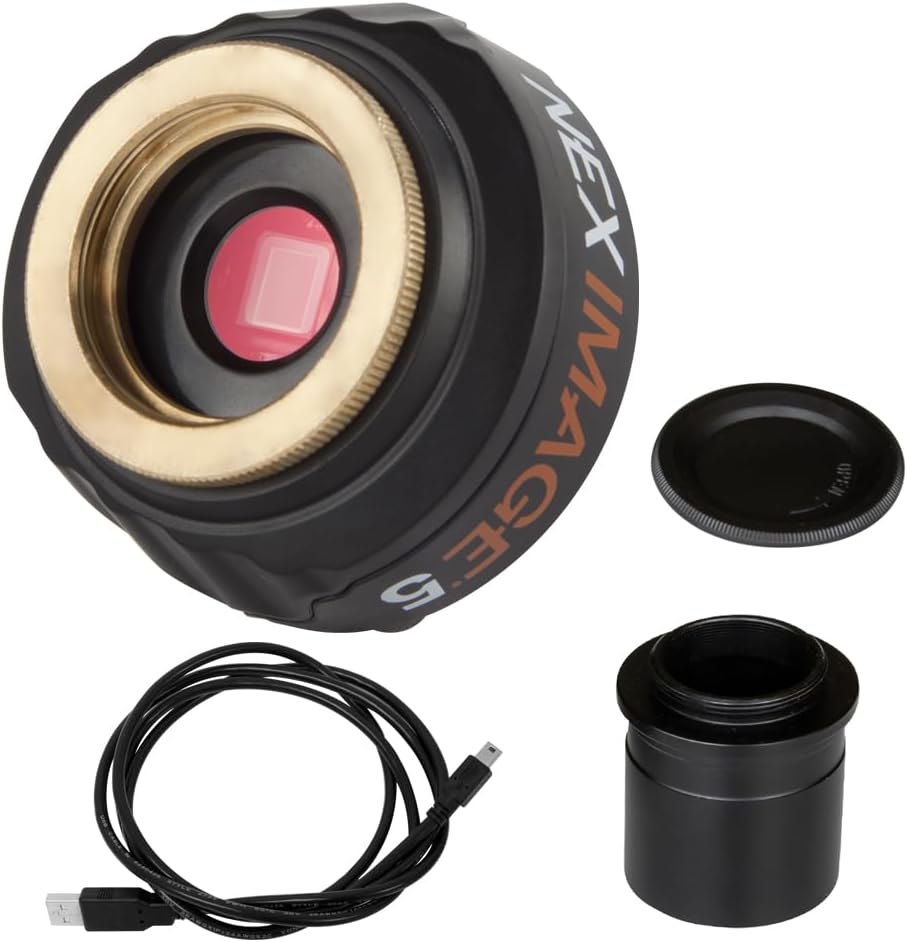
Celestron NexImage 5
Entry planetary camera for recording short videos of Jupiter, Saturn, and lunar detail for stacking.
Check Price on Amazon →Is the Skymax 127 Good for Astrophotography?
For lunar and planetary imaging, yes. For deep-sky astrophotography, no.
The Skymax 127's long focal length produces large, detailed images of the Moon and planets when paired with a planetary camera like the Celestron NexImage. Planetary imaging uses short exposures (milliseconds), so the alt-azimuth mount's inability to track Earth's rotation doesn't matter - you capture thousands of frames in a short video and stack the sharpest ones in software.
Deep-sky astrophotography is a different story. The alt-azimuth mount introduces field rotation during long exposures, which causes stars at the edges of your frame to trail in curved arcs. The slow f/12.1 focal ratio also means very long exposure times to capture faint nebulae and galaxies. If deep-sky imaging is your goal, you need an equatorial mount and ideally a faster optical system.
That said, the Skymax 127 optical tube can be removed from the included alt-az mount and placed on an equatorial mount (it uses a standard Vixen dovetail), which opens up more serious planetary imaging possibilities.
Related: 15 Best Telescopes for Astrophotography
Pros: Where the Skymax 127 Excels
Planetary and Lunar Performance
The 1540mm focal length at f/12.1 is purpose-built for high-magnification observation. The Mak-Cass design produces images with virtually zero chromatic aberration (color fringing) - a common issue with cheaper refractor telescopes. The 94% reflectivity mirror coatings (aluminum with a quartz overcoat on borosilicate glass) ensure maximum light throughput and sharp contrast.
Portability
The optical tube weighs approximately 3.5 kg and measures just 340mm long. For comparison, a Newtonian reflector with the same focal length would be over a meter long. The compact form factor makes the Skymax 127 ideal for travel, apartment balcony observing, or nights when you don't want to haul heavy equipment into the field.
Zero Maintenance
The sealed tube means dust can't settle on the mirrors. The mirrors don't shift during transport, so collimation is never needed. You take it out of the bag, point it at the sky, and observe. This is a meaningful advantage over open-tube Newtonian designs that require periodic mirror alignment.
Mount Versatility
The included Vixen-style dovetail is the most common mounting standard in amateur astronomy, so the tube fits any aftermarket mount. The ¼-20 tripod thread under the dovetail bar means you can also mount it on a sturdy photo tripod for quick grab-and-go sessions.
Cons: Where the Skymax 127 Falls Short
Narrow Field of View
At f/12.1, the maximum true field of view is approximately 1° with a wide-angle 2-inch eyepiece. For context, the Pleiades cluster spans about 1.8° across the sky - you won't fit it in a single view. Large nebulae, open clusters, and galaxy groups are better served by a faster, shorter focal length instrument.
Cool-Down Time
The thick corrector plate and sealed tube trap heat. When you take the telescope from a warm house into cold air, the optics need 30–45 minutes to reach thermal equilibrium. Until they do, views will appear soft and shimmery. Plan accordingly - set the scope outside well before you start observing.
Dew Formation on the Corrector Plate
The front corrector plate radiates heat toward the open sky and collects dew on humid nights, fogging the optics. A dew shield (essentially a tube extension over the front) slows this process significantly. You can build one yourself for a few dollars or buy a commercial one. On particularly humid nights, a dew heater strip may be necessary.
Alt-Azimuth Mount Limits Astrophotography
As discussed above, the included mount doesn't track celestial objects. For visual use, this is fine - you nudge the scope to follow targets. For long-exposure imaging, it's a dealbreaker. If astrophotography is a priority from day one, consider the Skymax 127 optical tube on a motorized equatorial mount, or look at a GoTo mount system like the Celestron NexStar 4SE, which pairs a similar Maksutov-Cassegrain optic with computerized tracking.
Accessories Need Upgrading
The included 28mm 2-inch eyepiece is serviceable but not exceptional. For planetary viewing at higher magnifications, you'll want to add a shorter focal length eyepiece in the 6–10mm range. The Celestron X-Cel LX series and the Goldline 66° eyepieces (around $25–35 each) are popular upgrades. See our eyepiece sizing guide for recommendations matched to this telescope's focal length.
Skymax 127 vs. Alternatives: How It Compares
Choosing a telescope means choosing tradeoffs. Here's how the Skymax 127 stacks up against popular alternatives in the same price range.
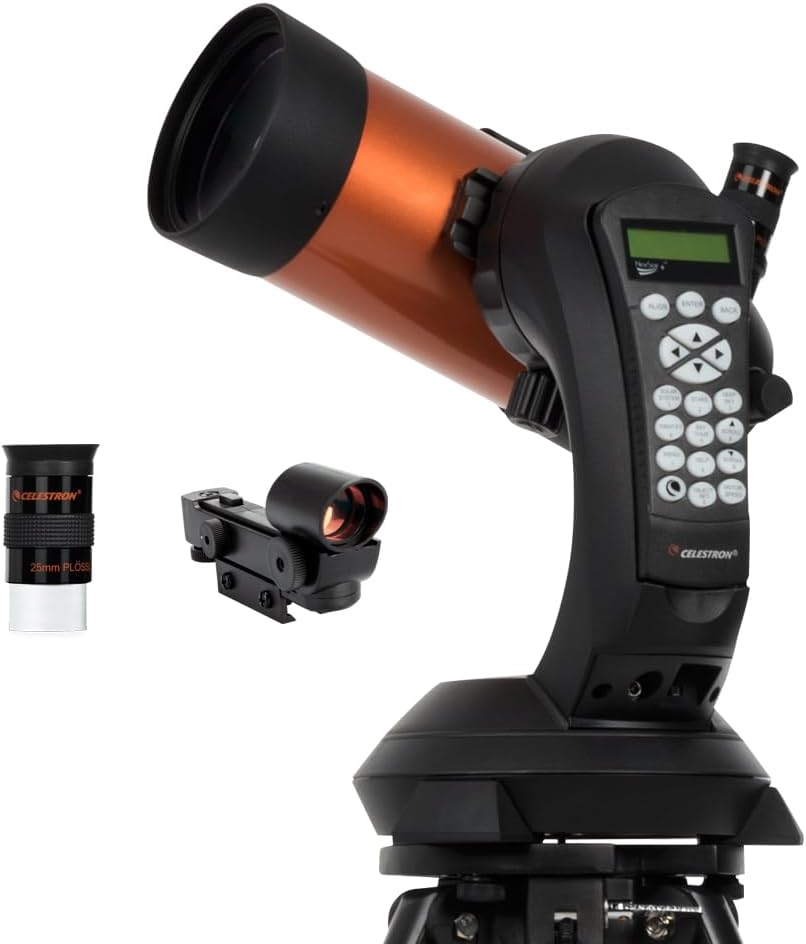
Celestron NexStar 4SE
Smaller aperture than the Skymax 127, but adds computerized pointing and tracking in a compact package.
Compare Price on Amazon →Skymax 127 vs. Celestron NexStar 4SE
The NexStar 4SE is also a Maksutov-Cassegrain, but with a smaller 102mm aperture and a computerized GoTo mount. Choose the Skymax 127 if you want better image quality (the larger aperture resolves more detail) and don't mind finding objects manually. Choose the NexStar 4SE if automated tracking and a built-in object database matter more than raw optical performance.
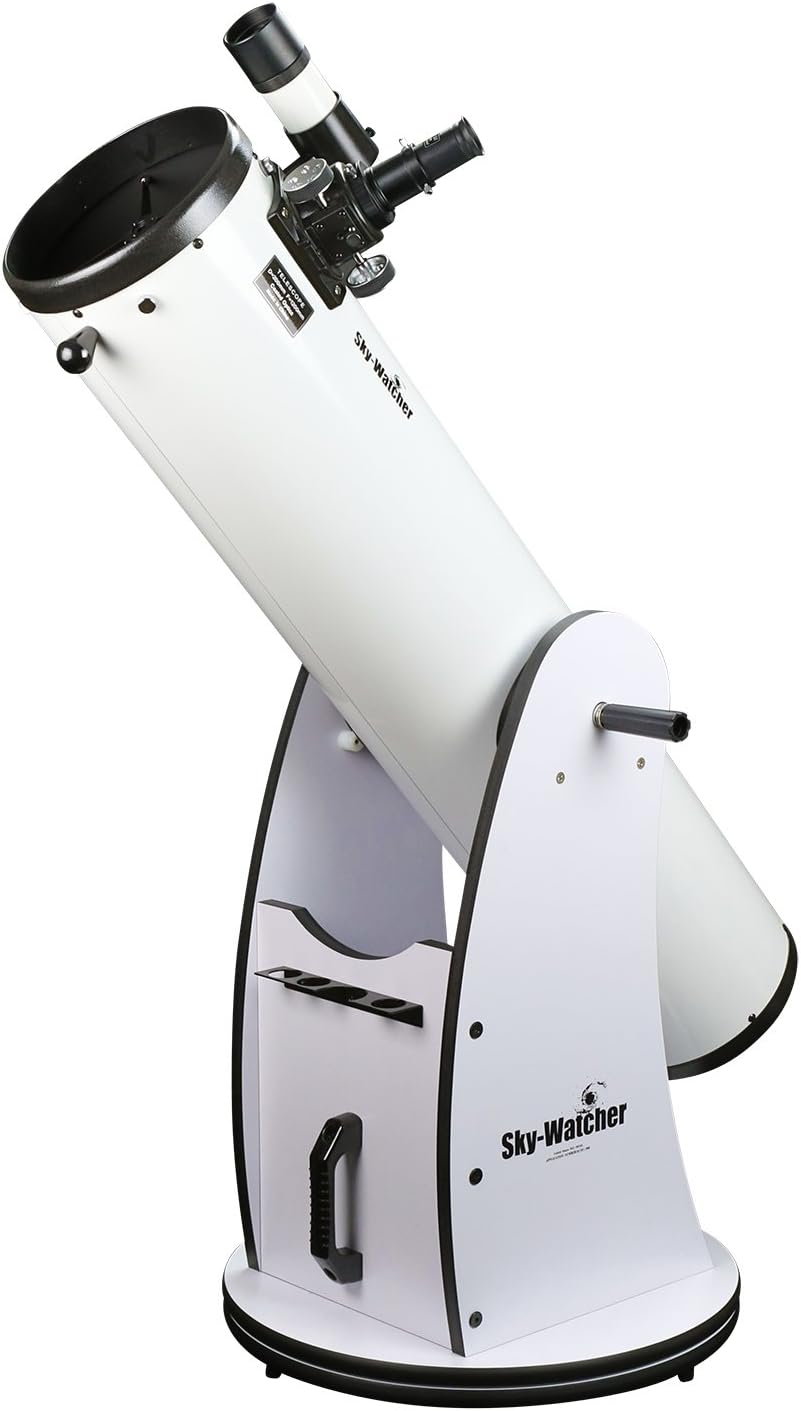
Sky-Watcher Classic 200P 8" Dob
Much more aperture for nebulae, galaxies, and clusters if portability is less important.
Buy at High Point →Skymax 127 vs. Sky-Watcher 200P (8" Dobsonian)
The 200P Dobsonian has a 200mm aperture - 57% more light-gathering area. It destroys the Skymax 127 on deep-sky objects and delivers slightly more planetary detail on nights with good seeing. But it weighs over 10 kg, the tube is a meter long, and it requires periodic collimation. Choose the Skymax 127 for portability and grab-and-go convenience. Choose the 200P if you observe from a fixed location and prioritize aperture above all else.
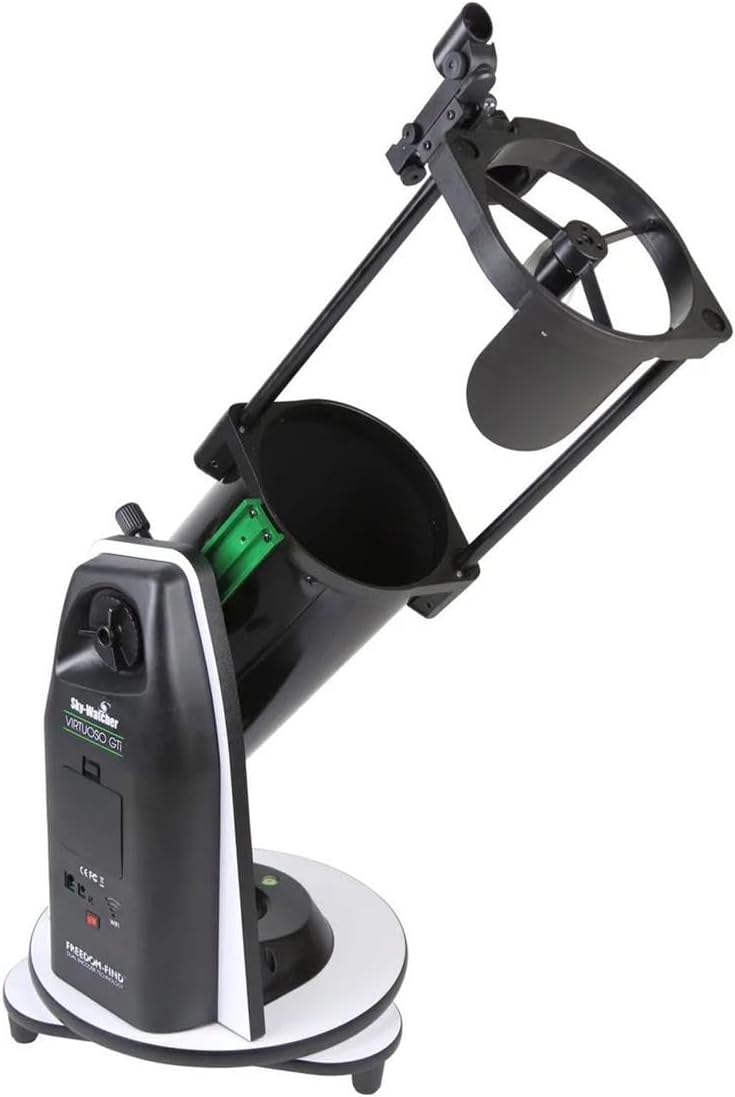
Sky-Watcher Virtuoso GTi 150P
Wider field and more deep-sky flexibility than the Skymax, but needs collimation and gives less native magnification.
View tabletop Dob →Skymax 127 vs. Sky-Watcher Heritage 130P
The Heritage 130P is a tabletop Newtonian with 130mm aperture at f/5 - a much wider field of view for deep-sky sweeping. But its shorter focal length means less magnification headroom for planets, and the open tube requires collimation. Choose the Skymax 127 if planets are your primary target. Choose the Heritage 130P if you want wide-field deep-sky views on a budget.
For the full Sky-Watcher lineup, see our complete Sky-Watcher telescope breakdown.
What's in the Box
The Skymax 127 ships with everything you need for a first observing session:
28mm 2-inch eyepiece - provides ~55× magnification (1540 ÷ 28 = 55×). A good starting magnification for locating objects and scanning the Moon. Not the sharpest at the edges, but functional for getting started.
2-inch 90-degree star diagonal - bends the light path 90° so you're looking down into the eyepiece rather than craning your neck upward. Essential for comfortable viewing, especially when pointing at objects high in the sky.
6×30 straight-through finderscope - a small auxiliary scope with 6× magnification and a 30mm lens. Helps you aim the main telescope at your target. The straight-through design can be awkward when pointing near the zenith - many users upgrade to a right-angle finder or red dot finder.
Vixen-style dovetail bar - the standard mounting plate. Compatible with virtually all aftermarket telescope mounts.
Key Features Explained
Maksutov-Cassegrain Optical Design
The Mak-Cass design uses a thick meniscus corrector plate at the front of the tube, a concave primary mirror at the back, and a small convex secondary mirror (an aluminized spot on the corrector plate itself). Light enters through the corrector, bounces off the primary mirror, reflects off the secondary back through a hole in the primary, and reaches the eyepiece at the rear.
This folded optical path achieves a 1540mm focal length in a tube only 340mm long. The corrector plate also seals the tube, protecting the mirrors from dust and eliminating the internal air currents that can degrade images in open-tube designs.
For a detailed comparison of how this design differs from other compound telescope types, read our guide on Schmidt-Cassegrain vs. Maksutov-Cassegrain.
94% Reflectivity Mirror Coatings
The primary mirror is made from borosilicate glass (the same thermally stable material used in laboratory glassware), coated with aluminum and protected by a quartz overcoat. This achieves 94% reflectivity - meaning only 6% of the light hitting the mirror is lost. Higher reflectivity translates directly to brighter, more detailed views.
Fully Baffled Tube
Internal baffles (a series of light-blocking rings inside the tube) prevent off-axis light from reaching the eyepiece. This is particularly important when observing bright targets like the Moon or Jupiter near the meridian, where stray light from nearby bright stars or the Moon itself could otherwise wash out contrast.
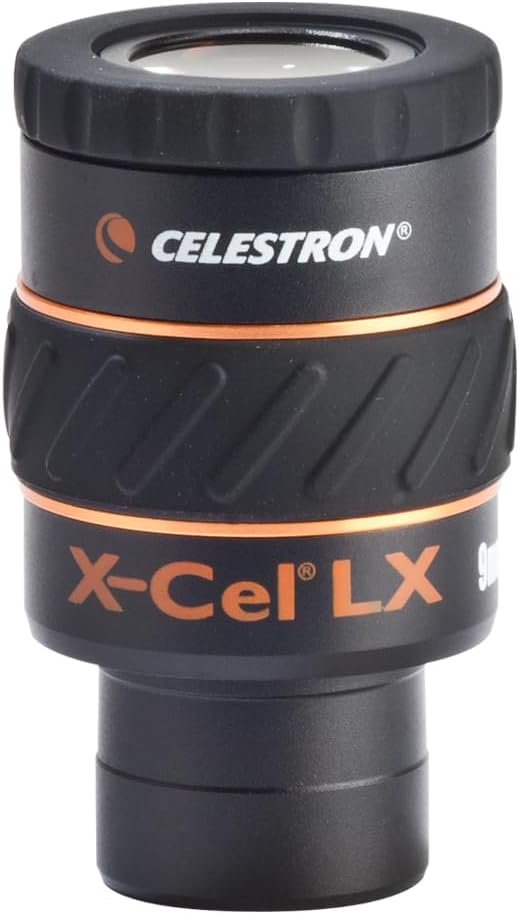
Celestron X-Cel LX 9mm
A practical high-power eyepiece for the Skymax 127, giving about 171× with the 1540mm focal length.
Check eyepiece price →Frequently Asked Questions
What magnification should I use with the Skymax 127?
Start at 55× with the included 28mm eyepiece for finding targets and scanning the Moon. For planetary detail, aim for 150–200× using a 7.5–10mm eyepiece. The theoretical maximum is ~250× (2× the aperture in mm), but atmospheric seeing rarely supports magnifications above 200× for sustained sharp viewing. On exceptional nights with rock-steady air, you can push past 250× and still hold detail.
Can the Skymax 127 see galaxies and nebulae?
Yes, but with limitations. You can observe bright Messier objects like the Orion Nebula (M42), the Andromeda Galaxy (M31), globular clusters like M13, and planetary nebulae like the Ring Nebula (M57). However, extended objects appear small in the narrow field, and faint galaxies and nebulae may be difficult to detect from light-polluted locations. A Dobsonian reflector is a better choice if deep-sky observation is your primary goal.
Does the Skymax 127 need collimation?
No. The Maksutov-Cassegrain design holds its optical alignment indefinitely under normal use. Unlike Newtonian reflectors, you'll never need to realign the mirrors. This is one of the biggest advantages of the sealed Mak-Cass design for beginners and travelers.
What accessories should I buy first?
Three upgrades make the biggest difference: (1) a 6–10mm wide-angle eyepiece for planetary magnification (the Celestron X-Cel LX or budget Goldline 66° are popular choices), (2) a dew shield to prevent fogging on the corrector plate, and (3) a Moon filter to reduce glare during lunar observation. Total cost for all three: approximately $80–120.
Can I attach a camera to the Skymax 127?
Yes. The 2-inch focuser accepts T-ring adapters for DSLR and mirrorless cameras (you need a T-ring specific to your camera brand plus a 2-inch T-adapter). For planetary imaging, a dedicated planetary camera connected to a laptop produces better results than a DSLR because it captures high-frame-rate video for stacking.
Does the Skymax 127 come with a warranty?
Sky-Watcher provides a two-year manufacturer's warranty covering defects in materials and workmanship. Warranty terms may vary by region, so check with your retailer.
Can I use the Skymax 127 on a photo tripod?
Yes. Every Sky-Watcher Maksutov includes a ¼-20 tripod thread beneath the Vixen dovetail bar, allowing direct mounting on any photographic tripod with a standard ¼-inch screw. A sturdy fluid-head tripod is recommended - lightweight travel tripods may introduce vibration at high magnifications.
How does the Skymax 127 compare to Schmidt-Cassegrain telescopes?
Both are compound (catadioptric) designs that fold long focal lengths into short tubes. The key difference is the corrector: Maksutovs use a thick meniscus lens, SCTs use a thinner aspheric plate. In practice, Maksutovs deliver slightly sharper on-axis images (better for planets), while SCTs offer a wider corrected field (better for astrophotography). For a detailed breakdown, see our Schmidt-Cassegrain vs. Maksutov-Cassegrain comparison.
Verdict: Is the Sky-Watcher Skymax 127 Worth It?
The Skymax 127 is the best compact planetary telescope under $350. No other scope in this price range matches its combination of 127mm aperture, 1540mm focal length, zero-maintenance sealed optics, and backpack-portable size.
Buy the Skymax 127 if you:
- Want the sharpest possible views of the Moon, Jupiter, Saturn, and Mars in a portable package
- Value grab-and-go convenience - zero setup time, zero collimation, zero maintenance
- Live in an apartment or travel frequently and need a scope that fits in a small space
- Are a beginner who wants a telescope they won't outgrow quickly
Consider something else if you:
- Primarily want to observe faint galaxies and nebulae - get a Dobsonian with more aperture
- Want computerized GoTo tracking - look at the Celestron NexStar 4SE or NexStar 5SE
- Plan to do deep-sky astrophotography - you need an equatorial mount and a faster optical system
The Skymax 127 does one thing exceptionally well: it puts razor-sharp planetary and lunar detail in front of your eyes, anywhere you can carry it. For the astronomer who values quality over quantity of targets, it's an outstanding investment.
Explore more Sky-Watcher reviews:
- Sky-Watcher Telescopes: Complete Model Breakdown
- Sky-Watcher Dobsonian 8-Inch Review
- Sky-Watcher 200P Review
- Maksutov-Newtonian Telescopes: In-Depth Guide
New to stargazing? Our Stargazing 101 guide covers everything from your first night out to building an observation log.