- Best use: visual astronomy, especially galaxies, nebulae, clusters, the Moon, and planets.
- Not best for: deep-sky astrophotography, apartment-only storage, or hiking to observing sites.
- Practical magnification: 150-250× on most good nights, despite the theoretical 400× ceiling.
- First upgrades: laser collimator, wide 2-inch low-power eyepiece, and Telrad or Rigel finder.
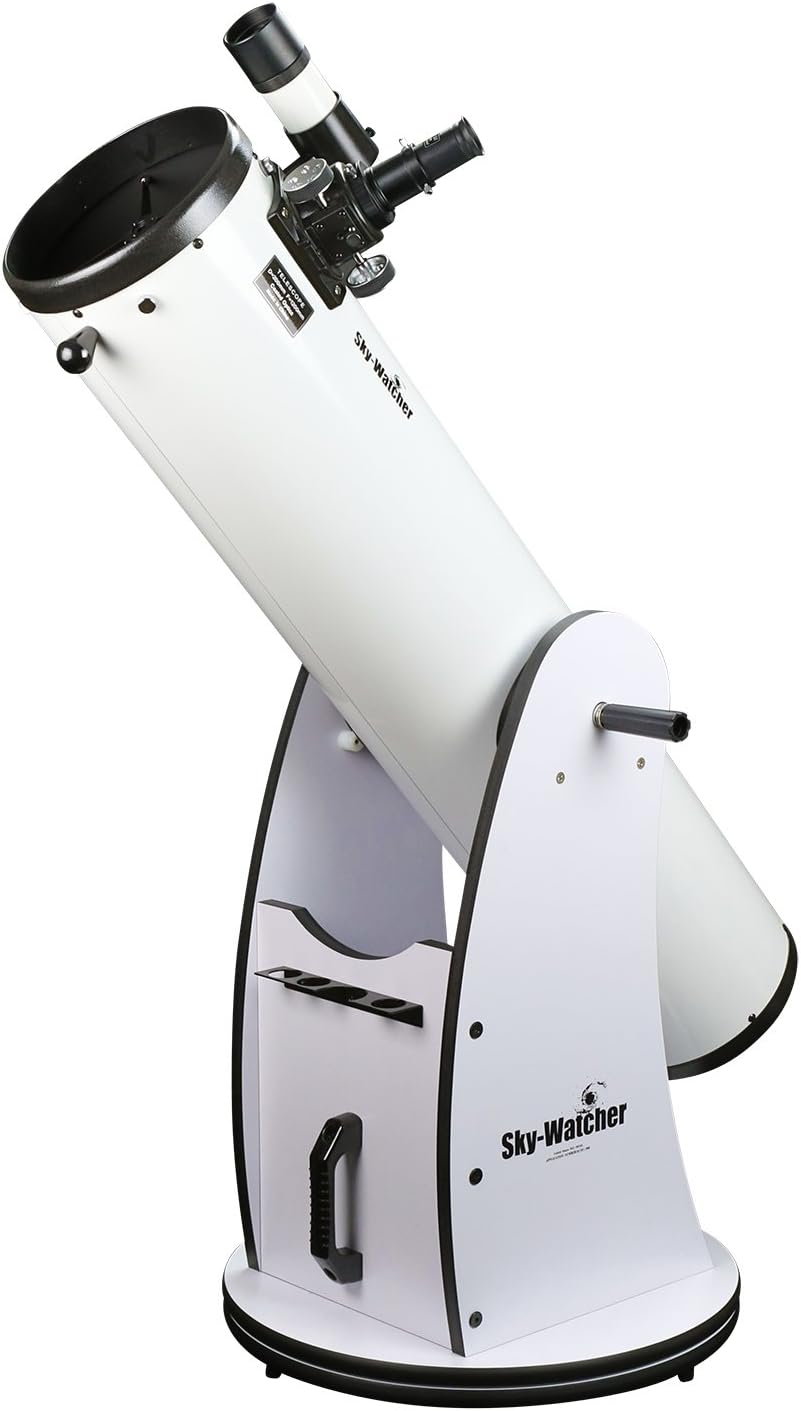
The Sky-Watcher 200P is an 8-inch (200mm) Dobsonian reflector with a 1200mm focal length that delivers more light-gathering power per dollar than almost any telescope on the market. At $400–500, it shows spiral arms in galaxies, structure in nebulae, individual stars in globular clusters, and razor-sharp detail on the Moon and planets - views that require spending two to three times as much with other telescope designs.
It's the single most recommended telescope on every astronomy forum, subreddit, and buyer's guide for one reason: nothing else in this price range comes close to what 8 inches of aperture can show you.
But "most recommended" isn't the same as "right for everyone." The 200P is big, heavy, demands periodic collimation, can't track objects automatically, and is poorly suited for deep-sky astrophotography. This review covers exactly what the scope delivers, where it falls short, and who should buy something else.
Sky-Watcher 200P at a Glance
| Specification | Details |
|---|---|
| Optical design | Parabolic Newtonian reflector |
| Aperture | 200mm (8 inches) |
| Focal length | 1200mm |
| Focal ratio | f/5.9 |
| Mount | Dobsonian (alt-azimuth rocker box) |
| Limiting magnitude | ~14.0 |
| Resolving power | 0.57 arc seconds |
| Max useful magnification | ~400× (practical sweet spot: 150–250×) |
| Focuser | 2-inch Crayford-style with 1.25-inch adapter |
| Tube dimensions | ~235mm diameter × 1120mm long |
| Tube weight | ~10 kg (22 lbs) |
| Total weight (with mount) | ~20 kg (44 lbs) |
| Mirror reflectivity | 94% (aluminum + quartz overcoat) |
The 200P uses a parabolic Newtonian reflector design - the most cost-effective way to get a large aperture. Light enters the open end of the tube, hits a parabolic primary mirror at the back, bounces up to a small flat secondary mirror angled at 45°, and exits through the eyepiece on the side of the tube. The parabolic shape (as opposed to spherical) eliminates spherical aberration, producing sharp star images across the field.
The Dobsonian mount is a simple alt-azimuth rocker box - the telescope swivels left/right and tilts up/down. No electronics, no batteries, no alignment procedures. You push it, it moves. Sky-Watcher's patented tension control handle lets you adjust the friction so the tube holds its position at any angle without drifting.
What Can You Actually See with the 200P?
The 200P's 200mm aperture collects 2.5× more light than a 5-inch scope and 4× more than a typical 4-inch beginner telescope. In practical terms, this is the threshold where deep-sky observing transitions from "I think I see something" to "I can see structure." Here's what that looks like target by target.
Moon
The Moon through the 200P is breathtaking - and it's not an exaggeration. At 150–250×, you'll see individual boulders along crater walls, the collapse terraces inside Copernicus, tiny craterlets peppering the floors of larger impacts, and the delicate wrinkle ridges across the maria. The view is bright enough that a Moon filter is essential to avoid eye strain. If you're new to all of this, our Stargazing 101 guide walks through getting started with lunar observation.
Planets
Eight inches of aperture puts the 200P firmly in "serious planetary telescope" territory. The f/5.9 focal ratio is faster than dedicated planetary scopes (which tend to be f/10–f/15), but the raw aperture more than compensates.
Jupiter: Four to five cloud belts routinely visible, the Great Red Spot clearly defined during good seeing, festoons (dark wisps bridging belts and zones) visible on the best nights, and all four Galilean moons showing tiny discs at 250×+.
Saturn: Cassini Division in the rings sharp and clean, the shadow of the globe on the rings, cloud banding on the disc, and Titan clearly visible with several fainter moons (Rhea, Dione, Tethys) detectable.
Mars: During opposition, dark surface features (Syrtis Major, Mare Erythraeum) and the polar ice cap clearly visible at 200–300×.
For tips on getting the sharpest planetary views, see our guide on how to use a telescope - atmospheric seeing and proper focusing technique make as much difference as the optics themselves.
Deep-Sky Objects (Galaxies, Nebulae, Clusters)
This is where the 200P separates itself from smaller scopes. Eight inches of aperture crosses the threshold for seeing genuine structure in deep-sky objects - not just smudges.
Galaxies: M31 (Andromeda) shows its dust lanes. M51 (Whirlpool Galaxy) reveals spiral arm structure under dark skies. M81/M82 pair shows M82's irregular, mottled texture. Dozens of Messier galaxies are visible as distinct glows, and many NGC galaxies come within reach.
Nebulae: M42 (Orion Nebula) is stunning - wing structure, color hints in the trapezium region, dark lanes cutting through the gas. The Veil Nebula complex is visible with an OIII filter. M27 (Dumbbell Nebula) shows its hourglass shape clearly. M57 (Ring Nebula) is a clean, distinct ring.
Star clusters: Globular clusters like M13 (Hercules Cluster) resolve into individual stars to the core at 200×. Open clusters like the Double Cluster, M35, and M37 are stunning wide-field targets with the 25mm eyepiece.
The f/5.9 focal ratio helps here - it's faster than Maksutov-Cassegrain or Schmidt-Cassegrain designs, which means wider true fields of view and shorter effective focal lengths with each eyepiece, making it easier to frame larger objects.
Is the 200P Good for Beginners?
Yes - the 8-inch Dobsonian is the single most recommended first telescope by experienced astronomers, and for good reason. The Dobsonian mount is the most intuitive mount type: you push the scope to where you want it, and it stays there. There are no alignment procedures, no batteries, no software, no counterweights to balance. Setup takes under five minutes, and most of that is just lifting the tube onto the rocker box.
That said, the 200P demands more from a beginner than a small refractor on a tripod:
Collimation is required. The mirrors will shift during transport and temperature changes. You'll need to check and adjust alignment every few sessions using a collimation cap or laser collimator (~$30). The process takes 5–10 minutes once you've learned it, but it's a skill that can feel intimidating at first. It's a one-time learning curve - after a few sessions, it becomes second nature.
It's heavy. The tube weighs around 10 kg and the rocker box adds another 10 kg. You need to be able to carry each piece separately from storage to your observing site. This isn't a problem if you observe from a backyard or patio, but it rules out the 200P for anyone who needs to hike to a dark site.
Finding objects is manual. There's no GoTo computer. You find objects using a star chart, a planetarium app on your phone, or the old-fashioned method of star-hopping from known constellations. Many experienced astronomers prefer this - it teaches you the sky - but it adds a learning curve.
For a broader view of what's available at the beginner level, see our best telescopes for beginners ranking.
Is the 200P Good for Astrophotography?
For quick lunar and planetary snapshots, yes. For deep-sky astrophotography, no.
The Dobsonian's alt-azimuth mount doesn't track the rotation of the sky. Objects drift through your field of view, and at 200× they exit the eyepiece in about 30 seconds. This limits you to:
Lunar photography: Hold your phone to the eyepiece (or use a phone adapter) and shoot a quick photo. The Moon is bright enough that short exposures work fine. Results can be surprisingly good.
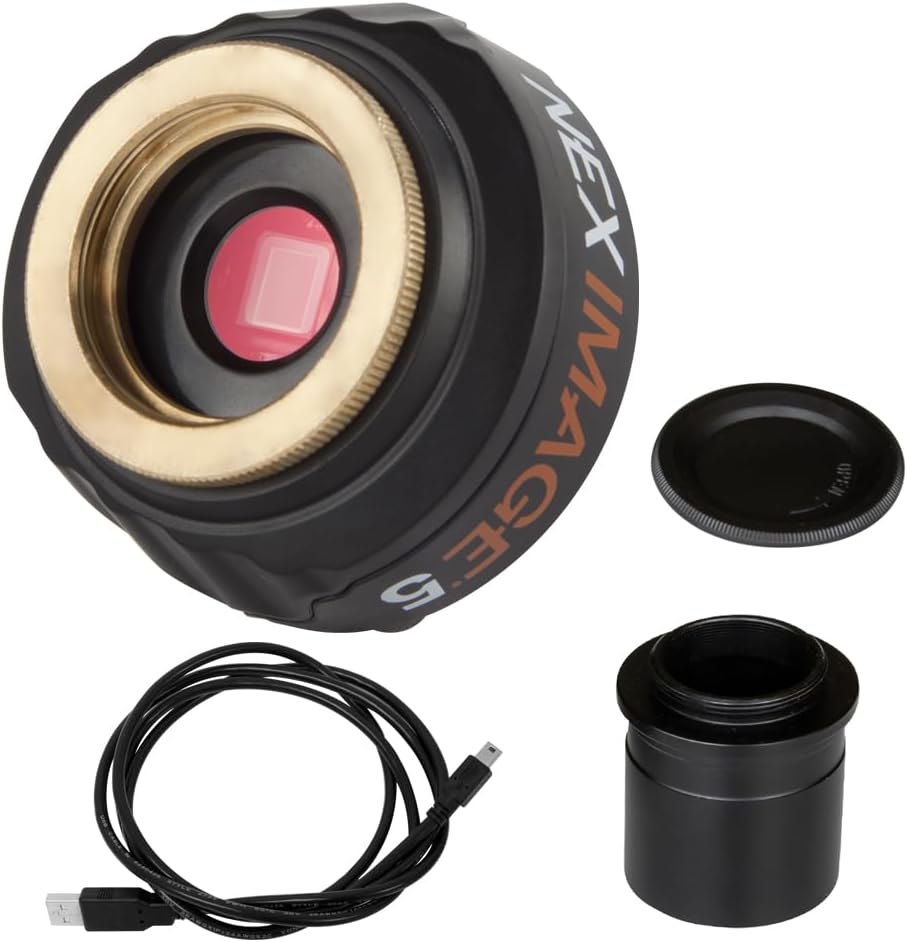
Planetary imaging: A planetary camera recording short video clips (each frame is milliseconds) works on a Dobsonian because you're stacking thousands of very short exposures. You manually keep the planet in frame by nudging the scope. This produces excellent results on Jupiter, Saturn, and the Moon.
Deep-sky astrophotography: Not feasible on a Dobsonian mount. Long-exposure imaging requires an equatorial mount that compensates for Earth's rotation. Even if you put the 200P tube on an EQ mount, the f/5.9 focal ratio and the coma inherent in Newtonian optics make it less than ideal without a coma corrector. If deep-sky imaging is your primary goal, the money is better spent on a dedicated astrophotography setup.
Related: 15 Best Telescopes for Astrophotography
Pros: Where the 200P Excels
Maximum Aperture Per Dollar
This is the defining advantage. An 8-inch Dobsonian costs $400–500. A Schmidt-Cassegrain with the same 8-inch aperture costs $1,100–1,600. A refractor with equivalent light-gathering ability would cost thousands. Dollar for dollar, the 200P shows you more of the universe than anything else in its price class.
Deep-Sky Performance
200mm of aperture reaches limiting magnitude ~14, which puts thousands of galaxies, nebulae, and clusters within visual range. This is the aperture where deep-sky observing becomes genuinely rewarding - you're not straining to see faint smudges, you're seeing real structure in distant objects.
Optical Quality
The parabolic primary mirror with 94% reflectivity coatings (aluminum + quartz overcoat) delivers sharp, well-corrected images. The 2-inch Crayford-style focuser is a significant upgrade over the rack-and-pinion focusers found on cheaper Dobsonians - it's smoother, more precise, and eliminates the image shift that plagues rack-and-pinion designs.
Simplicity and Reliability
No electronics means nothing to break, nothing to charge, nothing to update. The rocker box is built from particle board with Teflon bearing surfaces - crude but effective, and essentially indestructible. The patented tension control handle gives you smooth motion without the scope drifting when you let go. Setup is: place the rocker box on the ground, set the tube in the cradle, insert an eyepiece. Done.
Wide Field of View
At f/5.9, the 200P offers substantially wider true fields than longer focal-ratio designs. The included 25mm eyepiece delivers a ~1.2° field - wide enough to frame the entire Orion Nebula or sweep across rich Milky Way star fields. This is a major advantage over compact Maksutov or SCT designs that are limited to ~0.5–0.8° fields.
Cons: Where the 200P Falls Short
Size and Weight
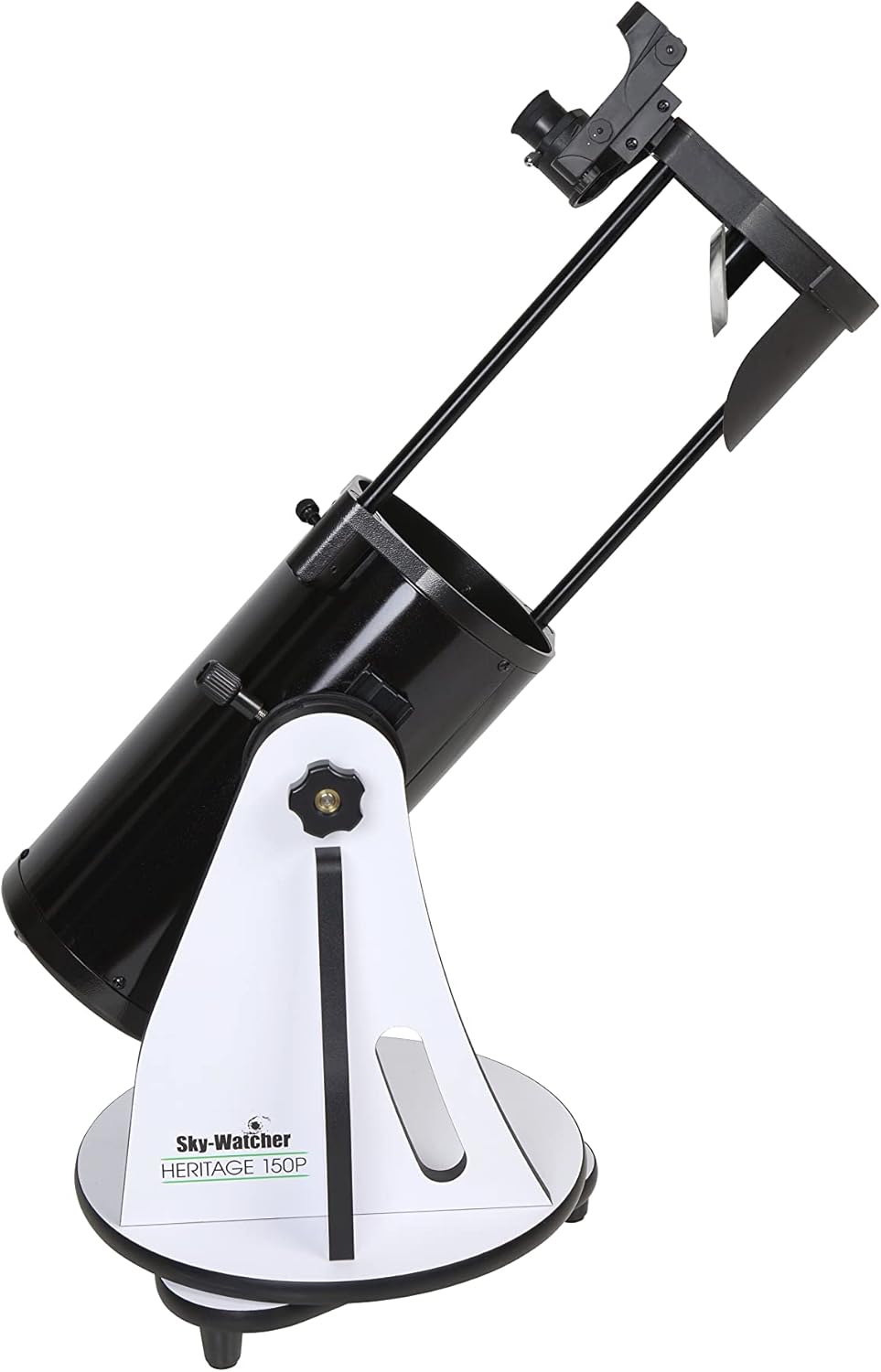
There's no way around it - the 200P is a big telescope. The tube is about 1120mm long and the total package weighs ~20 kg. It doesn't fit in a car trunk without some planning, and carrying it out to the backyard requires two trips (tube, then rocker box). If you live in a third-floor apartment with no elevator, this telescope will test your commitment. For a more portable alternative from the same brand, consider the Skymax 127 Maksutov or the Heritage 150 tabletop Dobsonian.
Collimation Required
Newtonian reflectors need their mirrors aligned (collimated) periodically. Transport, temperature swings, and even gravity can shift the mirrors slightly. An uncollimated scope produces blurry, lopsided star images. A $30 laser collimator makes the process quick, but it's still a skill you need to learn. This is the single biggest adjustment for people coming from maintenance-free refractors or Maksutov-Cassegrains.
No Tracking
Objects at high magnification drift out of the field of view in ~30 seconds. You'll constantly nudge the scope to re-center your target. This is normal for Dobsonians and becomes instinctive quickly, but it means you can't sit back and stare at Saturn for five minutes without touching the scope. It also makes sharing views with a group slower - by the time the next person gets to the eyepiece, the object may have drifted.
Cool-Down Time
The large primary mirror needs 20–30 minutes to reach ambient temperature after you bring the scope outside. Until the mirror equilibrates, warm air rising off it creates "tube currents" that make images shimmer and blur. In cold climates, this extends to 45+ minutes. Plan to set the scope outside well before you start observing.
Coma at the Field Edges
This is inherent to fast Newtonian optics. At f/5.9, stars near the edge of the field appear slightly elongated (like tiny comets). This is a minor annoyance for visual observing and can be eliminated with a coma corrector (~$100–200) if it bothers you. It's also one reason the 200P isn't ideal for wide-field astrophotography without additional optics.
What's in the Box
The 200P ships with everything you need for your first observing session:
25mm Super Plössl eyepiece - delivers 48× magnification (1200 ÷ 25 = 48×). Wide-field view at roughly 1.2° - ideal for locating objects and scanning star fields. This is where you'll spend most of your time when sweeping the sky.
10mm Super Plössl eyepiece - delivers 120× magnification. Good for planetary detail and tighter views of clusters and nebulae. The included eyepieces are serviceable starter Plössls, but observers who wear glasses will usually prefer a higher-eye-relief upgrade later.
9×50 finderscope - a proper optical finderscope (not a red dot finder). 9× magnification and a 50mm objective lens show faint stars you can't see with the naked eye, making star-hopping much easier. The crosshair reticle helps you center targets precisely.
2-inch Crayford-style focuser with 1.25-inch adapter - the standout accessory. The Crayford design uses a friction roller instead of gears, producing smooth, backlash-free focusing. The 2-inch barrel accepts large-format eyepieces for maximum field of view, while the 1.25-inch adapter maintains compatibility with standard eyepieces.
Dobsonian rocker box - particle board construction with Teflon bearing pads. Includes the patented tension control handle for adjustable friction. Sturdy and functional.
200P vs. Alternatives: How It Compares
200P vs. Sky-Watcher Virtuoso GTi 150P
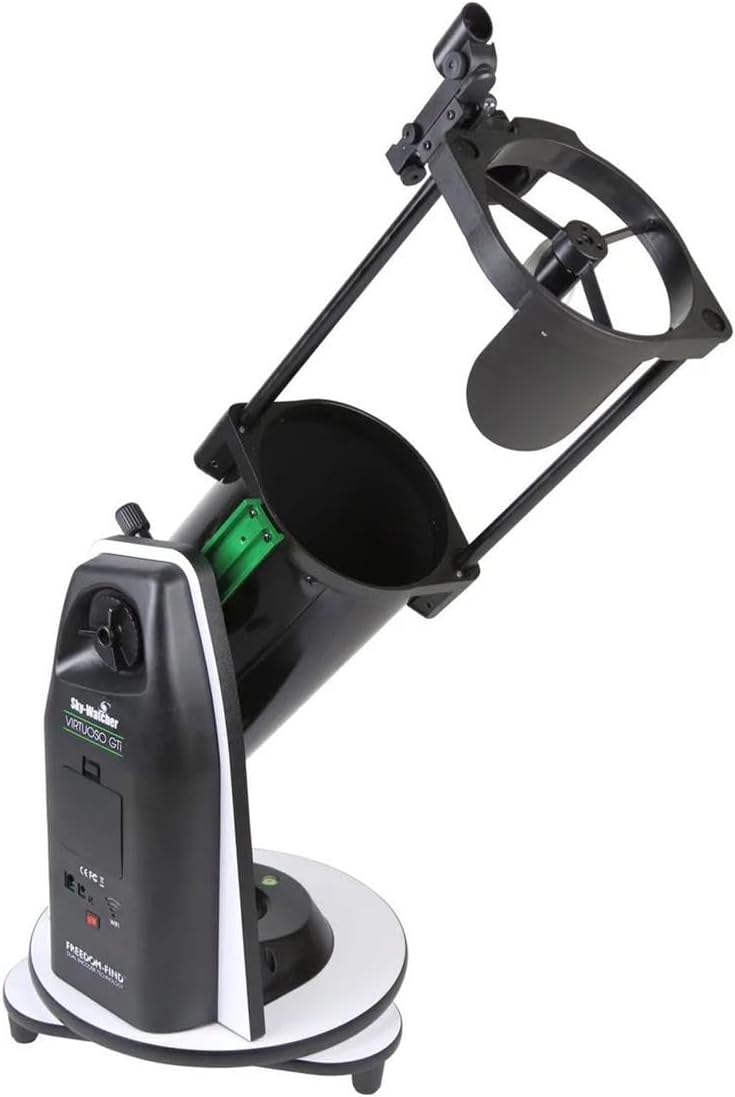
A 6-inch Dobsonian like the Sky-Watcher Virtuoso GTi 150P costs less and weighs less, but the 200P collects 78% more light. In practice, this means the 200P reveals galaxies the 6-inch cannot detect, resolves globular clusters more completely, and shows noticeably more planetary detail on good nights. Choose the XT6-class 6-inch Dob if budget or portability is your primary constraint. Choose the 200P if you can handle the extra size and want the deeper views that justify the investment.
200P vs. Celestron StarSense Explorer 8-Inch Dobsonian
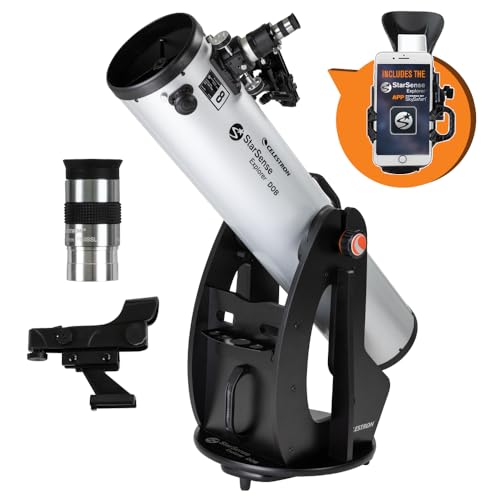
The Celestron StarSense Explorer 8-inch has the same 203mm aperture class as the 200P, so raw light gathering is comparable. Its main advantage is the StarSense phone-assisted finder, which makes object hunting easier than with a fully manual Dob, while the 200P remains the simpler and usually less expensive option. Choose the 200P if you value simplicity and price. Choose the StarSense 8-inch if app-assisted finding matters more.
200P vs. Celestron NexStar 8SE (8-Inch SCT)
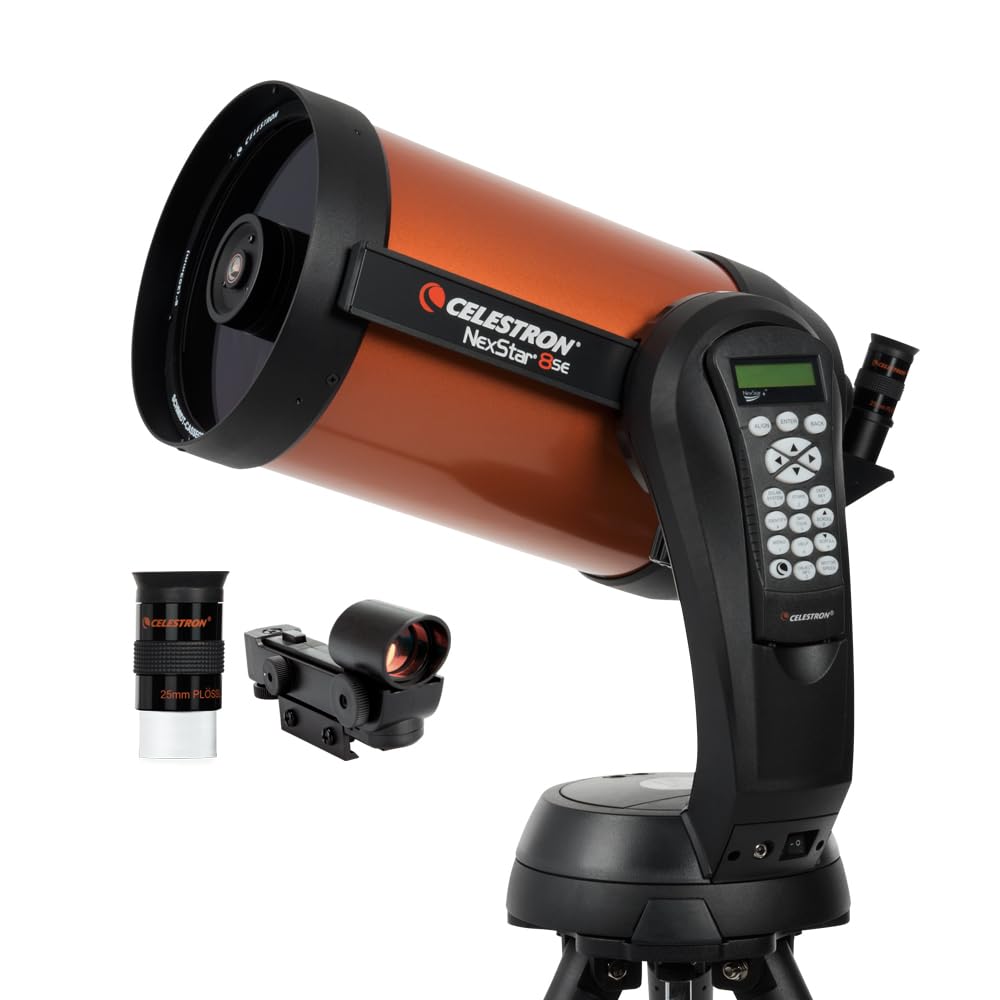
The NexStar 8SE has the same 8-inch aperture but costs $1,100+ - roughly $700 more than the 200P. That premium buys you a computerized GoTo mount (finds and tracks objects automatically), a compact tube (17 inches vs. 36 inches), and better suitability for astrophotography. The 200P delivers identical visual performance for 60% less money. Choose the 200P if you want maximum views per dollar and don't need automated tracking. Choose the NexStar 8SE if astrophotography is a goal or you value GoTo convenience.
200P vs. Sky-Watcher Skymax 127 (5-Inch Mak-Cass)
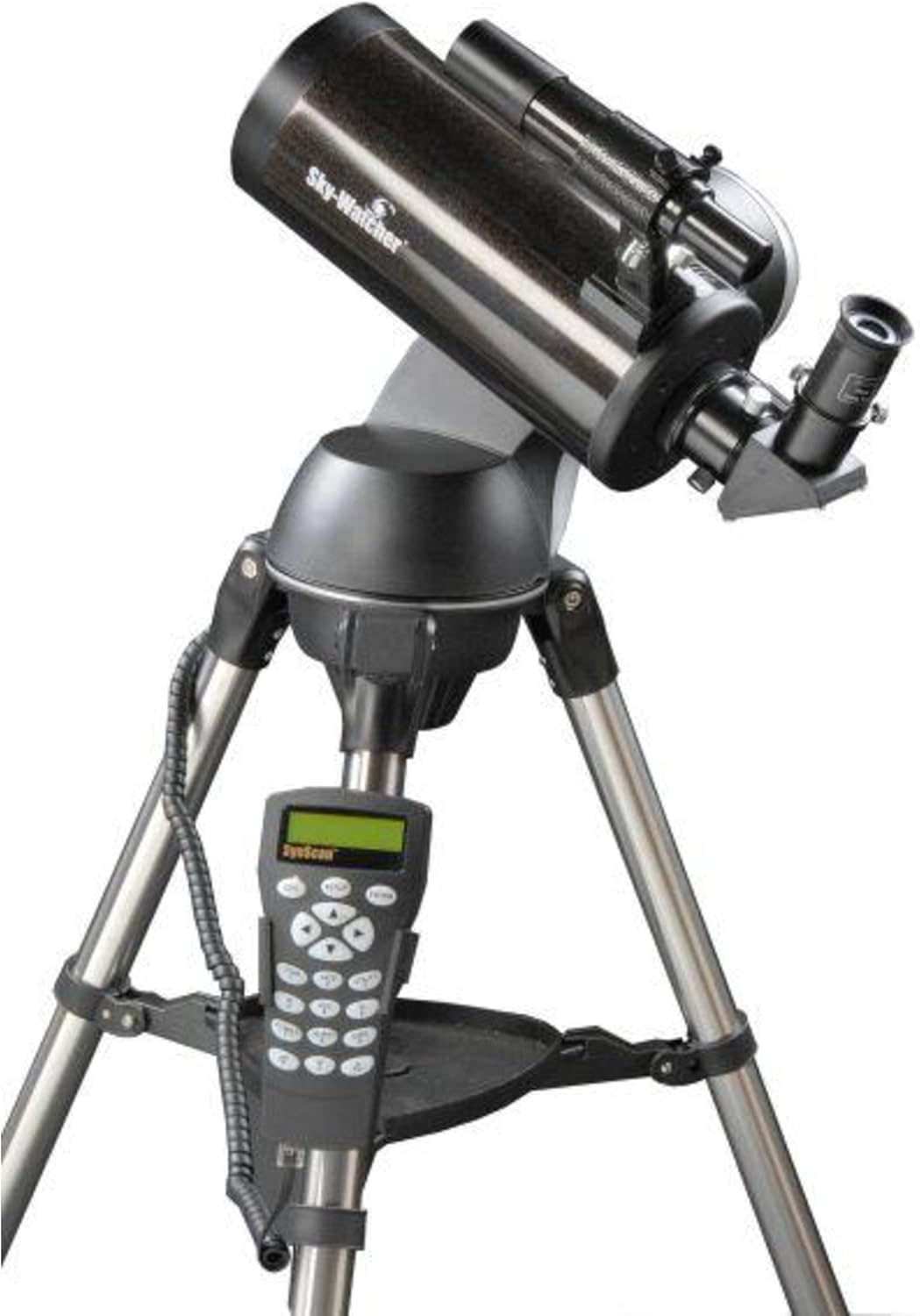
The Skymax 127 is a compact, maintenance-free Maksutov-Cassegrain that excels at lunar and planetary observation. It fits in a backpack. But 5 inches of aperture collects 2.5× less light than the 200P's 8 inches, which translates to significantly worse deep-sky performance. Choose the Skymax 127 if portability and zero maintenance are paramount. Choose the 200P if you want to see galaxies and nebulae with real detail.
200P vs. Zhumell Z8
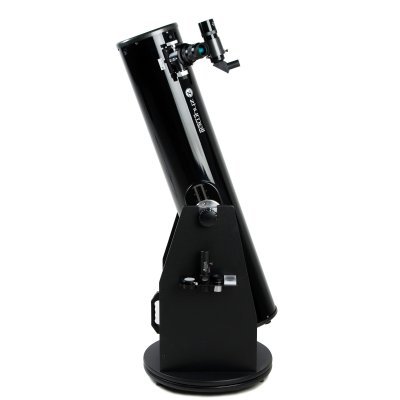
The Zhumell Z8 is the 200P's direct competitor - same 8-inch aperture, same Dobsonian mount, similar price. The Z8 typically ships with more accessories (a cooling fan, a laser collimator, a 2-inch wide-angle eyepiece) and has a slightly better focuser. The 200P has comparable optics and Sky-Watcher's broader reputation for support and parts availability. Either is an excellent choice - compare bundled accessories at current pricing and pick the better value at the time of purchase.
For the full Sky-Watcher lineup, see our complete Sky-Watcher telescope breakdown.
First Upgrades Worth Making
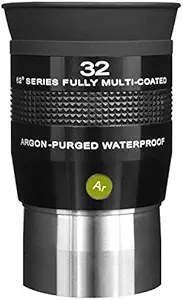
The 200P is highly capable out of the box, but three affordable upgrades make a noticeable difference.
A wider-angle eyepiece (2-inch, 30–35mm, 68–82° AFOV): The included eyepieces have ~52° apparent fields. Upgrading to a wide-angle 2-inch eyepiece like the GSO Superview 30mm or Explore Scientific 30mm 82° transforms the low-power experience - the Milky Way becomes immersive rather than peephole-like. Cost: $60–130. See our eyepiece size guide for recommendations.
A laser collimator: Makes mirror alignment a 5-minute task instead of a 15-minute guessing game. The Hotech or Sightmark laser collimators are popular and reliable. Cost: $30–50.
A Telrad or Rigel Quickfinder: A zero-magnification reflex sight that projects concentric circles onto the sky. Pair it with a star atlas (like Sky & Telescope's Pocket Sky Atlas) for fast, intuitive star-hopping. Much faster than the 9×50 finderscope for initial targeting. Cost: $40–50.
For a deeper look at Dobsonian advantages and tradeoffs, our dedicated guide covers the design philosophy in detail.
Frequently Asked Questions
What is the best eyepiece for the Sky-Watcher 200P?
For planetary viewing, a 6–8mm eyepiece delivering 150–200× magnification is the sweet spot. The Celestron X-Cel LX 7mm or the Goldline 66° 6mm are popular choices. For deep-sky sweeping, a 2-inch wide-angle eyepiece in the 30–35mm range (like the GSO Superview 30mm) delivers the widest possible field. A 2× Barlow lens effectively doubles your eyepiece collection by giving each eyepiece a second, higher magnification. Start there before buying more eyepieces. Full breakdown in our eyepiece size guide.
How often does the 200P need collimation?
Check collimation every session - it takes 30 seconds to verify and 5–10 minutes to adjust if needed. In practice, if the scope lives in one spot and isn't jostled, you may only need to adjust every few sessions. If you transport it in a car, check every time. A laser collimator makes this trivially easy.
Can the 200P see the Andromeda Galaxy?
Yes, and it's one of the highlights. M31 (Andromeda) is easily visible even from light-polluted suburbs as a bright oval glow with the 25mm eyepiece. Under dark skies, the 200P reveals Andromeda's dust lanes, its companion galaxies M32 and M110, and the brightening of the galaxy's core - a genuinely impressive view.
Is the Sky-Watcher 200P too heavy to carry?
The telescope breaks into two pieces: the optical tube (~10 kg) and the rocker box (~10 kg). Most adults can carry each piece separately from house to backyard without difficulty. The challenge comes when transporting it in a car - the tube is about 1120mm long and needs to ride flat without rolling. A large duffel bag or padded case helps. If weight is a genuine concern, consider the Sky-Watcher 6-inch Dobsonian or the collapsible 8-inch model.
What size Dobsonian should I get - 6, 8, 10, or 12 inch?
Eight inches (like the 200P) is the consensus sweet spot for most observers - enough aperture for serious deep-sky observing without the bulk and weight of a 10- or 12-inch. If budget allows an extra $150–200 and you have the storage space, the 10-inch is a transformative upgrade. Our guide on choosing the right Dobsonian size covers this decision in detail.
Can I put the 200P tube on an equatorial mount?
The optical tube has a Vixen-style dovetail compatibility (with an aftermarket dovetail bar), so it can technically be mounted on an equatorial mount. However, the tube weighs ~10 kg, so you'd need a sturdy EQ mount (Sky-Watcher HEQ5 Pro or equivalent, ~$1,100+). At that point, you're spending $1,500+ total and would be better served by a purpose-built astrophotography rig. The Dobsonian mount is the 200P's natural habitat.
How does the 200P compare to the Celestron StarSense Explorer 8-inch Dobsonian?
They're essentially the same telescope - both are 8-inch f/5.9 Dobsonians with parabolic mirrors. Differences come down to accessories, focuser quality, and local pricing. The Sky-Watcher 200P typically comes with a Crayford focuser (smoother), while the XT8 Classic uses a rack-and-pinion. Compare what's bundled at current prices and choose accordingly. Optically, they're interchangeable.
Does the 200P work in light-polluted areas?
Yes, with caveats. The Moon and planets look excellent regardless of light pollution. For deep-sky objects, light pollution washes out contrast - you'll see fewer objects and with less detail than under dark skies. An OIII or UHC narrowband filter (~$50–100) helps with emission nebulae by blocking light pollution wavelengths while passing nebula light. The 200P's large aperture helps it punch through light pollution better than smaller scopes, but it can't overcome truly severe urban skyglow.
Verdict: Is the Sky-Watcher 200P Worth It?
The Sky-Watcher 200P is the best visual astronomy telescope under $500, full stop. No other design gives you this much aperture, this much deep-sky capability, and this much optical quality for the money. It's the telescope that the astronomy community recommends more than any other for a reason.
Buy the 200P if you:
- Want to see galaxies, nebulae, and star clusters with real detail - not just faint smudges
- Value visual observing over astrophotography
- Have backyard or patio access and can store a meter-long tube
- Want a telescope you'll use for years without outgrowing it
- Are willing to learn collimation (it's easier than it sounds)
Consider something else if you:
- Need maximum portability - look at the Skymax 127 or the Heritage 150
- Want computerized GoTo tracking - look at the Celestron NexStar 8SE or NexStar 6SE
- Plan to do deep-sky astrophotography - you need an equatorial mount and a different optical tube
- Have a strict weight limit - the Sky-Watcher 6-inch Dobsonian delivers 80% of the experience at 60% of the weight
The 200P is the telescope that turns a casual interest in astronomy into a lifelong hobby. Eight inches of aperture under a dark sky will show you things that change how you think about the universe. At this price, that's an extraordinary value.
Explore more Sky-Watcher reviews:
- Sky-Watcher Telescopes: Complete Model Breakdown
- Sky-Watcher Skymax 127 Review
- Sky-Watcher Dobsonian 8-Inch Review
- Sky-Watcher 10-Inch Dobsonian Telescopes
- Sky-Watcher Explorer 130P Review
New to stargazing? Our Stargazing 101 guide covers everything from your first night out to building an observation log.