As an Amazon Associate, we earn from qualifying purchases.
Short answer: Pick by the child's age and reading level: a board book for toddlers, an illustrated beginner's guide for elementary ages, and real science writing from about age 10.


- The best astronomy books for kids combine accurate science with engaging illustrations - both matter equally for young readers.
- For ages 4–7: focus on picture books with simple concepts (Moon phases, planets, stars). For 8–12: introduce real science and exploration stories.
- Pair reading with a simple telescope session to make the science feel real.
When getting astronomy books for kids, consider the following factors to ensure they are both engaging and educational:
- Age-appropriate content: Choose books that are suitable for the child’s age and reading level.
- Clear and engaging illustrations: Look for books with vibrant and visually appealing illustrations or photographs of celestial objects, planets, and galaxies. Visual content can captivate young readers.
- Simple explanations: Ensure that the book uses simple and understandable language to explain complex astronomical concepts.
- Interactive elements: Some astronomy books for kids include interactive elements such as pop-up illustrations, flaps to lift, or hands-on activities that make learning more engaging.
- Accurate information: Check that the book provides accurate and up-to-date information about space and astronomy. Consider books written by reputable authors or reviewed by experts.
- Inclusion of fun facts: Kids often enjoy books that include fun and surprising facts about space, planets, and astronauts.
- Topics of interest: Consider the child’s specific interests within astronomy. Some kids may be fascinated by planets, while others might be more interested in stars, galaxies, or space exploration.
In this post, we’ll tell you about the best astronomy books for kids, sorted by age, to fuel their fascination with outer space.
Pairing a book with a first telescope? See our best telescopes for kids by age. For a first pair of binoculars, see the best binoculars for kids.
Best astronomy books for toddlers (ages 0-3)
Here are some of the best astronomy books for toddlers:
1. Hello, World! Solar System
- Author: Jill McDonald
- Category: Board Book
- Pages: 26
- Educational content: Overview of the solar system with planet facts
- Readability: Pre-reading and preschool grade level
Hello, World! Solar System invites young readers on a tour of the solar system. It offers a succinct overview of each planet, showcasing their unique characteristics.
Vibrant and clear illustrations accompany the text, providing a visual guide to the wonders of our neighboring celestial bodies.
2. Baby Loves Aerospace Engineering!

- Author: Ruth Spiro
- Category: Board Book
- Pages: 20
- Educational content: Simple introduction to flight and space concepts
- Readability: Pre-reading and preschool grade level
Baby Loves Aerospace Engineering! unravels the wonders of flight and basic space concepts, making aerospace engineering accessible for toddlers.
It encompasses short sentences with vivid, colorful illustrations to present the ideas of gravity, air, and lift in a toddler-friendly manner.
3. 8 Little Planets

- Author: Chris Ferrie
- Category: Board Book
- Pages: 18
- Educational content: Introduces each planet with unique traits
- Readability: Pre-reading, preschool, and kindergarten grade level
8 Little Planets represents a rhythmic exploration of our solar system’s planets. It portrays each planet with its distinctive traits.
This book presents an engaging learning experience using catchy rhymes and colorful images.
4. Touch the Brightest Star

- Author: Christie Matheson
- Category: Interactive Book
- Pages: 42
- Educational content: Night sky wonders like shooting stars and constellations
- Readability: Pre-reading and preschool-3
Touch the Brightest Star introduces kids to the night sky’s marvels, from shooting stars to constellations.
Children are prompted to “touch” and “tap” as they navigate through the pages, encouraging hands-on engagement.
5. Kitten’s First Full Moon

- Author: Kevin Henkes
- Category: Picture Book
- Pages: 34
- Educational content: An educational journey for young readers as they navigate the night sky
- Readability: Pre-reading and preschool grade level
Kitten’s First Full Moon is a playful tale that follows a curious kitten who mistakes the full moon for a bowl of milk.
Its cheerful illustrations captivate young children’s attention and serve as a perfect introduction to the moon in the sky.
Best astronomy books for preschoolers (ages 3-5)
Ignite your preschooler’s imagination with the following books:
6. The Moon Inside
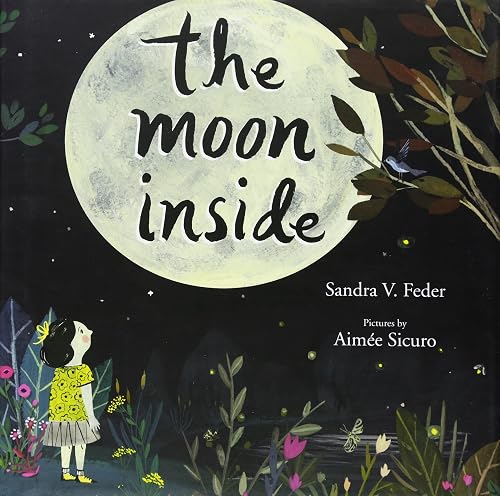
- Author: Sandra V. Feder
- Category: Picture Book
- Pages: 32
- Educational content: It explores the moon and its phases
- Readability: Preschool – Kindergarten grade level
The Moon Inside is a beautiful story centered on the moon, exploring the fascinating nature of this celestial body.
Young readers are drawn into a comforting tale about night’s natural beauty through engaging illustrations and a gentle narrative.
7. There’s No Place Like Space: All About Our Solar System

- Author: Tish Rabe
- Category: Picture Book
- Pages: 48
- Educational content: Introduces planets and basic space concepts.
- Readability: Preschool – 3 grade level
There’s No Place Like Space is about a delightful journey through our solar system.
It uses rhythmic text and bright illustrations to introduce little ones to the planets in a fun and educational way.
8. Our Stars

- Author: Anne Rockwell
- Category: Picture Book
- Pages: 24
- Educational content: Provides an engaging introduction to astronomy.
- Readability: Preschool – 3 grade level
Our Stars is a beginner’s guide to the stars in our sky with cheerful illustrations and clear explanations. It’s a fantastic way for children to dive deeper into the mysteries of the Milky Way and beyond.
9. A Big Mooncake for Little Star

- Author: Grace Lin
- Category: Picture Book
- Pages: 40
- Educational content: Introduces young readers to the concept of the moon’s phases and celestial wonders
- Readability: Preschool – 3 grade level
Grace Lin presents an endearing tale that combines playful verse with a touch of astronomy.
A Big Mooncake for Little Star explores young children’s curiosity about the moon’s phases whimsically, making it an engaging read for kids.
10. Star Stuff: Carl Sagan and the Mysteries of the Cosmos

- Author: Stephanie Roth Sisson
- Category: Picture Book
- Pages: 42
- Educational content: Introduces young readers to the importance of scientific exploration and curiosity
- Readability: Preschool – 3 grade level
Star Stuff: Carl Sagan and the Mysteries of the Cosmos is the true story of Carl Sagan, a renowned science communicator.
The book showcases his early fascination with the stars, giving children a glimpse into the life of someone who has significantly influenced the world of astronomy.
11. Outer Space Bedtime Race
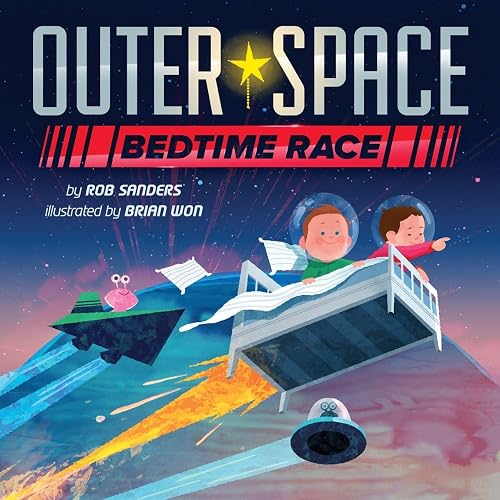
- Author: Rob Sanders
- Category: Picture Book
- Pages: 40
- Educational content: Teaches young readers about space exploration, planets, and the thrill of learning about the universe
- Readability: Preschool – 2 grade level
Outer Space Bedtime Race is a delightful picture book that weaves the theme of space into the universal bedtime ritual. The book teaches toddlers the technicalities of space in an engaging and playful verse.
With excellent readability, this whimsical tale transports young readers on a bedtime journey, making nighttime routines an exciting adventure.
Best astronomy books for elementary students (ages 5-10)
Trigger the spark of cosmic curiosity with these astronomy books perfect for middle school students:
12. A Child’s Introduction to the Night Sky
- Author: Michael Driscoll
- Category: Non-Fiction
- Pages: 96
- Educational content: Offers a comprehensive beginner’s guide to celestial bodies like stars, planets, and galaxies.
- Readability: Grade 3 – 7
A Child’s Introduction to the Night Sky is a treasure for young kids interested in space exploration. Its engaging illustrations make it an essential pick for curious young minds.
13. Moon’s First Friends

- Author: Susanna Leonard Hill
- Category: Picture Book
- Pages: 40
- Educational content: Blends educational elements about the moon with storytelling.
- Readability: Grade level – 3
Moon’s First Friends is a delightful tale told in playful verse. This book humanizes the moon, detailing how it patiently waited for visitors from Earth.
For a young reader, it beautifully marries fact-filled planetary tales with cheerful illustrations, making it a great pick.
14. The Everything Kids’ Astronomy Book

- Author: Kathi Wagner
- Category: Non-Fiction
- Pages: 144
- Educational content: Provides an in-depth introduction to basic astronomical concepts, including planetary systems.
- Readability: Grade 4 – 7
The Everything Kids’ Astronomy Book dives deep into questions like “how many moons are in our solar system?” or “why do stars twinkle?”.
A captivating space book that offers young readers a perfect introduction to the universe, it’s filled with fun facts about the Milky Way, the eight planets, and other celestial wonders.
15. Hidden Figures Young Readers’ Edition

- Author: Margot Lee Shetterly
- Category: Biography
- Pages: 240
- Educational content: Highlights the historic contributions of African-American women in space exploration.
- Readability: Grade 3 – 7
Hidden Figures Young Readers’ Edition tells the true story of the brilliant African-American women behind the scenes at NASA.
This adaptation for younger readers brings to light their significant contributions to space history. This makes it a captivating read and a powerful lesson on perseverance and equality.
16. Space Encyclopedia: A Tour of Our Solar System and Beyond
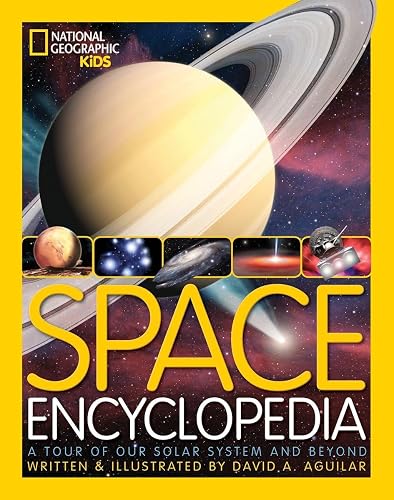
- Author: David A. Aguilar
- Category: Non-Fiction
- Pages: 192
- Educational content: Offers a detailed exploration of our solar system and cosmic phenomena.
- Readability: Grade 5 – 9
Space Encyclopedia provides an incredible journey through our solar system and beyond.
With incredible photos and in-depth information, it’s one of the best space books for kids wanting to explore everything from the Big Bang to black holes.
17. Look Up! Henrietta Leavitt, Pioneering Woman Astronomer

- Author: Robert Burleigh
- Category: Biography, Picture Book
- Pages: 32
- Educational content: Introduces children to the life and contributions of a pioneering female astronomer.
- Readability: Preschool – 3
Look Up! offers a glimpse into the life of an incredible woman in astronomy.
It features engaging illustrations and a well-narrated story, inspiring beginning readers and older children.
Best astronomy books for middle schoolers (ages 10-13)
Dive deeper into the universe with these engaging and educational reads perfect for the middle schooler in your life:
18. Astrophysics for Young People in a Hurry
- Author: Neil deGrasse Tyson
- Category: Non-Fiction
- Pages: 176
- Educational content: Breaks down complex astronomical concepts into digestible information.
- Readability: Grade 3 – 7
Astrophysics for Young People in a Hurry is the go-to astronomy book for young people curious about the mysteries of our universe.
Written by a renowned science communicator, it presents complex concepts, like the Big Bang or dwarf planets, in an easily digestible manner for the space enthusiast.
19. Spectrum 5th Grade Science Workbooks

- Author: Spectrum
- Category: Non-Fiction
- Pages: 144
- Educational content: Comprehensive academic exercises that cover a wide array of scientific topics.
- Readability: Grade 5 – 9
Spectrum 5th Grade Science Workbooks are an educational powerhouse for kids delving deeper into the world of science. This workbook covers seven chapters on varied topics, complemented by bonus research extension activities.
It ensures comprehensive learning with chapter reviews, a mid-test, and a final test equipped with an answer key.
See also: 47 Space Activities For Kids To Fuel Their Love For Science
20. Space: The Definitive Visual Catalog

- Author: Sean Callery
- Category: Visual Guide
- Pages: 208
- Educational content: Provides a visual journey through the universe, filled with detailed descriptions and images.
- Readability: Grade 3 – 7
Space: The Definitive Visual Catalog boasts a collection of mesmerizing images and detailed descriptions.
It’s a visual treat for any young reader, offering a deep dive into the nature of space and its incredible phenomena.
21. The Mighty Mars Rovers

- Author: Elizabeth Rusch
- Category: Non-Fiction
- Pages: 80
- Educational content: Takes readers on an adventure through the red planet, exploring Mars rovers and their discoveries.
- Readability: Grade 5 – 7
The Mighty Mars Rovers tells the story of the vehicles that have roamed the red planet.
It is an exciting blend of science and adventure that inspires kids to dream about space exploration and the next frontiers.
22. See You in the Cosmos

- Author: Jack Cheng
- Category: Fiction
- Pages: 320
- Educational content: Explores emotional themes while lightly touching on space topics.
- Readability: Grade 5 – 9
See You in the Cosmos is a touching fictional narrative of a young boy’s journey to find his place in the universe.
While not entirely rooted in science, this story explores family, loneliness, and our place among the stars.
23. The Night Sky: A Folding Pocket Guide to the Moon, Stars, Planets, and Celestial Events

- Author: James Kavanagh
- Category: Guide/Reference
- Pages: 10
- Educational content: Provides a quick reference for identifying celestial bodies and phenomena.
- Readability: Grade 5 – 7
The Night Sky is a concise pocket guide for stargazers and astronomy enthusiasts.
It covers key celestial events, the moon, stars, and planets, offering users a quick reference to identify and understand the wonders of the night sky.
Best astronomy books for high school kids (ages 13-18)
Here are enlightening reads for the budding scientist or space enthusiast in high school:
24. The Space Race: How the Cold War Put Humans on the Moon

- Author: Matthew Brenden Wood
- Category: Historical & Exploration
- Pages: 128
- Educational content: Explores the historical context behind humanity’s quest to conquer space.
- Readability: Grade 7 – 9
The Space Race: How the Cold War Put Humans on the Moon dives into the intense competition between the USA and USSR to conquer space.
This fact-packed book offers insights into how the Cold War dynamics drove humans to the moon, making history.
25. Make: Rockets: Down-to-Earth Rocket Science

- Author: Mike Westerfield
- Category: Practical Rocketry & DIY
- Pages: 520
- Educational content: Provides hands-on rocketry projects for a practical understanding of the science involved.
- Readability: Grade 7 – 9
Make: Rockets: Down-to-Earth Rocket Science is a definitive guide for teens interested in rocketry. This book provides hands-on projects, making it a fun and interactive learning experience for any space enthusiast.
26. Women in Space: 23 Stories of First Flights, Scientific Missions, and Gravity-Breaking Adventures (Women of Action)

- Author: Karen Bush Gibson
- Category: Biographical & Historical
- Pages: 240
- Educational content: Highlights stories of groundbreaking women in the space industry.
- Readability: Grade 7 – 12
Women in Space presents true tales of groundbreaking women in space exploration.
From astronauts to scientists, these biographical sketches showcase the female grit and determination.
27. It’s a Question of Space: An Ordinary Astronaut’s Answers to Sometimes Extraordinary Questions

- Author: Clayton C. Anderson
- Category: Biographical & Exploratory
- Pages: 224
- Educational content: Provides a behind-the-scenes look at the life of an astronaut and answers questions about space life.
- Readability: Grade 7 and higher
It’s a Question of Space offers a behind-the-scenes look at the life of an astronaut aboard the international space station.
This book answers several quirky and profound questions, offering readers a comprehensive view of space life.
28. Planetary Science: Explore New Frontiers

- Author: Matthew Brenden Wood
- Category: Science & Exploration
- Pages: 128
- Educational content: Dives into detailed planetary science topics, from Earth to the far reaches of our solar system.
- Readability: Grade 7 – 9
Planetary Science: Explore New Frontiers is a detailed guide into the fascinating world of planetary science. It covers everything from the Earth’s backyard to the far reaches of the solar system.
Takeaway: Enhance your child’s journey through the cosmos by investing in the best astronomy books for kids
From the playful verses in picture books for toddlers to the incredible photos and engaging illustrations in guides for older children, these books have paved a luminous path for young readers to explore the cosmos.
Whether it’s an exciting fact-filled planetary tale for a young child or a science communicator narrating the intricacies of space exploration, these books are the perfect introduction to the wonders of the universe.
Each book serves as a portal, allowing kids to question, learn, and dream about the Milky Way, the eight planets, the Big Bang, and so much more.
So, parents, gather your little astronomers, pick a book from this carefully curated list, and embark on an exciting voyage across the stars and beyond!