- What are Barlow lenses for telescopes?
- Barlow lens magnification
- Benefits of Barlow Lenses
- Barlow lens disadvantages
- Which Barlow lens should I buy?
- How to use a Barlow lens
- Can you use Barlow lens for astrophotography?
- Simple Barlow lens DIY
- Do Barlow lenses work?
- FAQs about Barlow lenses
- Takeaway: Learn more about Barlow lenses and enhance your observing experience
Barlow lenses are powerful accessories used by astronomers to magnify their telescopes and improve image quality.
If you’re an astronomy enthusiast, you may have heard of Barlow lenses but may not fully understand what they are, their benefits, and how to use them.
This article will provide you with a comprehensive guide to Barlow lenses, including their definition, types, benefits, and tips on how to use them to enhance your stargazing experience.
What are Barlow lenses for telescopes?
Barlow lenses are telescope accessories that can increase the magnification of a telescope. They are essentially a type of lens that sits between the telescope and the eyepiece, extending the telescope’s effective focal length.
- Barlow lens design
- Barlow lens diagram
- What is the effect of Barlow lens on eye relief?
A Barlow lens is a simple and cost-effective way to increase the magnification of a telescope, using one or more lens elements to extend the effective focal length of the telescope’s objective lens.
It is designed to be inserted into the telescope’s eyepiece barrel, and the eyepiece is inserted into the Barlow lens.
The Barlow lens works by increasing the effective focal length of the telescope’s objective lens, resulting in a higher magnification image.
A single Barlow lens can provide a range of magnifications depending on the eyepiece used with it.
When using a Barlow lens, the effective focal length of the telescope becomes longer, which can help achieve higher magnifications and finer details in planetary and lunar observations.
Barlow lenses are commonly used by amateur astronomers and astrophotographers to get a closer look at distant objects in the night sky.
Barlow lens design
Barlow lenses are made up of two or more lenses that are designed to magnify the image produced by your telescope. They are usually made of high-quality glass and are coated to prevent reflections and glare.
The design of a Barlow lens is such that it extends the effective focal length of the telescope, which, in turn, increases the magnification of the image.
Barlow lens diagram
A Barlow lens diagram typically shows a simple design consisting of two lenses, a negative and a positive lens. The negative lens is positioned closer to the telescope, and the positive lens is positioned closer to the eyepiece. The distance between the lenses determines the Barlow lens’ magnification.
What is the effect of Barlow lens on eye relief?
When using a Barlow lens, the effect on eye relief can vary depending on the specific eyepiece and Barlow lens combination used. Generally, a Barlow lens can extend the eye relief of most eyepiece designs.
This allows observers to position their eyes further away from the eyepiece and provides a more comfortable viewing experience, particularly for those who wear glasses.
This is because the Barlow lens effectively increases the distance between the eyepiece and the observer’s eye.
However, it’s worth noting that some eyepieces may have shorter eye relief, and adding a Barlow lens may not provide as much extension as expected.
Additionally, using a Barlow lens with a very long focal length can result in reduced eye relief. The observer must position their eye very close to the eyepiece to achieve focus.
Another factor to consider is that higher magnification views provided by Barlow lenses can result in a narrower field of view, which can make it more challenging to find and track objects in the sky.
This can be particularly difficult for beginners or observers using telescopes with manual tracking systems.
The effect of a Barlow lens on eye relief can be positive or negative depending on the specific combination used and the observer’s needs.
Barlow lens magnification
A Barlow lens is primarily used to increase the magnification of a telescope. By inserting a Barlow lens between the telescope and the eyepiece, the effective focal length of the telescope is increased, resulting in greater magnification.
Does a Barlow lens increase magnification?
A Barlow lens increases magnification by increasing the effective focal length of the telescope. The magnification power of a Barlow lens is determined by the ratio of its focal length to the focal length of the telescope.
Does a Barlow lens increase focal length?
A Barlow lens increases the effective focal length of a telescope by a factor of the Barlow lens’ magnification power. For example, a 2x Barlow lens doubles the effective focal length of a telescope.
Barlow lens calculator
Calculating the magnification power of a Barlow lens can be done using a simple formula:
Magnification power = focal length of Barlow lens / focal length of the telescope.
There are also online Barlow lens calculators available that make the calculation easy.
What is the magnification power of the 2x Barlow lens?
A 2x Barlow lens doubles the magnification of a telescope, meaning that it multiplies the magnification power of the eyepiece by 2.
What is the magnification power of a 3x Barlow lens?
A 3x Barlow lens triples the magnification of a telescope, meaning that it multiplies the magnification power of the eyepiece by 3.
What is the magnification power of a 5x Barlow lens?
A 5x Barlow lens quintuples the magnification of a telescope, meaning that it multiplies the magnification power of the eyepiece by 5.
Barlow lens maximum magnification
The maximum magnification achievable with a Barlow lens depends on several factors, including the aperture and focal length of the telescope and the quality of the Barlow lens itself.
Generally, a Barlow lens can increase magnification by a factor of 2-5x, but attempting to achieve higher magnifications can result in a blurry or distorted image.
- Can you use Barlow lens for DSLR cameras?
- How to attach a Barlow lens to a camera adapter
- Can you use a Barlow lens for planetary photography
- What is the best Barlow lens for planetary imaging?
- Is stacking Barlow lenses good?
- Tips for using a Barlow lens to capture high-quality images
A Barlow lens can be used for astrophotography to increase the magnification of the image captured by a camera.
Here are some tips on using a Barlow lens for astrophotography:
- Choose the right Barlow lens for your setup, keeping in mind the magnification and focal length you want to achieve.
- Attach the Barlow lens to your camera or telescope, depending on the type of Barlow lens you have.
- Connect your camera to your telescope or mount, ensuring that the camera is properly aligned and focused.
- Adjust the focus and aperture settings on your camera and telescope to get the desired image.
- Use a high-quality eyepiece in conjunction with your Barlow lens to enhance image quality.
- Consider using a filter to help reduce glare and improve contrast.
- Experiment with different Barlow lens magnifications and settings to get the best results for your astrophotography.
Can you use Barlow lens for DSLR cameras?
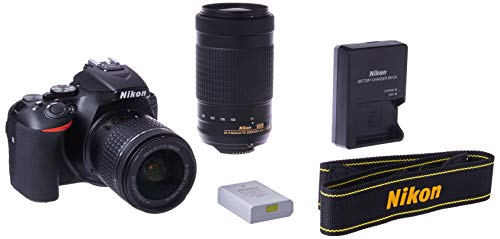
You can use a Barlow lens with a DSLR camera to increase the magnification of the image captured. To do so, you will need a T-ring adapter to attach the camera to the telescope.
The Nikon D5600 DSLR camera with 18-55mm f/3.5-5.6G VR and 70-300mm f/4.5-6.3G ED lenses is an excellent option for astrophotography enthusiasts.
 AmazonNikon D5600 DSLR cameraView on Amazon →
The camera features a 24.2-megapixel DX-format CMOS sensor and the EXPEED 4 image-processing engine, which deliver high-quality images and video with rich detail and vibrant colors.
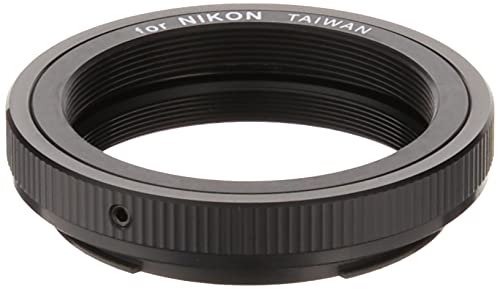
When paired with the Celestron 93419 T-Ring for Nikon Camera, it allows you to attach the camera to your telescope and use a Barlow lens to increase the magnification of your astrophotography images.
 AmazonCelestron 93419 T-Ring for Nikon CameraView on Amazon →
The Celestron T-Ring is specifically designed for Nikon cameras and provides a secure and stable connection between your camera and telescope.
Together, the Nikon D5600 and Celestron T-Ring make for a great combination for astrophotography enthusiasts.
Selecting the appropriate magnification is crucial when using a Barlow lens for planetary photography. Higher magnification can capture more details but can also result in a dimmer image that requires longer exposure times.
A lower magnification may result in a brighter image but with fewer details. Experimentation with different magnifications can help find the ideal balance for your setup.
Some Barlow lenses are specifically designed for planetary photography and have unique coatings that help to decrease chromatic aberration and increase contrast. If you’re serious about planetary imaging, these lenses can be a worthwhile investment.
Another essential factor to consider when using a Barlow lens for planetary photography is ensuring your telescope is appropriately collimated or aligned.
What is the best Barlow lens for planetary imaging?
The best Barlow lens for planetary imaging will depend on the specific telescope and camera being used.
Some of the most popular and highly recommended options include:
 AmazonTele Vue 2xView on Amazon → is a high-quality Barlow lens that can double the magnification of your telescope’s eyepiece. It is designed to provide a clear and sharp image with minimal distortion and can be a great addition to your astronomy setup.
 AmazonBaader Planetarium VIP BarlowView on Amazon → is a premium quality Barlow lens with advanced optical coatings to minimize light loss and color fringing, producing sharp and clear planetary images.
 AmazonCelestron Ultima Duo BarlowView on Amazon → is a dual-element Barlow lens that offers a flat field and high-contrast images with minimal chromatic aberration.
When two lenses are stacked, the magnification is multiplied, but the overall image quality can suffer due to increased vignetting, chromatic aberration, and distortion.
Using a single high-quality Barlow lens to achieve the desired magnification for planetary imaging rather than stacking multiple lenses is generally better.
Tips for using a Barlow lens to capture high-quality images
Here are some recommended tips for using a Barlow lens to capture great images:
- Use a high-quality Barlow lens with good optics to ensure the best image quality.
- Make sure the Barlow lens is properly attached to the telescope to prevent it from falling out or wobbling during use.
- Experiment with different Barlow lens magnifications to find the optimal level for the specific object being observed.
- Use a stable mount or tripod to prevent any shaking or vibration that could cause image blurring.
- Use a high-quality camera or imaging device to capture the magnified image for the best results.
Simple Barlow lens DIY
A Barlow lens can be made at home with simple materials such as a PVC pipe, a lens, and an adapter. There are many tutorials available online for those interested in making their own Barlow lens.
A Barlow lens can be made at home with simple materials such as a PVC pipe, a lens, and an adapter. There are many tutorials available online for those interested in making their own Barlow lens.
Check out this tutorial of a Barlow Lens DIY:
Do Barlow lenses work?
Barlow lenses work by increasing the effective focal length of a telescope, resulting in a higher magnification of the image being observed. Barlow lenses are a popular tool for both visual and astrophotography purposes.
Barlow lenses work by increasing the effective focal length of a telescope, resulting in a higher magnification of the image being observed. Barlow lenses are a popular tool for both visual and astrophotography purposes.
Can you use Barlow lens for binoculars?
A Barlow lens is specifically designed to be used with telescopes and cannot be used with binoculars. However, some binoculars come with interchangeable eyepieces and can be used with a Barlow lens to increase magnification.
Using a Barlow lens with binoculars can be challenging as it requires precise alignment and may result in a narrower field of view.
Read also: Celestron Vs Nikon Binoculars: A Comparative Review Based on Customer Feedback
Can you use a Barlow lens on a microscope?
A Barlow lens is incompatible with microscopes because they have different optical designs and attachment systems.
Are Barlow lenses worth it?
Barlow lenses are a useful tool for increasing the magnification of a telescope and can be especially helpful for planetary observation and astrophotography.
FAQs about Barlow lenses
This section covers some frequently asked questions about Barlow lenses and their usage in astronomy and astrophotography.
What are Barlow lenses 0.5x /0.75x good for?
Barlow lenses with a magnification factor of 0.5x or 0.75x are good for reducing the magnification of a telescope, which can be helpful for observing larger objects or for obtaining a wider field of view.
Can I use Barlow lens for Dobsonian telescope?
Barlow lenses are compatible with Dobsonian telescopes, as well as other types of telescopes.
Can I use the Barlow lens with an extension tube?
Barlow lenses can be used with extension tubes to achieve longer effective focal lengths and higher magnifications.
What is the difference between Barlow and Powermate?
The difference between a Barlow and a Powermate is that a Powermate provides pure magnification with no additional effects.
A Barlow lens, on the other hand, can increase eye relief, which may be either beneficial or not, depending on the eyepiece’s original eye relief and the individual’s personal preference.
Barlow lens vs eyepiece, what is the main difference?
The main difference between a Barlow lens and an eyepiece is that a Barlow lens increases the effective focal length of a telescope, resulting in a higher magnification of the image, while an eyepiece determines the actual magnification of the image.
When paired with a Barlow lens, longer focal length eyepieces can result in even higher magnifications.
For more information on the differences between Barlow lenses and eyepieces, check out this article: Barlow Lens vs Eyepiece: Making the Right Choice for Your Telescope Setup
Barlow lens vs erecting eyepiece, what is the difference?
The difference between a Barlow lens and an erecting eyepiece lies in the type of image produced. A Barlow lens will increase the magnification of an image but will not correct the orientation, resulting in a laterally transposed or upside-down image.
On the other hand, an erecting eyepiece is designed to provide an upright and true-sided image, making it useful for terrestrial observation. However, it does not provide any magnification.
In short, a Barlow lens is used for increasing magnification, while an erecting eyepiece is used for correcting the image orientation.
Barlow lens vs focal extender, what is the difference?
Barlow lenses and focal extenders are both designed to increase the effective focal length of a telescope, but they work in different ways.
A Barlow lens uses a negative lens element to diverge the incoming light before it reaches the primary mirror or lens of the telescope.
This causes the light to spread out, effectively lengthening the telescope’s focal length and increasing the image’s magnification.
A focal extender, on the other hand, uses a positive lens element to converge the incoming light before it reaches the eyepiece.
This extends the eyepiece’s focal length, increasing the image’s magnification without changing the telescope’s focal length.
Can Barlow lenses reduce light?
Barlow lenses can reduce the amount of light that enters the telescope and reaches the eyepiece. This is because Barlow lenses use a negative lens element to spread out the incoming light, which can result in a dimmer image.
However, the reduction in light can be mitigated using a higher-quality Barlow lens or a focal extender instead. A focal extender does not reduce the amount of light entering the telescope and can result in a brighter image.
Takeaway: Learn more about Barlow lenses and enhance your observing experience
A Barlow lens is a versatile and powerful tool for amateur astronomers. It allows for increased magnification and finer detail in planetary and lunar observations while also extending the focal length of telescopes for deep-sky objects.
A Barlow lens is a versatile and powerful tool for amateur astronomers. It allows for increased magnification and finer detail in planetary and lunar observations while also extending the focal length of telescopes for deep-sky objects.
With the right combination of telescope, camera, and Barlow lens, stunning astrophotography is within reach.
However, it’s important to understand the limitations and considerations when using a Barlow lens, such as atmospheric conditions, telescope alignment, and choosing the right magnification. With practice and patience, the rewards of using a Barlow lens in astronomy and astrophotography can be truly breathtaking.
You may also like:
📚 You Might Also Like
🔭 Want to Master Your Telescope?
Get our complete guide: Stargazing Secrets — 133 pages, 6 modules, everything from setup to deep-sky observation.
Get It for $19 →
$27 $19 — 30-day money-back guarantee