- Specifications of Maksutov Newtonian telescopes
- What is Coma in a Newtonian telescope?
- What is the Maksutov corrector lens?
- Difference between Maksutov Newtonian and Maksutov Cassegrain
- Advantages of the Maksutov Newtonian
- Is the Maksutov Newtonian good for astrophotography?
- Best Maksutov Newtonian Telescopes
- Is it worth investing in a Maksutov Newtonian telescope?
- Takeaway: Maksutov Newtonian Telescopes are highly effective tool in astrophotography
Maksutov Newtonian is a combination of the Newtonian reflector and Maksutov correcting lens. Standard Newtonians suffer from coma around the edge of the field of view. The Maksutov corrector plate is correcting this coma and producing coma-free stars across the field. It also corrects the spherical aberration of the primary mirror.
Maksutov Newtonian is a rare and unique design in the telescope world. It is not so popular, but it is starting to gain the traction it deserves.
They typically have aperture sizes ranging from 150 to 190 mm. Despite the large aperture size, they are significantly cheaper than apo refractor telescopes of the same size. The Maksutov Newtonian telescopes are heavier, though.
Anyone who’s used a Maksutov Newtonian telescope will tell you it excels exceedingly well for astrophotography, though it is also great for visual astronomy.
In this guide, I’ll share in-depth details about its specifications, what it is used for, its advantages over standard Newtonian telescopes, if it’s worth investing in, a few recommended examples, and much more.
Specifications of Maksutov Newtonian telescopes
Most Maksutov Newtonian telescopes come with an aperture size between 150mm to 190mm, although Intes-Micro produces Mak-Newt telescopes with aperture sizes from 127 to 305mm.
The focal lengths of Mak-Newt telescopes vary depending on the targeted focal ratio. Most Mak Newtonian designs are fast scopes with focal ratios between f/4.8 to f/8 maximum.
The diameter of the secondary mirror can range from 26mm to 64mm. They can weigh anywhere between just over 15 pounds to over 40 pounds.
The material used for the tube significantly determines the weight of the scope. Always choose a tube assembly made with carbon fiber, where available.
What is a Maksutov Newtonian telescope used for?
A Maksutov-Newtonian telescope is typically used for astrophotography and observing deep-sky objects with high contrast and sharpness. They require no field flattener, focal reducer, or a coma corrector like a standard Newtonian telescope would.
Just attach a camera to it, and it’s good to go. One of the reasons they do well for astrophotography is the high contrast they offer and the relatively broader field of view. That said, they are also good for just observing the night sky.
It’s also worth pointing out that some manufacturers intentionally design some Maksutov Newtonian telescopes for planetary and lunar observations rather than faint deep sky objects.
A great example is the 6-inch aperture Macksutov-Newtonian telescope by Intes-Micro, which has a focal ratio of f/8.
Is a Maksutov Newtonian better than a standard Newtonian telescope?
The Maksutov Newtonian is better than a standard Newtonian telescope primarily because the former does not produce diffraction spikes. Balance-wise, the Mak-Newtonian offers better balance on mounts than standard Newtonians.
Compared to the standard Newtonian telescopes, Mak-Newtonian scopes are easier and quicker to collimate.
What is Coma in a Newtonian telescope?
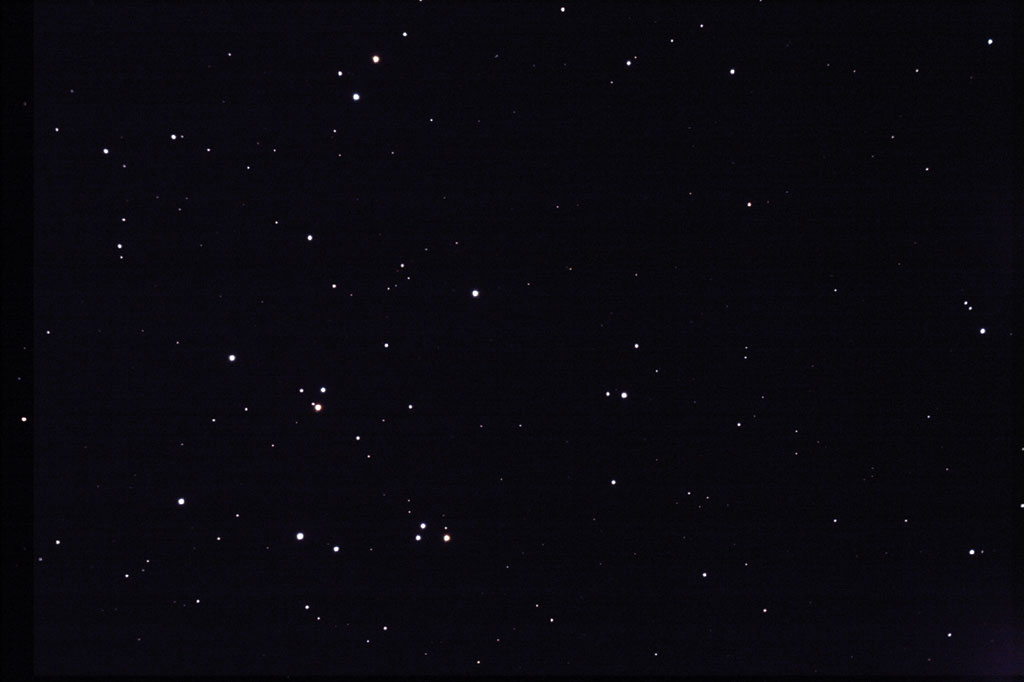
Coma refers to an optical aberration that causes off-axis light to form a comet-like tail. An imperfect mirror shape causes a coma in the reflector, meaning you see deformed stars around the edge of the field of view.
The stars are elongated and look like small comets – dots with a tail.
Coma is present in all Newtonian reflectors, but you can fix it with a coma corrector screwed onto the eyepiece or a camera. So even if you have a more expensive parabolic mirror in your telescope, you still need a coma corrector.
The coma is not really an issue for serious visual observers. In astrophotography, it is a problem, and you need to correct it.
With the cheaper spherical mirror in the Maksutov Newtonian, there’s no spherical aberration. It is coma-free because all this is already corrected with a single Maksutov corrector lens.
What is the Maksutov corrector lens?
Maksutov Corrector lens is a multi-coated spherical lens with an equal but opposite spherical aberration to the spherical primary mirror. This lens corrects the spherical aberration and the coma. It uses a meniscus corrector plate instead of the complex Schmidt corrector plate.
When light travels through the lens, it is refracted, hitting the primary mirror at the right angles to produce a crisp image. That’s why you don’t need other correcting equipment with the Maksutov Newtonian telescope.
But manufacturing the correcting lens is not easy for bigger apertures. As a result, the Maksutov Newtonian is more expensive. You may ask why not use a standard reflector with a parabolic mirror and use the coma corrector instead. Well, a high-quality coma corrector can cost hundreds of dollars.
The Maksutov correcting lens is made exclusively for the given telescope, so the image is much better in the Maksutov Newtonian than in the standard reflector with a coma corrector.
Difference between Maksutov Newtonian and Maksutov Cassegrain

Don’t get mistaken. The Maksutov Newtonian is not the Maksutov Cassegrain. The correcting lens and mirrors are the only things they share in common. The Maksutov Newtonian design is completely different.
The Maksutov Cassegrain telescope features a catadioptric design comprising a spherical primary mirror with a central aperture and a convex secondary mirror. Something like the reflector, but the light path is different. The light travels through the optical tube, then it is reflected by the primary mirror to the secondary mirror that is flat to the primary mirror.
The secondary mirror reflects the light into the hole of the primary mirror where the eyepiece is installed. The light travels twice as much as in a reflector, and the convex curvature of the secondary mirror magnifies the focal length further.
It results in a very long focal length but also a very short optical tube.
Mak-Newt telescopes are also easy to use and collimate. Collimation is one of the big reasons many people opt for refractors when choosing telescopes for astrophotography.
Also, the smaller corrector plate in Maksutov Newtonians leads to less obstruction than Schmidt Cassegrain corrector plates, which enables it to eliminate coma errors and flatten the field.
So, you won’t need to invest in accessories like field flatteners, focal reducers, or a coma corrector like you would with a typical Newtonian telescope.
These advantages are worthy reasons to invest in Mak-Newtonian telescopes if you ask me.
Takeaway: Maksutov Newtonian Telescopes are highly effective tool in astrophotography
For beginners in astrophotography weighing the decision between buying a refractor or reflector, the Maksutov-Newtonian telescope provides a great middle-ground option.
For beginners in astrophotography weighing the decision between buying a refractor or reflector, the Maksutov-Newtonian telescope provides a great middle-ground option.
They are remarkably better than standard Newtonians and great alternatives to apo refractor telescopes, price-wise, despite their weight.
It has the advantages of both refractors and reflectors. This type of design is the ultimate astrophotography telescope. If the need for collimation keeps you away from reflecting telescopes, Maksutov Newtonian scopes are easy to collimate.
You may also like: