- Basics of Dobsonian telescopes
- What type of mount do Dobsonian telescopes use?
- How to get started with a Dobsonian telescope
- How to collimate a Dobsonian telescope
- Magnification and selection of eyepieces when using a Dobsonian telescope
- What are Dobsonian telescopes good for?
- How to observe celestial objects with a Dobsonian telescope
- How do I aim with a Dobsonian telescope?
- Best Dobsonian telescopes to buy
- Recommended accessories for Dobsonian telescopes
- How to maintain and take care of a Dobsonian telescope
- How to build your own Dobsonian telescope
- Is a Dobsonian telescope any good?
- Takeaway: Master how to use a Dobsonian telescope for an enjoyable observation session
Dobsonian telescopes, named after the amateur astronomer John Dobson, are designed with the novice stargazer in mind. These telescopes combine powerful optics with user-friendly features, making it easier to explore the heavens without breaking the bank.
The altazimuth mount is at the core of its user-friendly design. It facilitates smooth and straightforward tracking of celestial objects across the sky.
This intuitive mount system, without complicated setups, allows for effortless horizontal and vertical movements, making your stargazing sessions more enjoyable.
Despite its beginner-friendly attributes, a Dobsonian telescope doesn’t compromise on power. Its large aperture gathers more light, offering you bright and detailed views of the cosmos, a feature that usually comes at a higher cost in other telescopes.
Remarkably, this telescope houses all these capabilities within a cost-effective package. It offers specifications and viewing experiences often found in higher-end models but at a friendly price point.
In this post, we’ll guide you through the intricacies of effectively setting up and using your Dobsonian telescope. From mastering the initial setup to understanding the fine art of collimation, we’ve got it all covered.
Basics of Dobsonian telescopes
Dobsonian telescopes are revered instruments in amateur astronomy, blending simplicity with powerful capabilities.
Here are the foundational features that set them apart in the stargazing community:
Large aperture
The aperture dictates how much light the telescope can gather. A larger aperture directly translates to a brighter and clearer image quality, revealing more details and allowing users to observe fainter celestial objects.
Given the same budget, a Dobsonian typically offers a larger aperture than other telescope types, making it a favorite for deep-sky observers.
Simple design and construction
Dobsonian telescopes are often praised for their straightforward design. Without unnecessary complexities, even beginners find it intuitive to set up and use.
This simplicity makes the telescope user-friendly; it also contributes to the telescope’s affordability.
Furthermore, the direct design makes finding objects in the night sky easier without getting bogged down by intricate adjustments.
Affordability
A Dobsonian telescope is an entry point into serious stargazing because of its cost-effectiveness.
The combination of simple construction and the ability to provide large apertures at a fraction of the cost of other telescope types means users get excellent value for money.
This affordability ensures that high-quality stargazing is accessible to a broader audience.
Wide field of view
Dobsonian telescopes, with their design and optics, often provide a wider field of view compared to many other types. This expansive view is especially advantageous when observing large celestial objects or scanning the sky for deep-sky objects.
A wider field of view also aids users to easily track and find objects as they move across the night sky.
What type of mount do Dobsonian telescopes use?
The altazimuth mount is one of the defining features of a Dobsonian telescope. Unlike more complex equatorial mounts, the altazimuth design allows the telescope to move vertically (altitude) and horizontally (azimuth).
This intuitive movement makes it significantly easier for users to track objects across the night sky.
The azimuth turntable, in particular, provides smooth horizontal motion, ensuring that following celestial objects is a breeze.
How to get started with a Dobsonian telescope
Embarking on your astronomical journey with a Dobsonian telescope is thrilling and straightforward. Begin by selecting a model that suits your budget and desired aperture size.
Once acquired, familiarize yourself with its various parts. This includes the mount, optical tube, eyepieces, and finder scope before venturing out for a night of stargazing.
How to assemble and set up a Dobsonian telescope
Assembling a Dobsonian telescope is typically a user-friendly experience due to its straightforward design.
Here are the steps to assemble and set up a Dobsonian telescope:
- Start by placing the base on a stable surface, ensuring the azimuth turntable can rotate freely.
- Next, seat the optical tube into the cradle of the mount, securing it with the provided brackets or screws.
- Attach the finder scope if it’s not pre-mounted, and select an eyepiece to insert into the focuser.
- Once set up, aim the telescope at a distant object during the day to practice focusing and tracking.
How to collimate a Dobsonian telescope
Collimation is crucial for optimal viewing through a Dobsonian telescope, ensuring its mirrors align correctly.
There are two primary methods to achieve this: with or without a laser.
Let us look at both techniques for precise alignment.
How to collimate a Dobsonian telescope without laser
For those not using a laser, here are the steps for collimating a Dobsonian telescope without a laser:
- Insert a collimation cap into the focuser and peer through its central hole. The goal is to ensure that the reflections of the primary and secondary mirrors align.
- Adjust the tilt of the primary mirror using its adjustment screws until the secondary mirror appears centered.
- Then, tweak the secondary mirror until the reflection of the primary mirror (and the central dot or marker on it) appears symmetrically centered.
How to collimate a Dobsonian telescope with a laser
Using a laser collimator tends to streamline the collimation process significantly.
Here are the steps for collimating a Dobsonian telescope with a laser:
- Start by inserting the laser collimator into the focuser in place of the eyepiece.
- Then, adjust the secondary mirror, ensuring the laser dot falls squarely on the primary mirror.
- Move to the primary mirror and adjust it until the laser beam is returned to the laser collimator. This indicates that the optical elements are well aligned.
Magnification and selection of eyepieces when using a Dobsonian telescope
You can adjust the magnification by selecting different eyepieces, usually measured in millimeters (mm). A lower mm eyepiece typically provides higher magnification, allowing for detailed views of celestial objects.
Conversely, higher mm eyepieces offer wider fields of view, making them great for observing larger objects or locating and centering objects.
A good rule of thumb is to have various eyepieces to switch between low and high magnification.
Generally, a magnification range between 30x and 300x for Dobsonian telescopes is recommended.
It maximizes the scope’s capabilities without exceeding its limits, thus ensuring clear and crisp views of the cosmos.
What are Dobsonian telescopes good for?
Dobsonian telescopes are ideal for various astronomical observations. With a 6-inch aperture, a beginner can comfortably start exploring prominent lunar craters, seas, and mountain ranges on the Moon.
As you venture into the 8 to 10-inch aperture range, the planetary viewing experience is significantly enhanced. These allow for more detailed observations of Jupiter’s bands, Saturn’s rings, and the surface features of Mars.
A telescope with 12 inches or more aperture is highly recommended for observing faint, deep-sky objects like galaxies, nebulae, and star clusters. It can gather more light to reveal the intricate structures of these distant celestial objects.
See also: What Is A Dobsonian Telescope And How Does It Work?
How to observe celestial objects with a Dobsonian telescope
Using a Dobsonian telescope offers a straightforward way to immerse yourself in the universe’s wonders.
- Observing the Moon with a Dobsonian telescope
- Observing the planets with a Dobsonian telescope
- Observing deep sky objects with a Dobsonian telescope
- Observing with a Dobsonian telescope from light-polluted areas
Here is what you should do:
- Utilize a
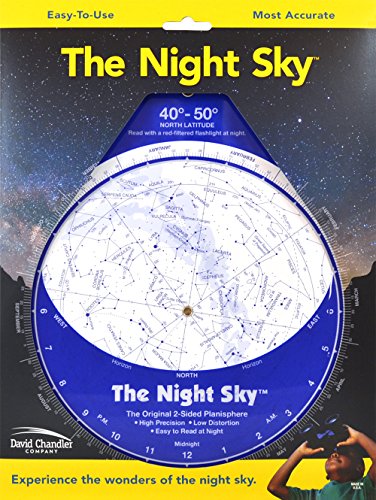 Amazonstar chartView on Amazon →or app to assist in locating and identifying celestial objects.
Observing the Moon with a Dobsonian telescope

The moon, with its mesmerizing craters, seas, and valleys, is an excellent starting point for beginners. When observing the Moon with a Dobsonian, starting with a lower magnification eyepiece is best, giving you a broad lunar landscape.
As you get familiar with its features, you can switch to higher magnification eyepieces to explore specific regions in detail. Consider using a moon filter to reduce the Moon’s intense brightness and improve contrast.
Observing the planets with a Dobsonian telescope

Dobsonian telescopes bring planets to life in breathtaking detail. With higher magnification eyepieces, you can discern Jupiter s cloud bands, Saturn s rings, or the polar caps of Mars.
Observing intricate planetary details in stable atmospheric conditions (minimal turbulence) is crucial.
Filters can sometimes enhance the viewing experience, emphasizing specific atmospheric features on the planets.
Observing deep sky objects with a Dobsonian telescope

Dobsonians, especially those with larger apertures, are invaluable for deep-sky objects like galaxies, nebulae, and star clusters. Start with a wide-field eyepiece to locate these faint objects, then switch to a higher magnification for closer examination.
Observing with a Dobsonian telescope from light-polluted areas
Light pollution can be a challenge for all astronomers, but Dobsonian telescopes, with their large apertures, can help mitigate some of these issues.
While the brightness of the sky background might hinder the visibility of fainter stars and deep-sky objects, brighter objects like the Moon, planets, and certain star clusters remain observable.
Using narrowband or light-pollution filters, such as the SVBONY 2-inch City Light Pollution Reduction Filter, can further help to improve contrast and reduce the effects of unwanted city lights.
But for the best experience, periodic trips to darker locations are recommended.
How do I aim with a Dobsonian telescope?
Here is how to aim with a Dobsonian telescope:
- Point the telescope roughly in the direction of the object you wish to observe.
- Use the finder scope (a smaller, low-magnification telescope attached alongside the main one) to narrow your target.
- Align the crosshairs or the red dot (depending on the type of finder) onto the object.
- Once centered in the finder scope, the object should be within the view of the main telescope.
- Make minor adjustments directly using the telescope’s base for azimuth (horizontal) and the side bearings for altitude (vertical) movements.
Best Dobsonian telescopes to buy
Here’s a look at some top Dobsonian recommendations tailored to specific needs:
- Orion SkyQuest XT6-Best for beginners
- Celestron 76mm Tabletop Dobsonian Best budget
- Orion SkyQuest XT8 Best for moon and planetary observation
- SkyWatcher 250 SynScan Best for automated tracking
Orion SkyQuest XT6-Best for beginners
For those stepping into amateur astronomy, the Orion SkyQuest XT6 stands out as perhaps the best beginner Dobsonian reflector telescope. It boasts a large 6 aperture at an impressive price point.
This telescope provides substantial advantages over smaller 60mm telescopes, which many tend to outgrow quickly.
The 6″ diameter f/8 parabolic mirror, the heart of this Newtonian reflector, offers fantastic views of the Moon, planets, and even distant objects like nebulae, galaxies, and star clusters.
Its design minimizes chromatic aberration, which is often an issue with refracting telescopes.
The simplicity of the altazimuth mount means there’s no need for polar alignment. Thus, navigation is intuitive, making it extremely easy for the whole family to use.
This design provides smooth enough motions that tracking the brightest objects in the night sky becomes a delightful experience, even for those new to the world of telescopes.
Celestron 76mm Tabletop Dobsonian – Best budget
The Celestron 76mm Tabletop Dobsonian pays tribute to historical figures like Galileo Galilei, reflecting on their contributions to astronomy. It elegantly displays the names of these notable astronomers and scientists around its optical tube.
It features a high-quality Dobsonian-style stand and a 76 mm reflector optical tube, making it an ideal entry-level astronomical telescope.
Its lightweight tabletop design ensures ease of storage, transport, and setup. For those unfamiliar with the night sky, this telescope type allows simple navigation by merely moving the tube toward the desired object.
This telescope comes with a 20mm and a 4mm eyepiece, offering magnifications up to 75x. For the best experience, start with the low-power eyepiece, gradually transitioning to higher magnifications.
Orion SkyQuest XT8 – Best for moon and planetary observation
The Orion SkyQuest XT8 is a reflector telescope designed with the amateur astronomer in mind. Its large 8 -diameter parabolic mirror is a feast for the eyes, excelling in deep-sky viewing and serving up jaw-dropping views of the planets and the Moon.
Gone are the complications of counterweights, gears, and polar alignment. This Dobsonian offers simple, hands-on, point-and-view navigation.
Its design ensures minimal chromatic aberration and maximum clarity.
The stable Dobsonian base provides a vibration-free experience during visual observing sessions, with smooth motions that make manual tracking of celestial objects feel almost effortless.
The kit comes equipped with value-added accessories.
These include the Orion Shorty 2x Barlow, which doubles the magnification, Orion’s MoonMap 260, DeepMap 600, Telescope Observer’s Guide, a RedBeam Mini flashlight, and a smartphone photo adapter, enhancing the overall stargazing experience.
To learn more about this telescope, read: Orion SkyQuest XT8 Review (#1 Beginner Telescope)
SkyWatcher 250 SynScan – Best for automated tracking
With the Sky-Watcher 250 SynScan, amateur astronomers can indulge in the luxury of automated tracking combined with the power of a large aperture.
This reflecting telescope features an innovative collapsible design with struts allowing for portability without compromising collimation.
Its unique feature is built-in WIFI, which means you can seamlessly control your telescope using a smartphone or tablet.
The metal gearing and the SynScan Dobsonian’s precise automated tracking make it perfect for those who want the large-aperture viewing of a Dobsonian and the automated tracking of an equatorial mount.
The 94% reflective mirrors ensure that even the faintest and most distant objects in deep space are clearly visible.
Its comprehensive 42,000-object database caters to both beginners and experienced astronomers, promising countless nights of exploration.
Accessories like the 2-inch Crayford-style focuser with a 1 1/4-inch adapter and two super wide-angle eyepieces (25mm and 10mm) make it a stellar choice for those looking to invest in a high-quality instrument.
While some astronomers use a simple collimation cap, others prefer tools that offer more precision.
The Astromania Alignment 1.25 Laser Collimator is a popular tool that allows for accurate and straightforward alignment of Dobsonian optics.
 AmazonAstromania Alignment 1.25 Laser CollimatorView on Amazon →
Finder scope or red dot finder
This accessory aids in initially locating and centering celestial objects before viewing them in the main telescope. While traditional finder scopes magnify a small portion of the sky, red dot finders project a red dot onto the night sky without magnification.
The Orion 8 50 Right-Angle Finder Scopeis a reliable choice. It offers a clear view and makes star-hopping easier due to its right-angle design.
 AmazonOrion 8 50 Right-Angle Finder ScopeView on Amazon →
Moon and planetary filters
These filters enhance the viewing experience by increasing contrast, reducing glare, and highlighting subtle details on celestial objects.
For instance, the Orion Basic Set of 1.25-inch Four Color Filters can help emphasize Jupiter’s cloud bands or the Mars ice caps.
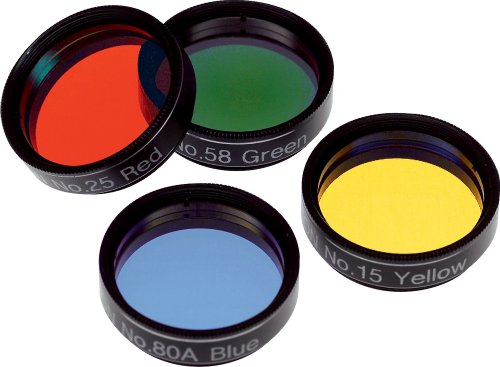 AmazonOrion Basic Set of 1.25-inch Four Color FiltersView on Amazon →
Light-pollution filters
Light pollution filters are especially useful for observers in urban environments. They suppress city lights’ wavelengths and enhance the contrast of celestial objects.
The Celestron UHC/LPR Filter is a top recommendation designed to improve the visibility of nebulae and other deep-sky objects in light-polluted skies.
To learn more about the best light pollution filter that will suit your needs, read: 16 Top-Rated Light Pollution Filters for Your Telescope.
How to maintain and take care of a Dobsonian telescope
To keep your Dobsonian telescope in top condition, storing the optical tube assembly in a dust-free environment is essential.
To keep your Dobsonian telescope in top condition, storing the optical tube assembly in a dust-free environment is essential.
Regularly check and adjust the alignment (collimation) of the mirrors, and gently clean the optics with proper cleaning tools.
You should also avoid touching the curved primary mirror with bare fingers, as oils can damage the surface.
Can I leave my Dobsonian telescope outdoors?
It’s not advisable to leave your Dobsonian telescope outdoors continuously. Exposure to moisture and temperature fluctuations can harm the optics and the telescope tube, compromising its performance when observing the night sky.
How to build your own Dobsonian telescope
Building your first Dobsonian telescope can be rewarding, allowing you to tailor the specifications to your preferences.
Building your first Dobsonian telescope can be rewarding, allowing you to tailor the specifications to your preferences.
You would need to assemble a stable Dobsonian mount, a robust optical tube housing the Newtonian reflector telescope setup.
You must also align a well-calibrated curved primary mirror to observe objects sharply in the night sky.
To learn more, read: How to Build a Dobsonian Telescope? Step-by-Step Guide for Beginners
Is a Dobsonian telescope any good?
Absolutely! A Dobsonian telescope, fundamentally a Newtonian reflecting telescope on an alt-azimuth mount, offers excellent value by providing large apertures at affordable prices.
Absolutely! A Dobsonian telescope, fundamentally a Newtonian reflecting telescope on an alt-azimuth mount, offers excellent value by providing large apertures at affordable prices.
This design allows observers to delve deep into the night sky, clearly capturing the brightest deep-sky objects.
Is a Dobsonian telescope suitable for beginners?
A Dobsonian telescope is often recommended as a first telescope for beginners. Its simple design and ease of use make it perfect for amateur astronomers eager to explore the cosmos without grappling with the complexities of equatorial mounts.
Can I observe galaxies with a Dobsonian telescope?
With its capacity to gather light from fainter objects, a Dobsonian with a large aperture is ideal for observing distant galaxies. At a dark sky site, even a modest-sized Dobsonian can reveal the core of the Andromeda galaxy, among others.
Can I track with a Dobsonian telescope?
While a Dobsonian mount doesn’t offer automatic tracking like some equatorial mounts, its intuitive altitude adjustment and horizontal motion make it easy to manually follow objects moving across the sky.
Can I attach a camera to a Dobsonian telescope?
You can attach a camera to a Dobsonian telescope. With the right adapters, many amateur astronomers capture stunning images.
However, the manual nature of the Dobsonian mount means it might be more complex than tracking mounts for long-exposure shots.
Can a Dobsonian telescope be used during the day?
Like other reflectors or refracting telescopes, you can use a Dobsonian telescope during the day for terrestrial observations.
However, it’s essential never to point it, or any telescope, directly at the sun without a proper solar filter, such as the 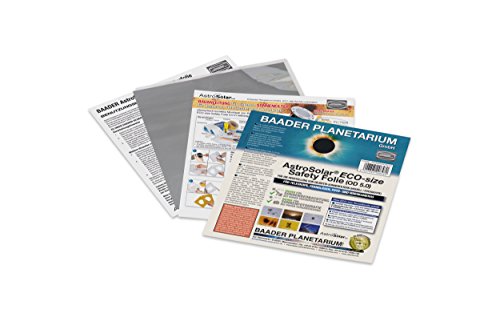 AmazonBaader Planetarium Solar FilterView on Amazon →.
This can cause severe eye damage and damage the optics due to intense light and heat.
Additionally, refracting telescopes might provide clearer daytime views without the potential image distortion of a larger telescope mirror.
Takeaway: Master how to use a Dobsonian telescope for an enjoyable observation session
The Dobsonian telescope, a type of reflecting telescope with Newtonian optics, has carved a niche for itself among both novice stargazers and experienced astronomers.
The Dobsonian telescope, a type of reflecting telescope with Newtonian optics, has carved a niche for itself among both novice stargazers and experienced astronomers.
Its simplistic yet efficient Dobsonian design, characterized by a flat secondary mirror and precise focal length, makes it a preferred choice for many.
Even if you’re starting with a small Dobsonian, understanding its fundamentals can pave the way for a lifetime of celestial exploration.
By grasping the intricacies of this telescope type, any beginner can transition into an experienced astronomer, making the most of the night sky’s wonders.
Whether it’s galaxies’ grandeur or planets’ delicate dance, a Dobsonian can be your trusted companion in these cosmic journeys.
You may also like: