Have you ever gazed up at the night sky and wondered which of those shining points are planets? While stars twinkle, planets shine with a steady light, and learning to recognize them can transform a simple night of stargazing into an enriching experience.
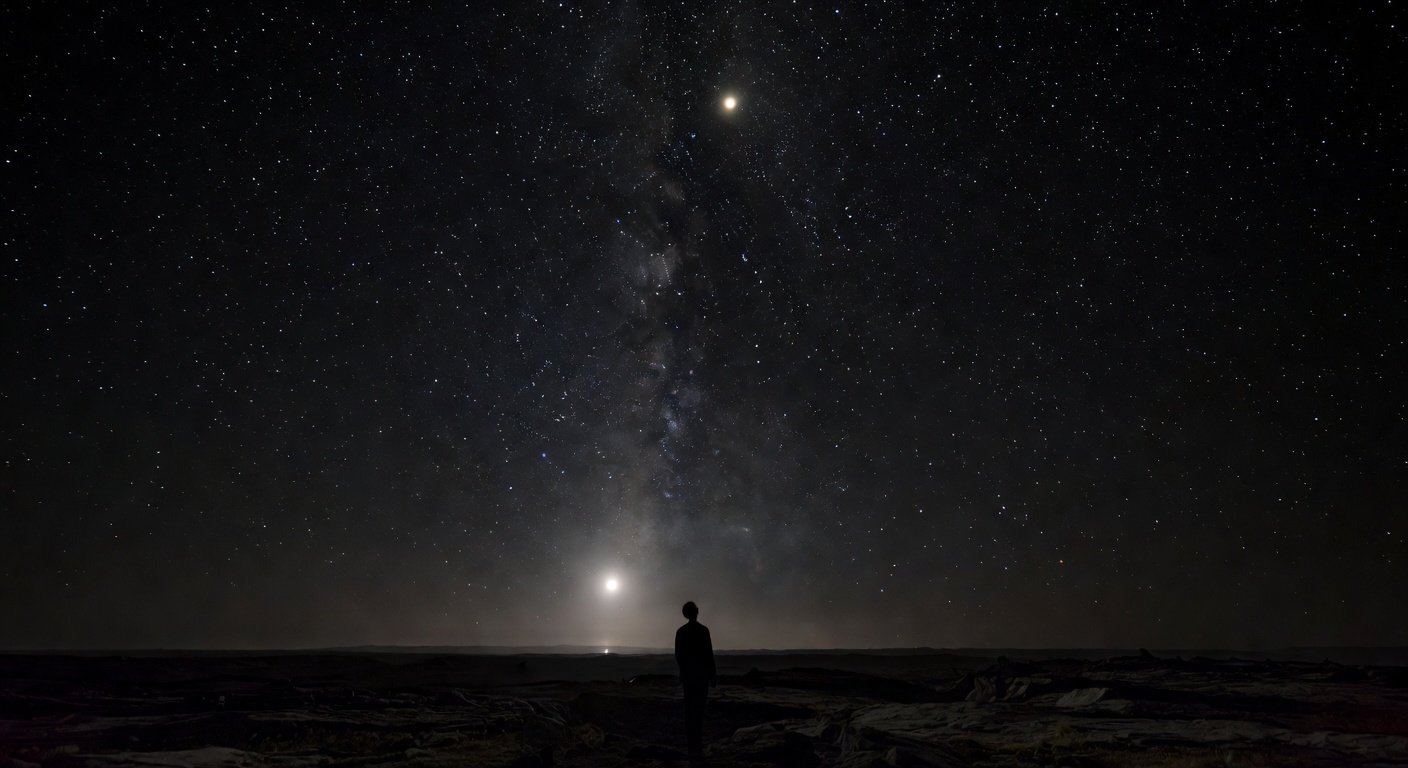
This article will guide you in identifying the planets visible to the naked eye and explain how these celestial wanderers differ from the stars.
By the end of this guide, you’ll not only be able to spot Mercury, Venus, Mars, Jupiter, and Saturn, but you’ll also understand their unique movements and appearances.
Getting the essential equipment to see planets
Before you start your planet-spotting adventure, it’s important to have the right tools. While it’s possible to see some planets with the naked eye, using the right equipment can enhance your experience.
Before you start your planet-spotting adventure, it’s important to have the right tools. While it s possible to see some planets with the naked eye, using the right equipment can enhance your experience.
Binoculars
A good pair of binoculars can be your gateway to the night sky. For beginners, choose binoculars with a specification of 7×50 or 10×50. These numbers refer to the magnification power and the diameter of the lens in millimeters, respectively. They offer a good balance between light-gathering capability and stability.
Telescopes
For a more detailed view of the planets, a telescope is the next step up. A refractor telescope with an aperture of at least 70mm or a reflector telescope with an aperture of 130mm is ideal for beginners. Look for telescopes with a sturdy mount and a decent focal length to ensure clear, crisp images of the planets.
Mobile apps
Apps like Star Walk, SkyView, or Stellarium can help you identify planets in real-time. Simply point your smartphone at the sky, and the app will overlay the names of planets and stars on the screen.
Star charts
Traditional paper star charts or planispheres can also be invaluable tools. They help you learn the constellations and understand the sky’s layout at different times of the year. Knowing the constellations around which the planets appear can significantly aid in spotting them.
Finding a good viewing location
Your viewing location can greatly affect how well you can see the planets:
Your viewing location can greatly affect how well you can see the planets:
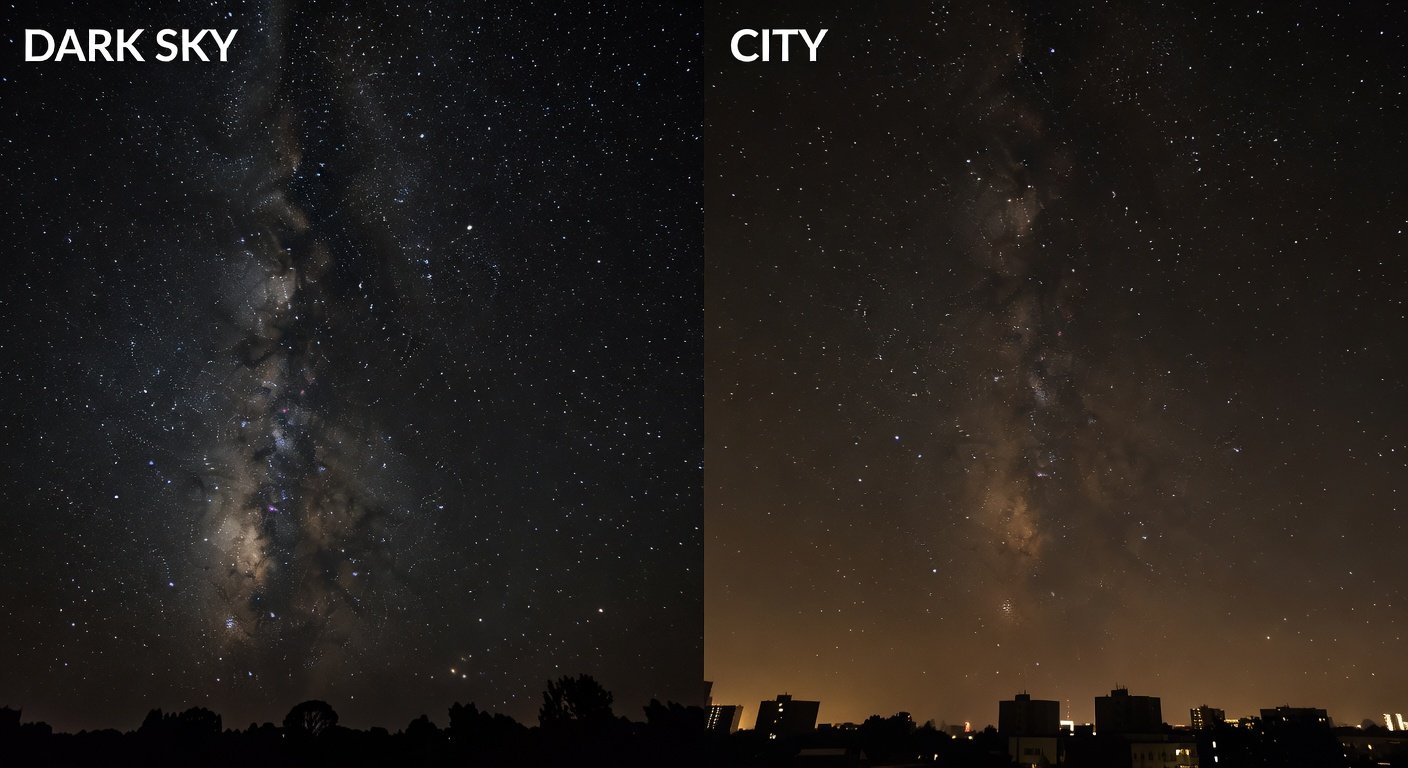
- Dark skies: Seek out areas with minimal light pollution. Dark sky parks or areas away from city lights offer the best visibility of the night sky.
- Best viewing times: Planets are visible at different times of the year and often at specific hours of the night. Generally, the best time to view planets is when they are in opposition, meaning the Earth is directly between the planet and the sun, making them brighter and more visible.
By properly preparing with the right equipment and knowledge, you set the stage for successful planet spotting. In the next sections, we will delve into the characteristics of planets to look for in the night sky, followed by specific tips on identifying each visible planet.
You may also like: 31 Best Stargazing Spots in the World: Spectacular Night Skies (Ranked!)
Understanding the characteristics of planets in the night sky
Understanding the visual attributes that differentiate planets from stars can significantly enhance your stargazing sessions. Here are key characteristics to help you recognize planets among the myriad of stars.
Understanding the visual attributes that differentiate planets from stars can significantly enhance your stargazing sessions. Here are key characteristics to help you recognize planets among the myriad of stars.
Brightness and color
One of the first things you’ll notice is that planets generally appear brighter than most stars. Unlike stars, which can twinkle, planets shine with a steady light due to their closer proximity to Earth and the way they reflect sunlight.
Brightness: Planets can outshine most stars. For instance, Venus is often the third brightest object in the sky, after the sun and moon, and can even cast shadows.
Color: Planets display distinct colors, which can be a clue to their identity:
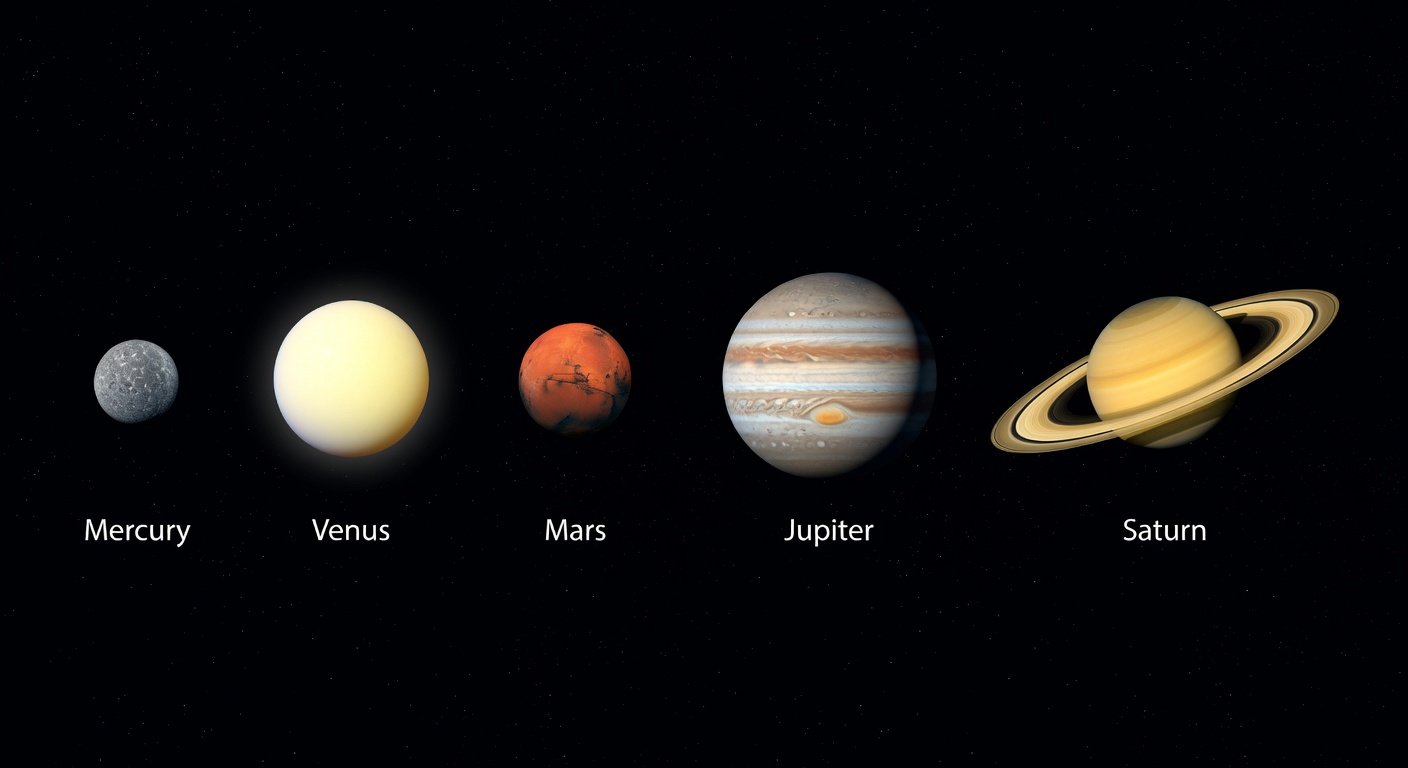
- Mercury appears as a grayish-white dot.
- Venus shines with a bright, white light.
- Mars exhibits a reddish hue, earning it the nickname “The Red Planet”.
- Jupiter has a creamy color with bands that telescope users can see.
- Saturn emits a golden glow.
Movement relative to stars
Unlike stars, which remain relatively fixed in their constellations, planets wander across the sky. This movement can be observed over a period of nights or weeks.
- Retrograde motion: Occasionally, planets will appear to move backward in the sky. This retrograde motion is an optical illusion caused by the Earth passing these slower orbiting outer planets.
- Prograde motion: Most of the time, planets move eastward against the background of stars.
Position in the sky
Planets follow an imaginary line in the sky called the ecliptic, which is the path the sun follows over the course of a year. Observing this line can help you spot planets as they generally won’t stray far from it.
- Along the ecliptic: All of the solar system’s planets can be found along the ecliptic, making this line a celestial highway to keep an eye on.
- Seasonal variations: Depending on the time of year, different planets will be visible in the sky. For example, Jupiter might be prominent in the autumn evening sky, while Venus graces the morning sky in the spring.
By familiarizing yourself with these characteristics—brightness, color, movement, and position—you’ll be more equipped to distinguish planets from stars during your nighttime observations. Next, we’ll explore how to identify specific planets using these traits.
Identifying specific planets
Recognizing each planet in the night sky involves noting their unique characteristics and behaviors. Here’s how you can identify some of the most prominent planets visible to the naked eye:
Recognizing each planet in the night sky involves noting their unique characteristics and behaviors. Here s how you can identify some of the most prominent planets visible to the naked eye:
Mercury and Venus (The Inferior Planets)
Mercury: This elusive planet is never far from the Sun and is best seen during twilight hours, either just after sunset or just before sunrise. Look for a faint, quickly setting or rising star-like object with a grayish hue.
Venus: Often called the Morning Star or Evening Star, Venus is the brightest planet and easy to spot. It shines with a brilliant white or slightly yellowish light and can be seen either in the western sky after sunset or the eastern sky before sunrise.
Mars, Jupiter, and Saturn (The Superior Planets)
Mars: Known for its distinctive red color, Mars is moderately bright and can be seen with the naked eye. Its visibility improves significantly every two years when it is in opposition and closest to Earth.
Jupiter: The largest planet in our solar system, Jupiter is very bright and usually outshines most stars in the sky. Even with basic binoculars, you might catch a glimpse of its four largest moons orbiting around it.
Saturn: Recognizable by its golden color, Saturn is less bright than Jupiter but still noticeable with the naked eye under good conditions. A small telescope can reveal its famous rings, making it a favorite among amateur astronomers.
Uranus and Neptune
Uranus: This planet is on the threshold of naked-eye visibility and appears as a faint, tiny blue-green dot in dark skies. It’s best viewed with at least a pair of binoculars or a small telescope.
Neptune: The most distant planet visible from Earth, Neptune is not visible without a telescope. Through a moderate telescope, it appears as a small blue dot similar in appearance to Uranus but fainter.
Each planet’s visibility in the sky also depends on its position relative to the Sun and Earth, and observing conditions. Apps and star charts can provide precise timings and positions to help plan your viewing sessions effectively.
Maximizing your experience of watching planets with some tips and tricks
Here are some practical tips and techniques that can help enhance your observations and make stargazing more enjoyable and educational.
Keeping a sky journal
Recording your observations in a sky journal can be a rewarding part of your astronomy hobby. It helps you track changes and patterns in the sky over time, and can be a great way to remember your experiences.
- What to record: Note the date, time, weather conditions, and details of what you see. You can sketch the arrangement of planets and stars, and note any changes in brightness or position.
- Benefits: This record keeps your observations organized and can help you quickly reference past sightings. It also sharpens your observational skills and deepens your understanding of celestial movements.
Joining astronomy clubs and online communities
Connecting with other astronomy enthusiasts can provide support, resources, and additional knowledge to help you grow in your hobby.
- Local astronomy clubs: Many cities and towns have clubs that host regular stargazing nights, lectures, and other events. These gatherings can offer hands-on telescope experience and advice from more experienced astronomers.
- Online communities: Forums and social media groups can be invaluable for asking questions, sharing tips, and staying updated on astronomical events like planet alignments, eclipses, or meteor showers.
- Telescope guides newsletter: for exclusive celestial insights and stargazing tricks
Photographing the planets
Astrophotography is a thrilling way to document your celestial observations. Even beginners can capture impressive photos of the planets with the right equipment and techniques.
- Basic equipment: Start with a simple setup using a smartphone or DSLR camera attached to a telescope. Special mounts can help stabilize your camera for clearer shots.
- Camera settings: Use manual focus and experiment with exposure settings to capture the best details of the planets. Long exposure times can reveal more features, but may require more advanced equipment to prevent blurring.
- Post-processing: Learning basic image processing can dramatically improve the quality of your photos, allowing you to bring out details that are not visible in raw images.
By incorporating these tips into your planet-watching practices, you can enrich your experience and gain a deeper appreciation for the night sky. Whether it’s keeping a detailed record of your observations, connecting with fellow astronomy enthusiasts, or capturing stunning photographs of the planets, each activity adds a layer of depth to your stargazing adventures.
Wrap up
By recognizing and observing the planets in our solar system, you not only gain a deeper understanding of the heavens but also join a centuries-old tradition of explorers and astronomers who have gazed up at the night sky in wonder.
The techniques and tips provided in this article are just the beginning. The sky is an ever-changing canvas that offers new sights and experiences every night. Continuously observing, learning, and adapting your methods will enhance your skills and deepen your appreciation for the beauty of the night sky. Remember, each clear night presents a new opportunity to witness the dance of the planets around the sun.
Astronomy is a vast field with much to explore. Whether you choose to delve into more complex aspects of observing, such as learning to identify fainter celestial objects or studying the physical characteristics of the planets, there is always more to learn. Consider furthering your education by:
- Attending workshops or lectures at local planetariums or universities.
- Reading books and reputable online resources that delve into the science behind the planets and stars.
- Participating in community events such as star parties and public observation sessions.
- for exclusive astronomy insights and stargazing tips delivered straight to your inbox.
By embracing the journey of learning and observing, you enrich your own life and contribute to a community that values knowledge and curiosity about our universe. Keep looking up—the sky’s the limit!